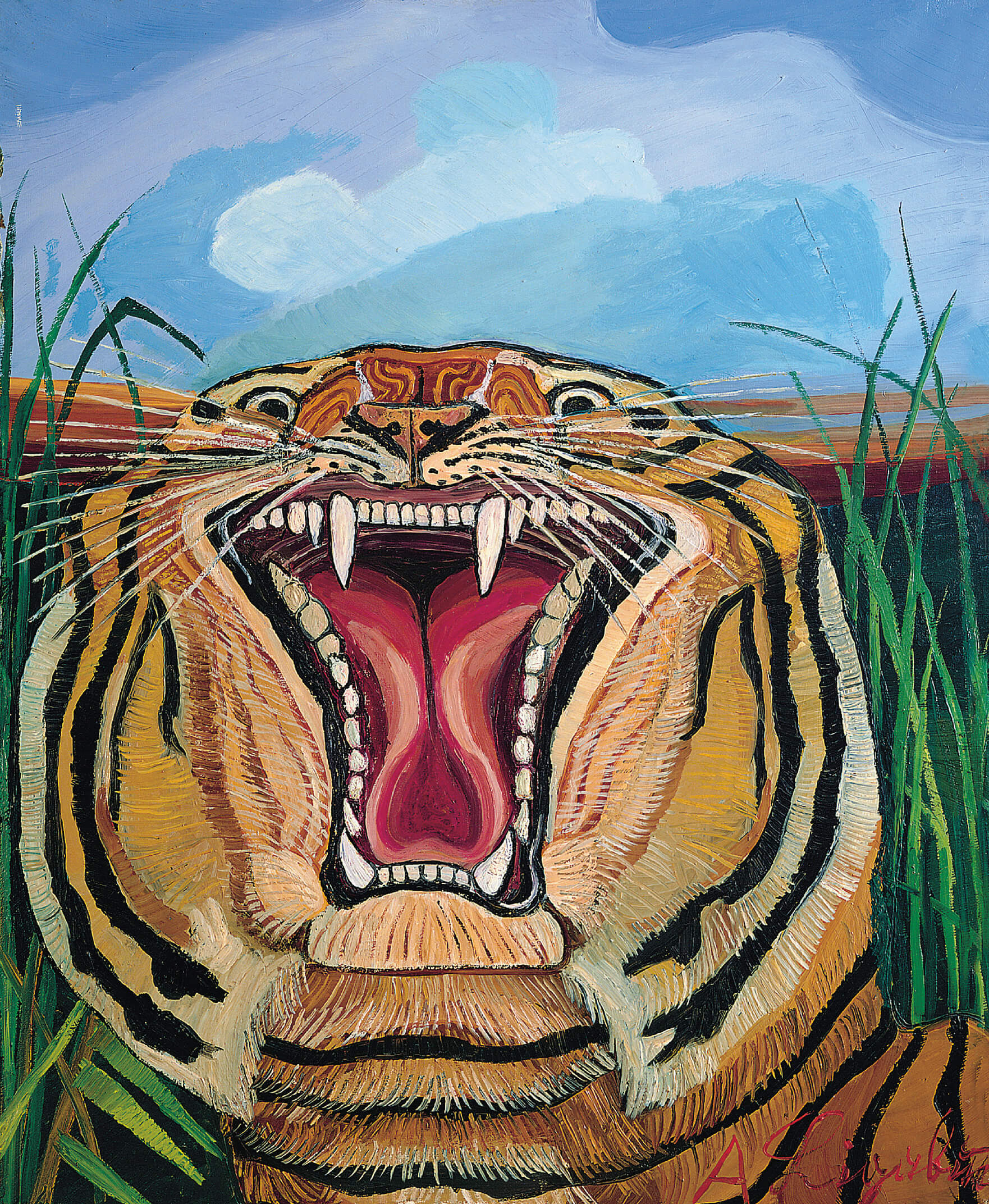
Antonio Ligabue, Tiger’s Head (oil on canvas, 1957).
A TRIBUTE TO ONE OF THE MOST INTENSE, TORMENTED AND ORIGINAL FIGURES OF TWENTIETH-CENTURY ART, SIXTY YEARS AFTER HIS DEATH. OVER 80 WORKS ON DISPLAY (AND A RARE VINTAGE MOTO GUZZI)
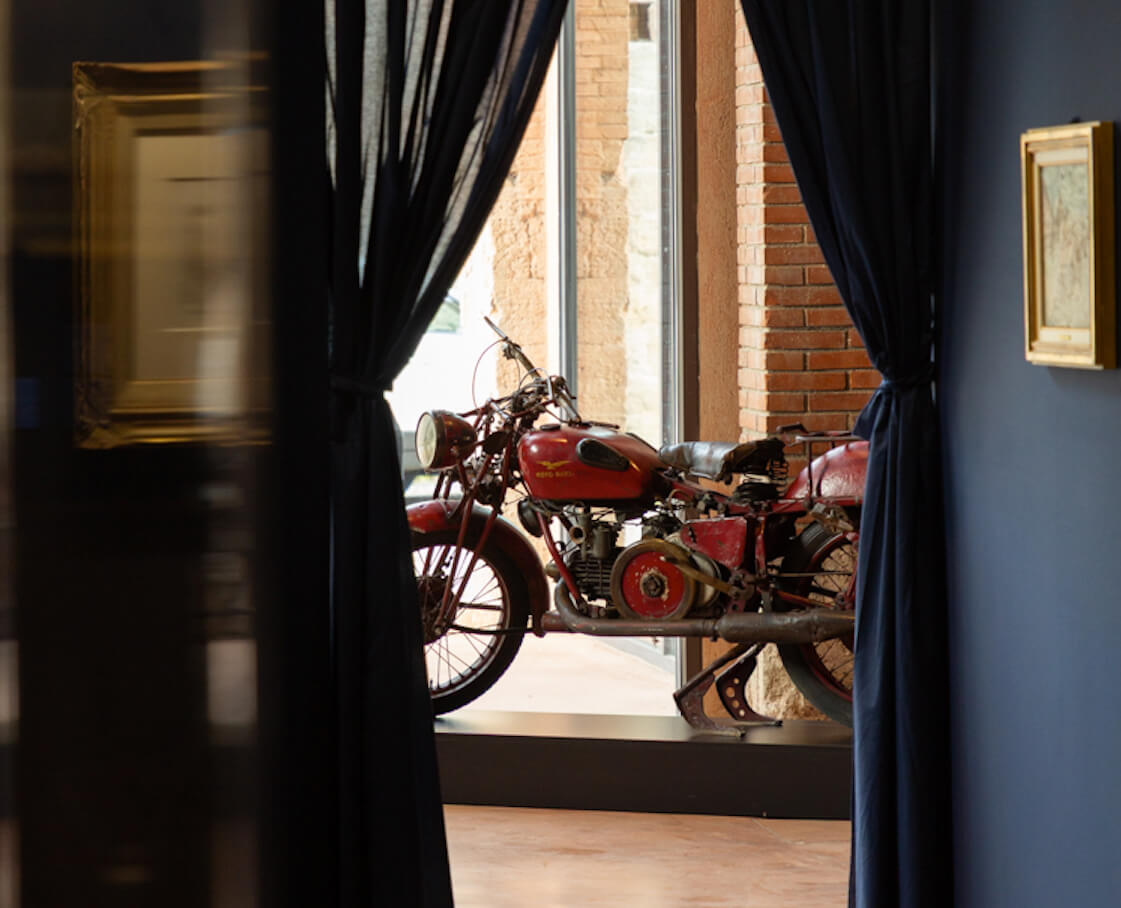
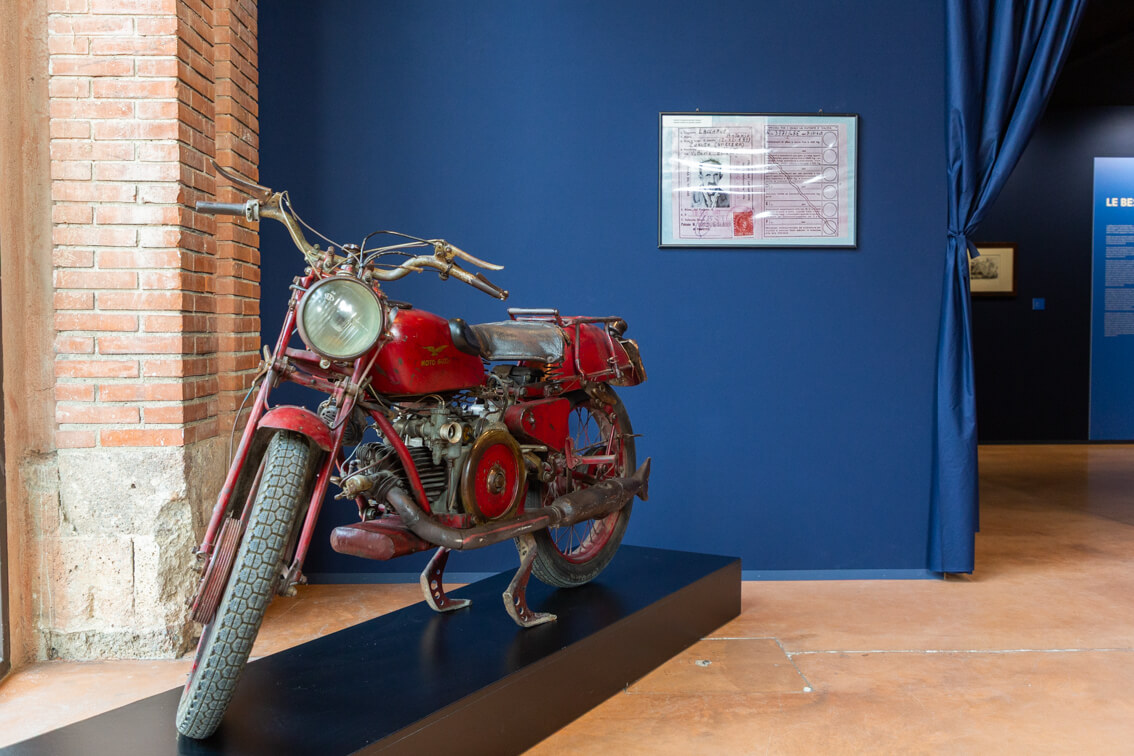
Photo courtesy. A rare vintage Moto Guzzi, around 85 years old, on display at the exhibition, beside a reproduction of Antonio Ligabue’s driving licence (Zurich, 1899–Gualtieri 1965). The motorbike was a gift to the artist from the Gnutti family of Brescia.
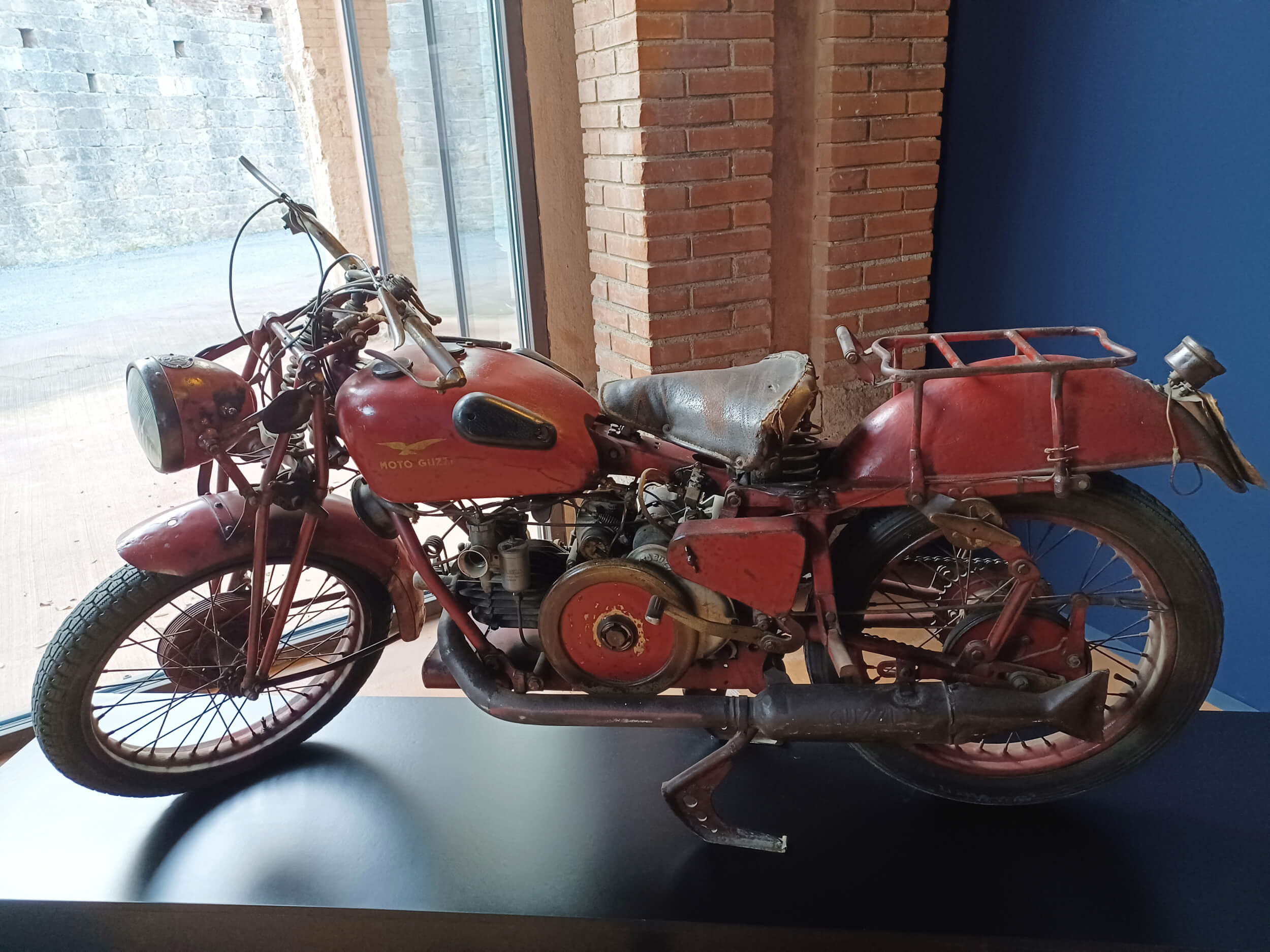
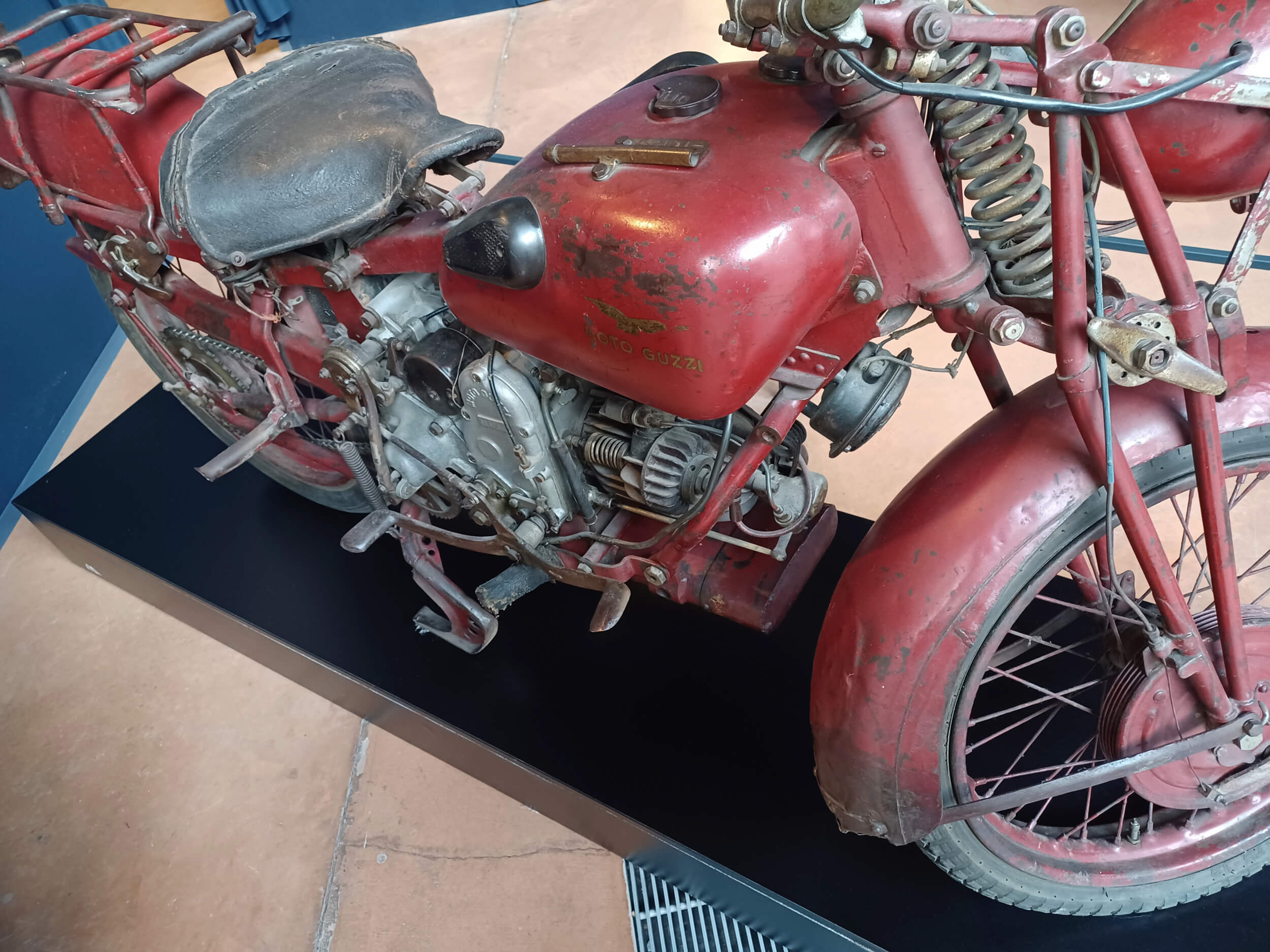
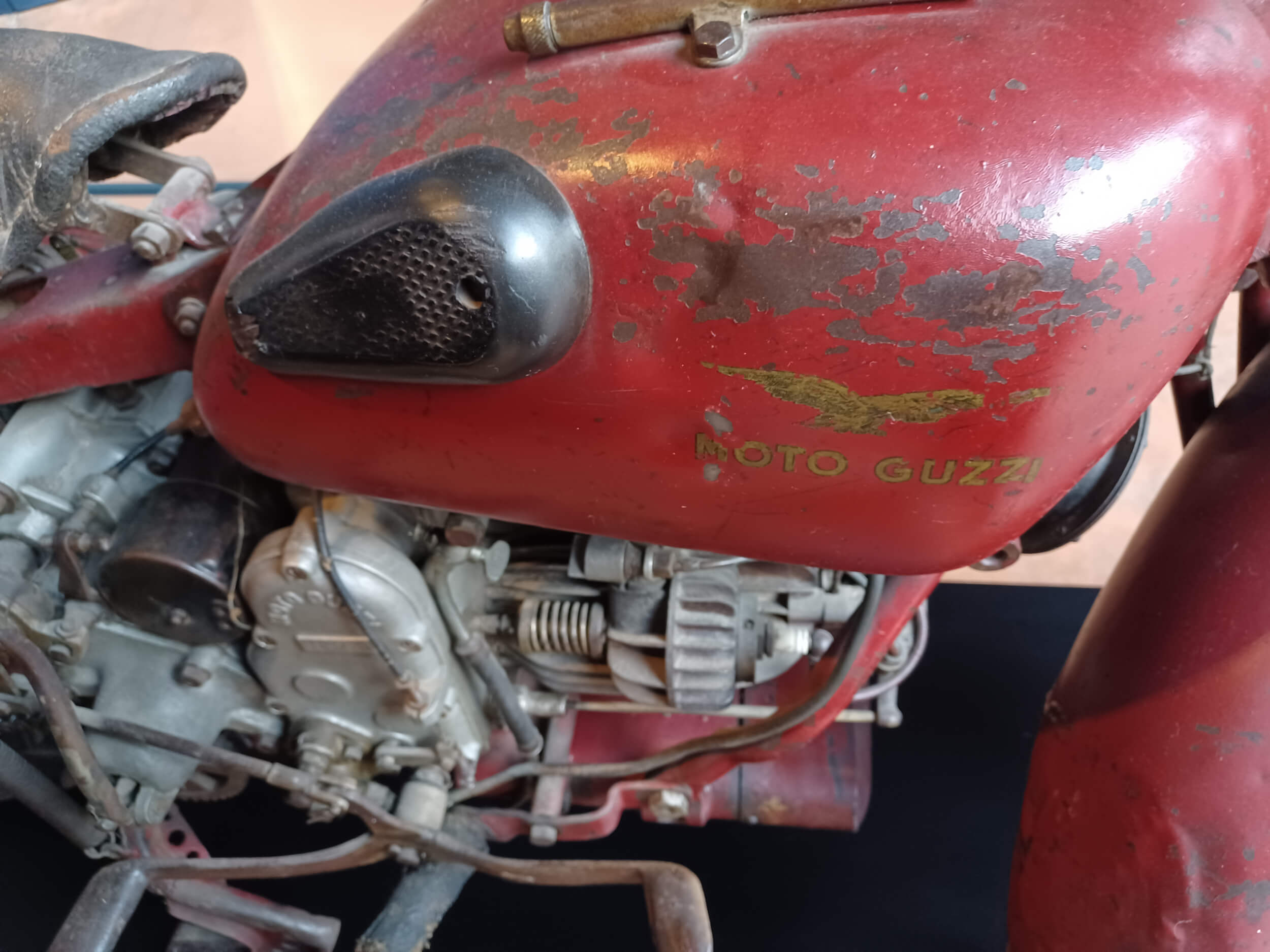
(Photo: Wide magazine). This is a Moto Guzzi Alce model from the 1940s; it is not entirely original, as certain components have been modified - namely the handlebars, rear mudguard, exhaust and luggage rack - to convert it for civilian use. Indeed, the Alce was a model created by Moto Guzzi for military troops before and during the Second World War (it was manufactured from around 1939 to 1945, and was also available as a two-seater model, with a double seat and dual handlebars). Words of the historical experts of the Moto Guzzi World Club!
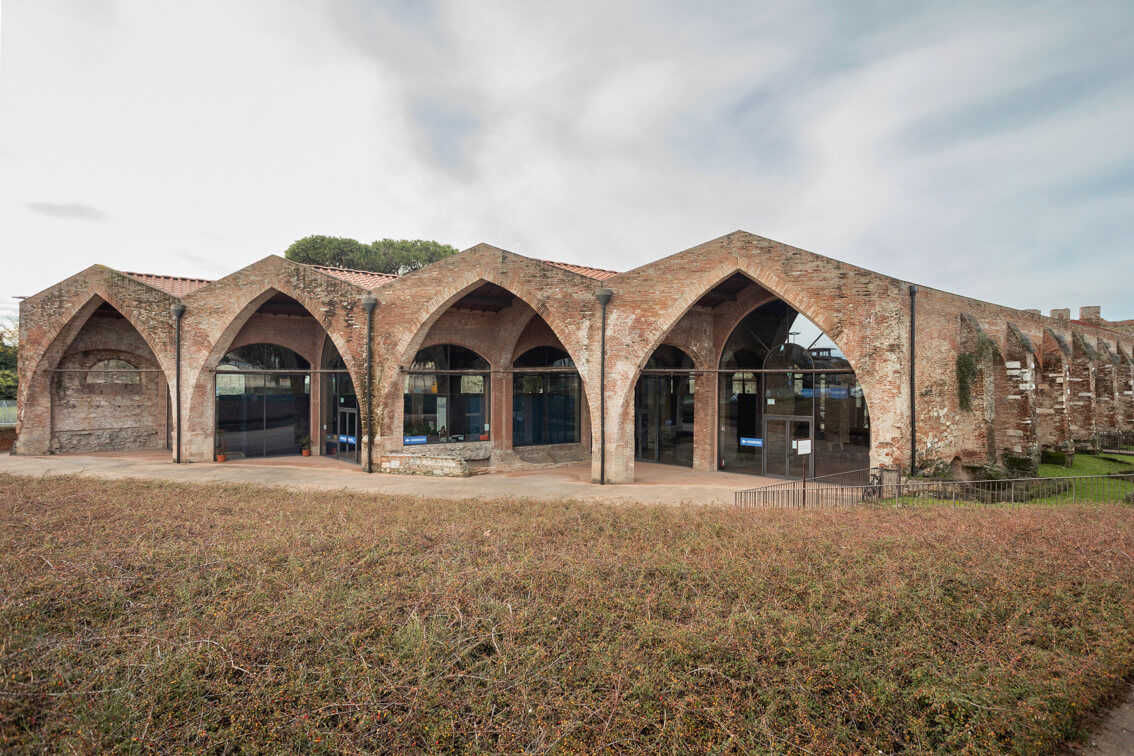
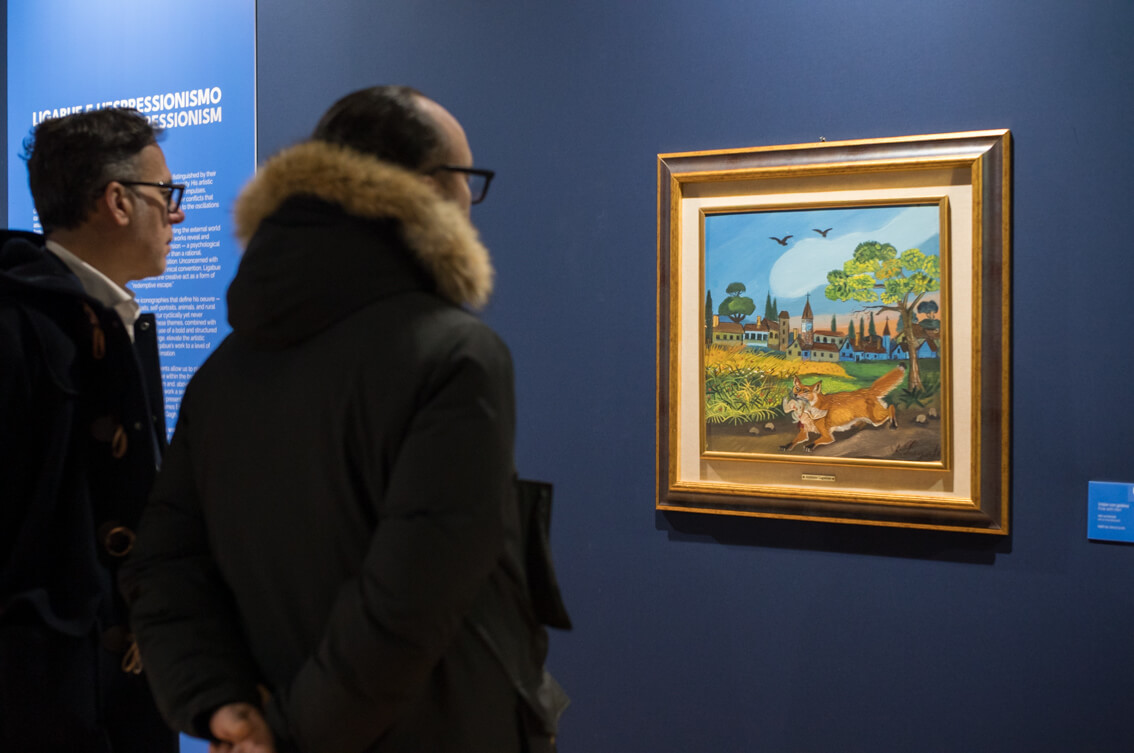
April 2026 (G.T.) – Antonio Ligabue’s art, the product of deep, instinctive need, exerts such a powerful visual effect that it never fails to move and touch the soul of the observer. This is confirmed by the success of the exhibition in Pisa – Antonio Ligabue, Il ruggito dell’anima (The Roar of the Soul) – which opened on 26 December 2025, and had already drawn more than 15,000 visitors by mid-March. Hosted in the evocative Arsenali Repubblicani (The Republican Arsenals of Pisa), it runs until 10 May 2026.
The exhibition celebrates the career of this constantly-evolving visionary genius 60 years after his death, and throws light on his relentless quest as an artist, characterised by a bold use of colour and intense emotional power. His iconographic language, both popular and sophisticated, takes shape in paintings which have a profound impact on the viewer.
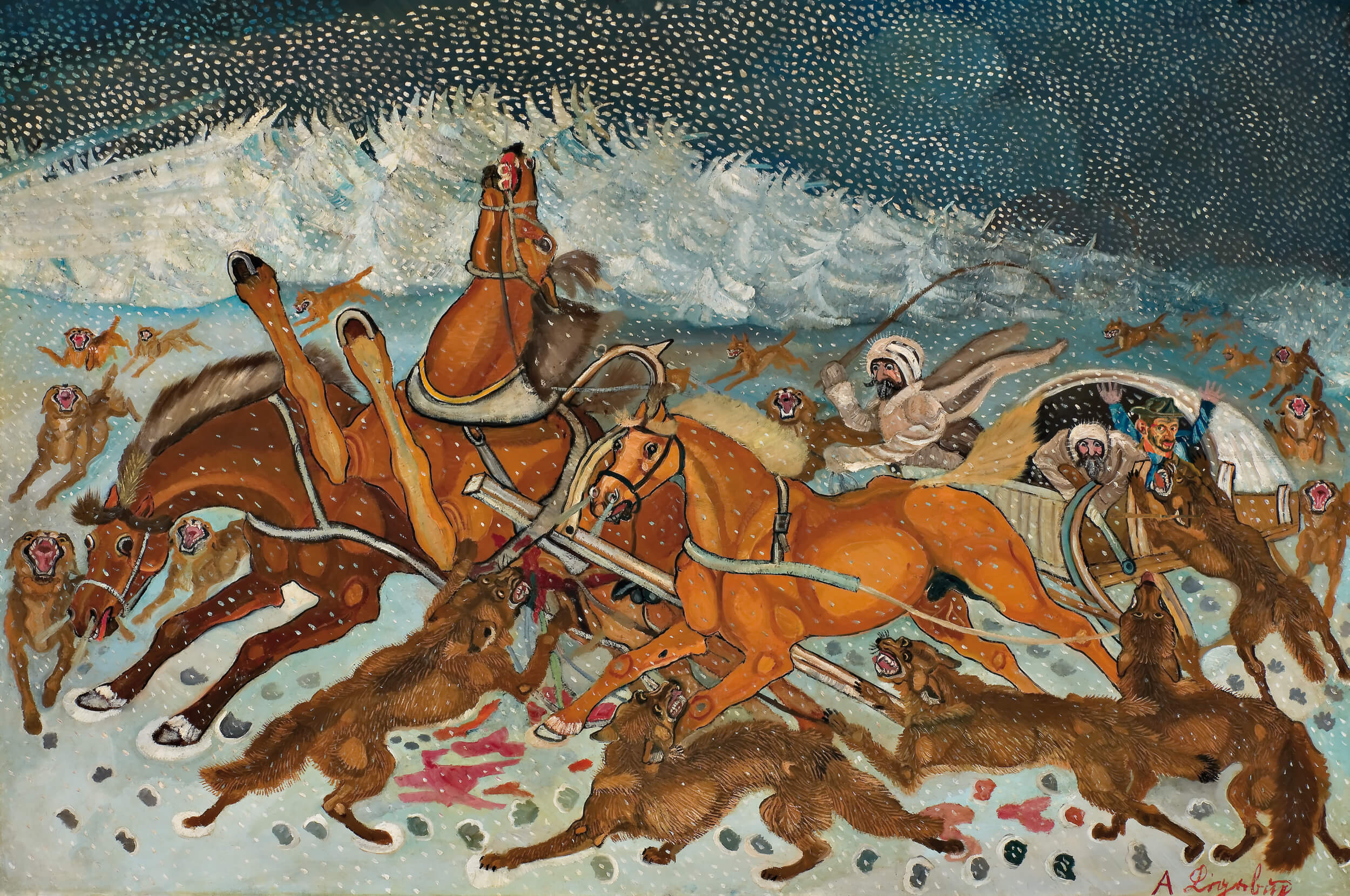
Antonio Ligabue, Traversata della Siberia (Crossing Siberia), (oil on canvas, 1959).
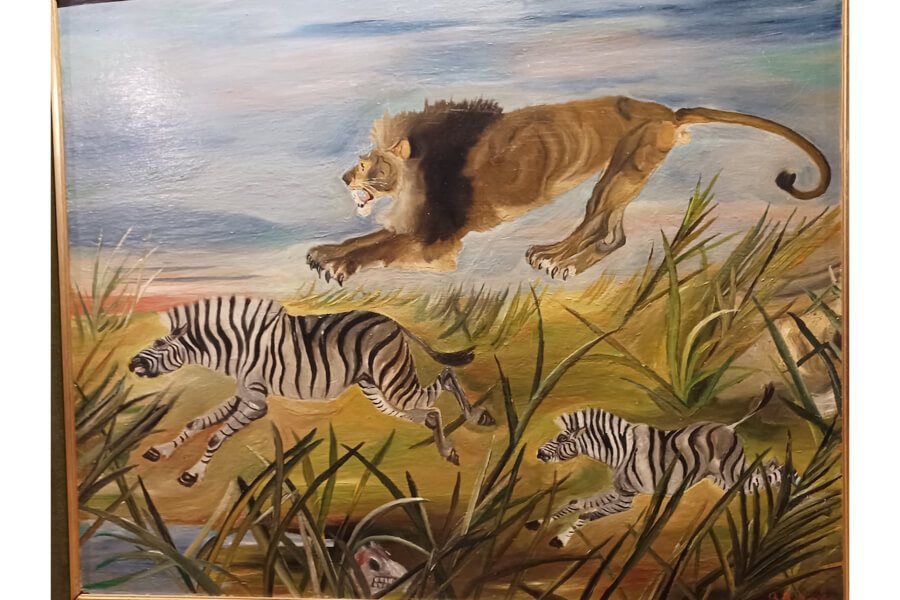
The exhibition leads visitors through the most important seasons of Ligabue’s life and artistic career, revealing some of his most iconic works. These include his famous self-portraits and his iconic depictions of ferocious wild animals: majestic tigers, leopards, birds of prey in action or engaged in struggles for survival. An immersive journey into a harsh, compelling jungle, which powerfully conveys the visual and symbolic intensity of the artist’s inner world, which continues to attract and fascinate generations of admirers of all ages.
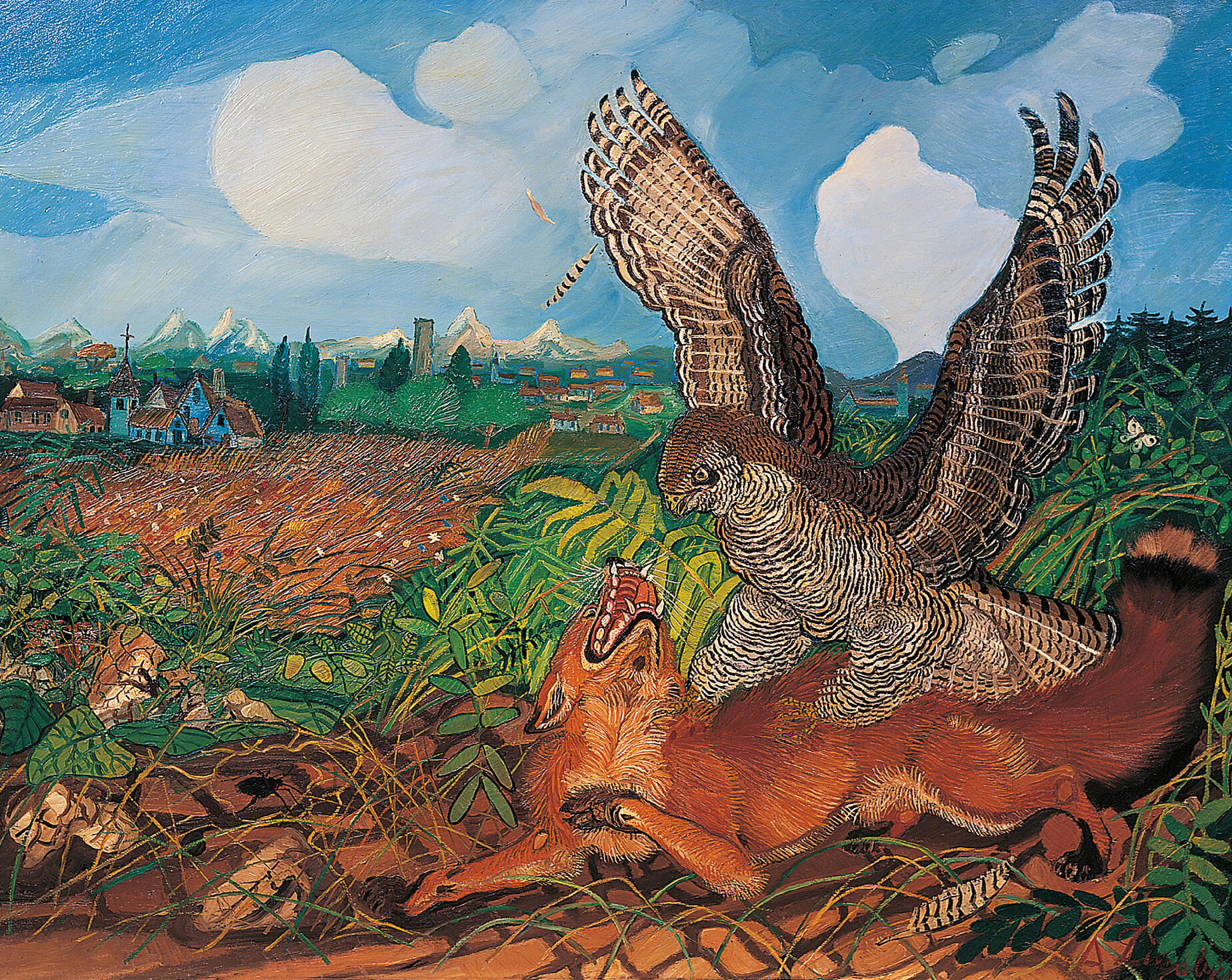
Antonio Ligabue, Volpe con rapace (Fox with Bird of Prey) (oil on canvas, 1967).
SOCIAL CORNER – CURATOR MARIO ALESSANDRO FIORI:
https://www.facebook.com/reel/1260106619549829
THE EXHIBITION ROUTE. The exhibition leads visitors past more than eighty works, with paintings, drawings, sculptures and self-portraits that recount the human journey of a man who knew how to transform pain and loneliness into artistic visions of extraordinary expressive power.
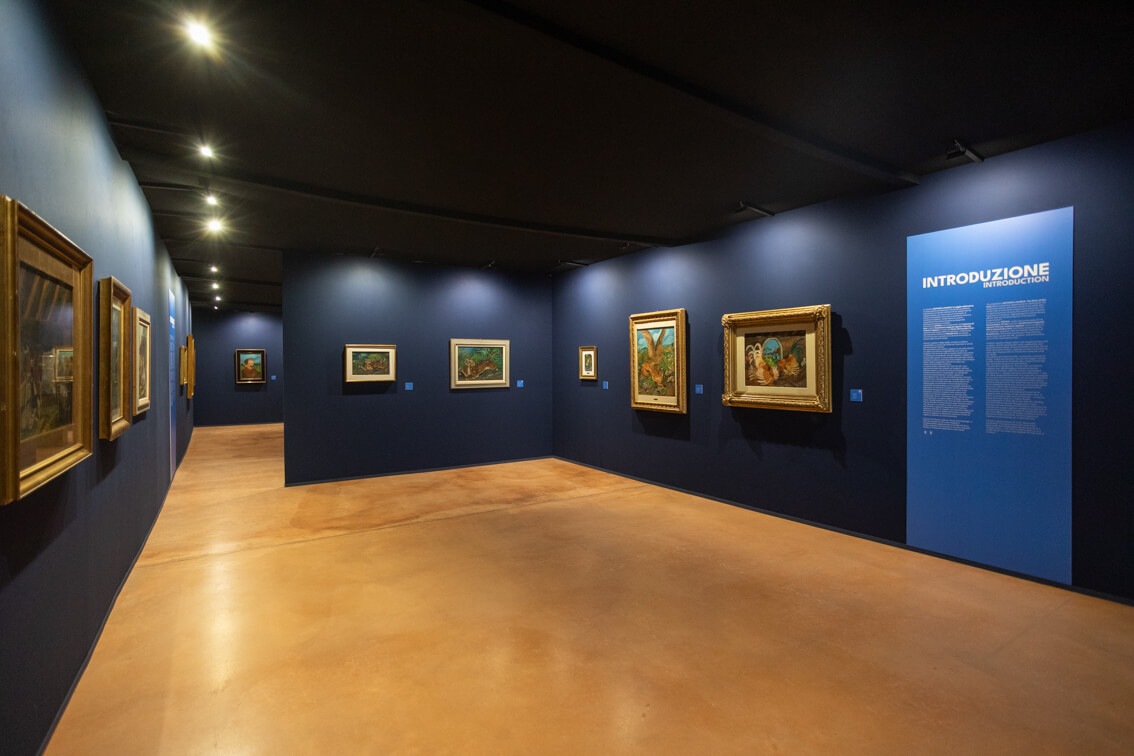
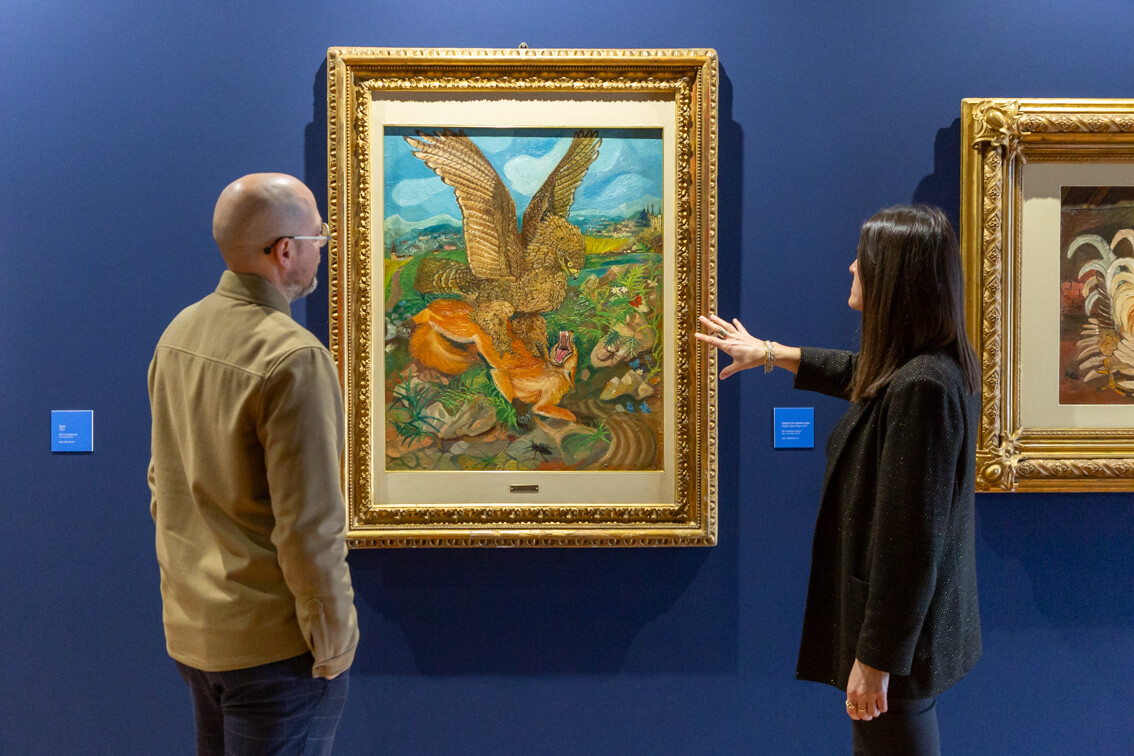
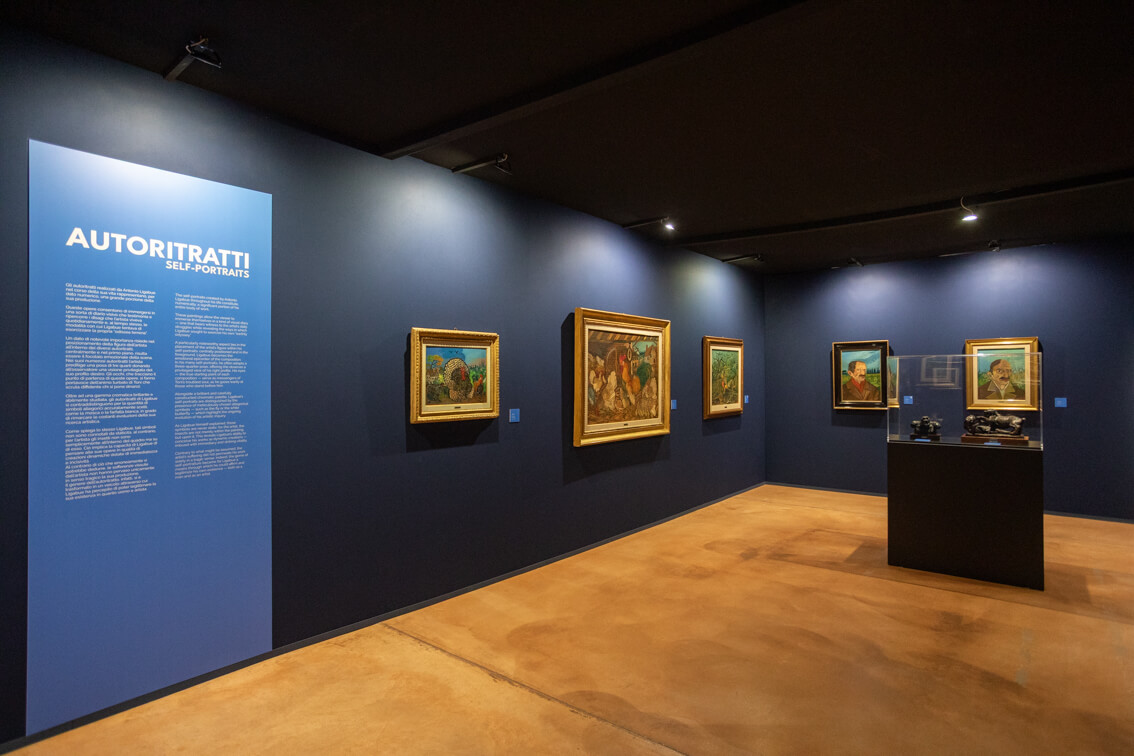
Ligabue paints like someone trying to breathe. His painting does not observe: it devours. Every tiger, every horse, every fighting cock is a part of him, emerging from the canvas with an urgency which grants no respite. In the first room of the exhibition, the animals burst into the space as all-encompassing presences – the rural world and the woodland of the Po Valley merge into a single primordial theatre… in Lotta di galli (Cockfight), violence becomes a dance.
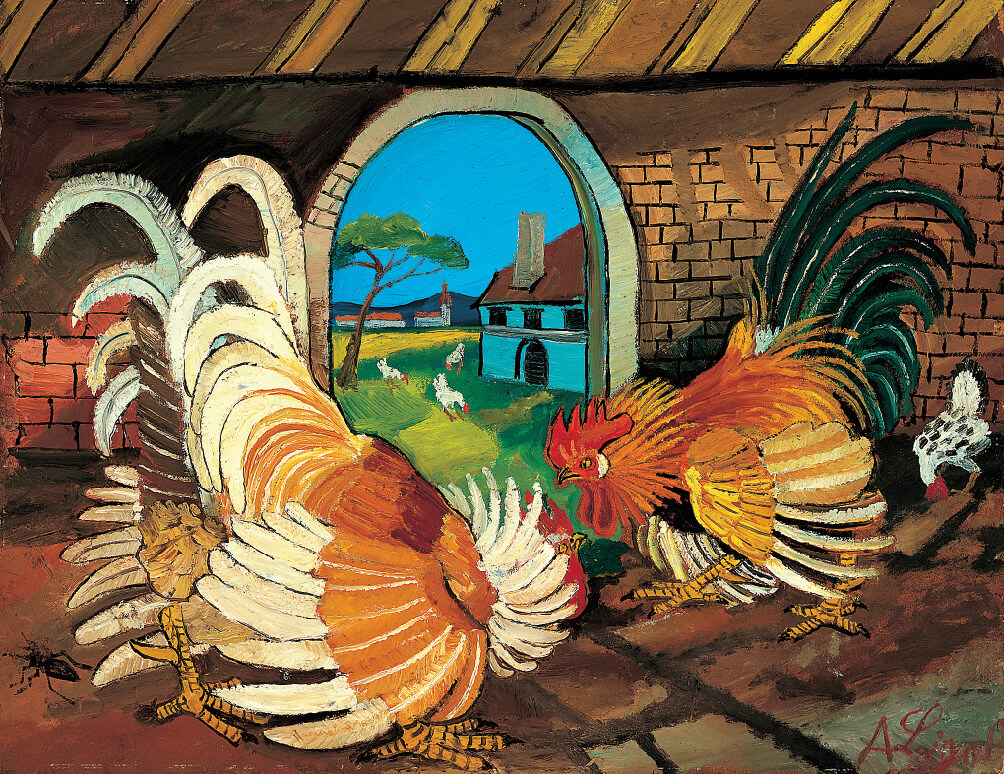
Antonio Ligabue, Lotta di galli (Cockfight), (oil on hardboard, 1954).
Everything Ligabue creates vibrates with a hunger for life that knows no bounds: nature is his language, but also his condemnation. Raised on the margins, exiled and ridiculed, Ligabue finds a way to exist in the world through painting. His forest of colours is a refuge and a confession. When he paints a lion or a tiger, it is he himself he is portraying: the artist roaring against the silence, trying to recognise himself in the gaze of the animal. This is the key to his “roar of the soul”: a sound that comes from the depths, a pain transformed into song (…).
In the final part of the exhibition, the painting becomes more concentrated, almost subdued. In his Ultima Opera (Last Work), Ligabue no longer roars: he listens. The colour draws back, enabling a silence to emerge that is not emptiness, but peace.
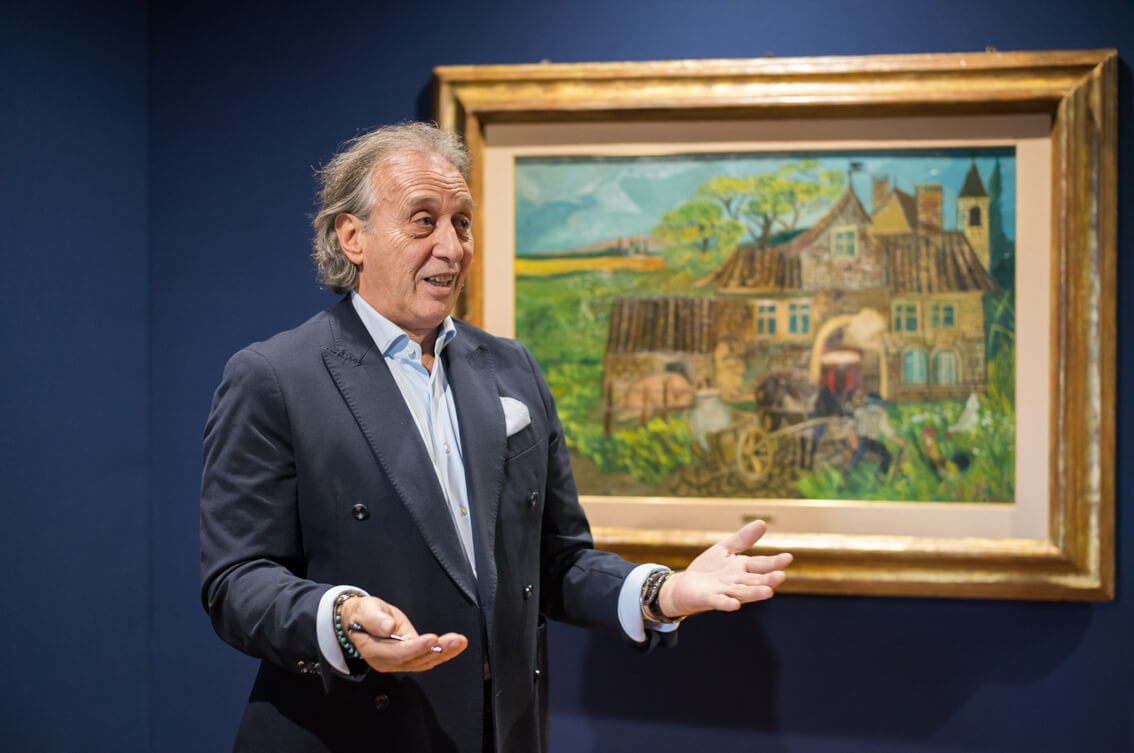
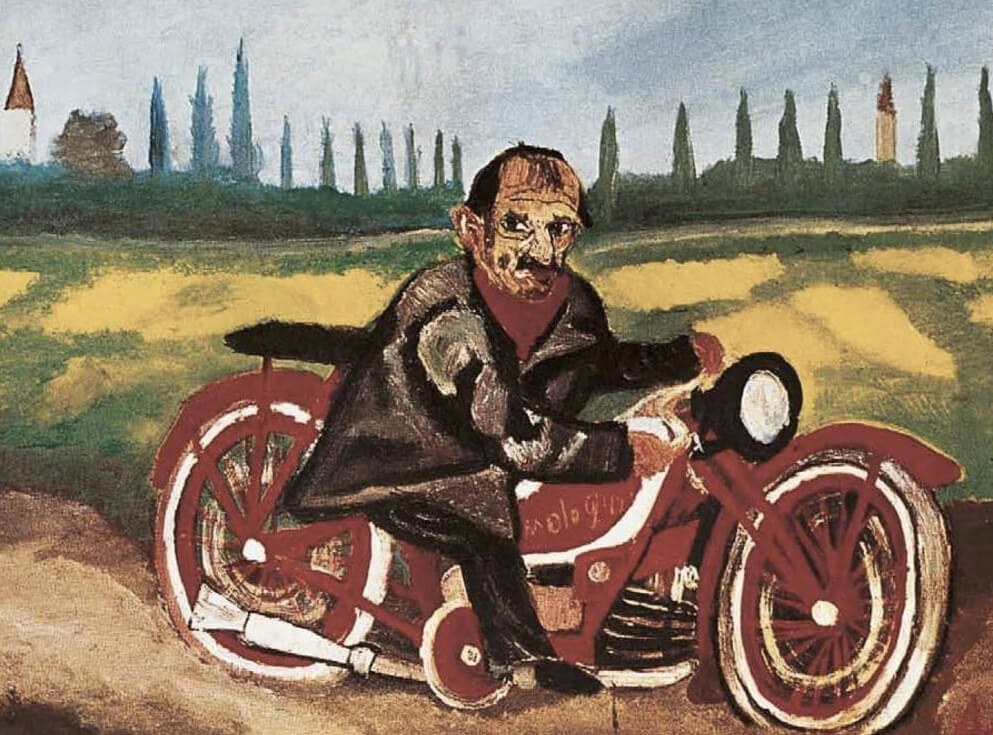
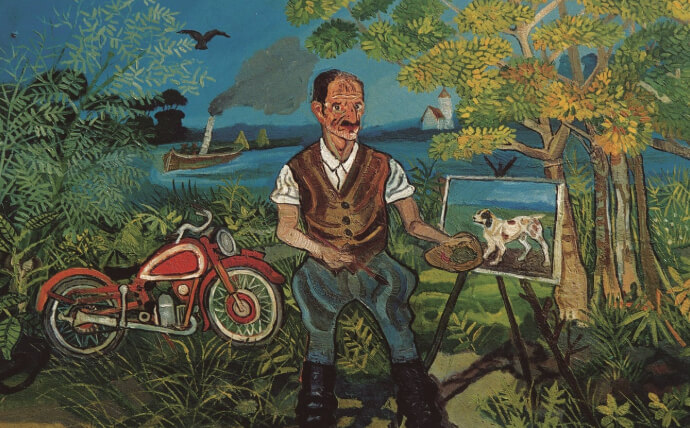
MOTORBIKES AND THE AFFIRMATION OF THE SELF. “In the 1940s, Antonio Ligabue was frequently admitted to the S. Lazzaro psychiatric hospital in Reggio Emilia (Italy). During his stays, doctors allowed him to continue painting, as they realised that this was the only thing that could help him fight his growing madness. During his time in hospital, he painted extensively, and word spread throughout the city of Reggio Emilia, among the aristocrats and entrepreneurs, who began to take an interest in this mysterious painter who produced an enormous number of works, all of them extraordinary. Once he was released from the asylum, his fame spread beyond the borders of Emilia, reaching as far as Brescia, where the Gnutti family commissioned him to paint many portraits. In addition to payment for the works, the Gnutti family gave him a Guzzi motorbike as a gift…a red one, which is on display in this exhibition. In the saddle of this bike, Ligabue began touring the Reggio Emilia lowlands, piercing his paintings through the sides and tying them to his back, to display and sell to the wealthy landowners in the area.
(Wide magazine archive).
For Ligabue, the motorbike became one of the most important things in his life, and indeed, it even appears in some of his paintings, such as Autoritratto con moto (Self Portrait with Motorbike).He would end up owning nine of them, all identical, to prove to himself that he could afford them and that he had succeeded in establishing himself as a good painter.”
From the Moto Guzzi Alce to the Falcone, the motorcycles bearing the Mandello eagle were the artist’s faithful companions for many years.
Source: press release and card on motorbike by ARTIKA. Photo courtesy.
Biography of Antonio Ligabue, in brief:
https://fondazioneaatperligabue.it/biografia/
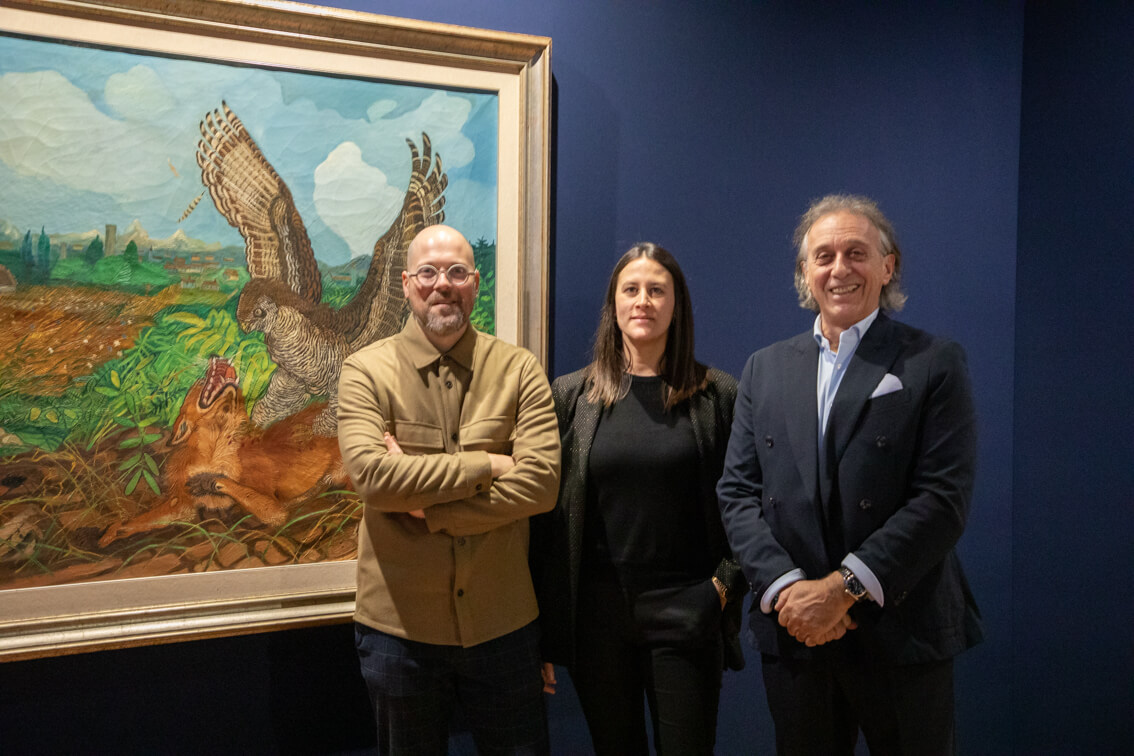
Exhibition created by ARTIKA, by Daniel Buso and Elena Zannoni, sponsored by the Municipality of Pisa and the Augusto Tota Foundation for Antonio Ligabue (an institution that has long been committed to promoting the artist’s work; the founder Augusto Agosta Tota’s daughters, Cinzia and Simona, continue his work); exhibition curated by Mario Alessandro Fiori (Secretary General of the Foundation), in collaboration with the artistic direction of BESIDE ARTS.
ARTIKA: https://www.artika.it/mostra/antonio-ligabue-il-ruggito-dellanima/
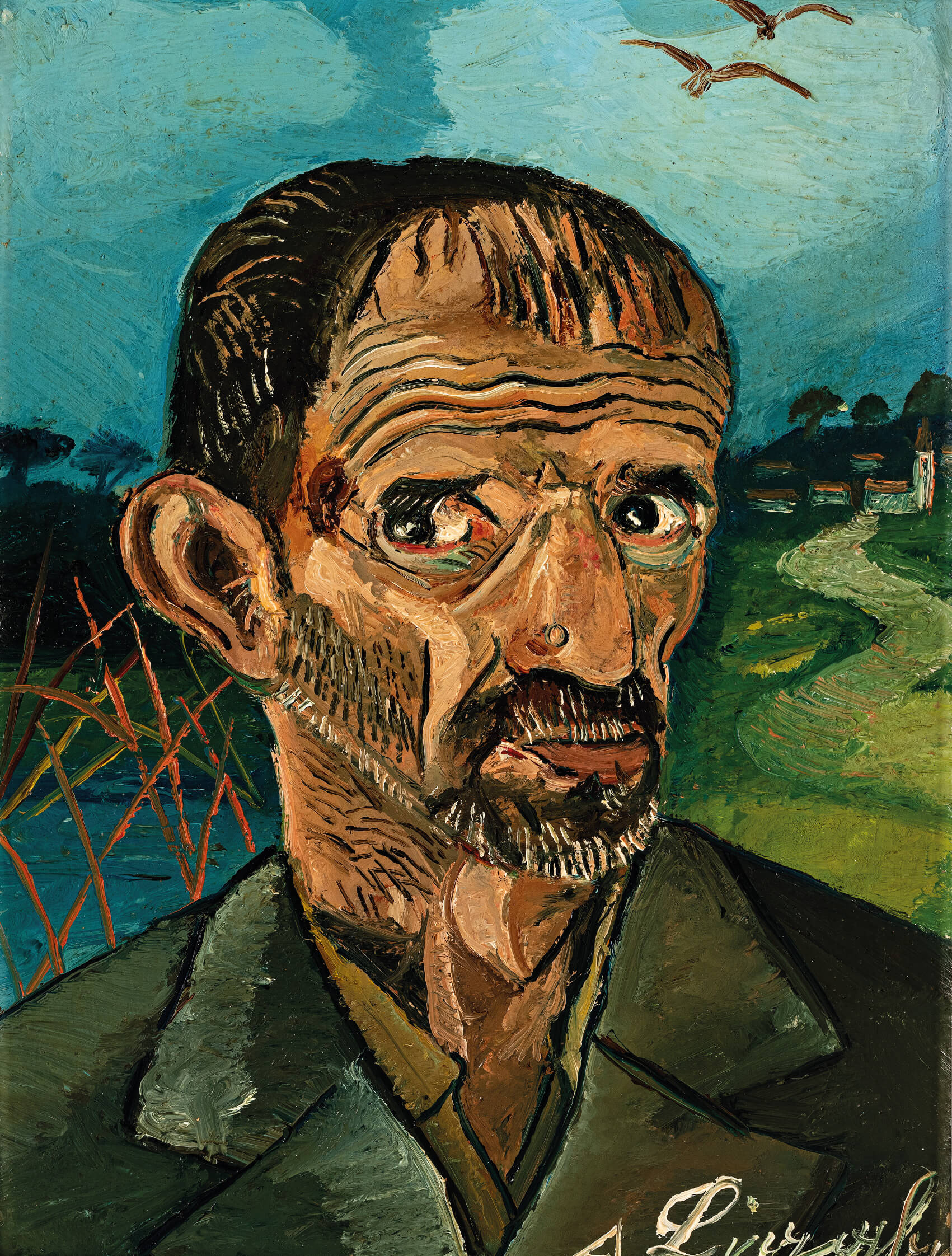
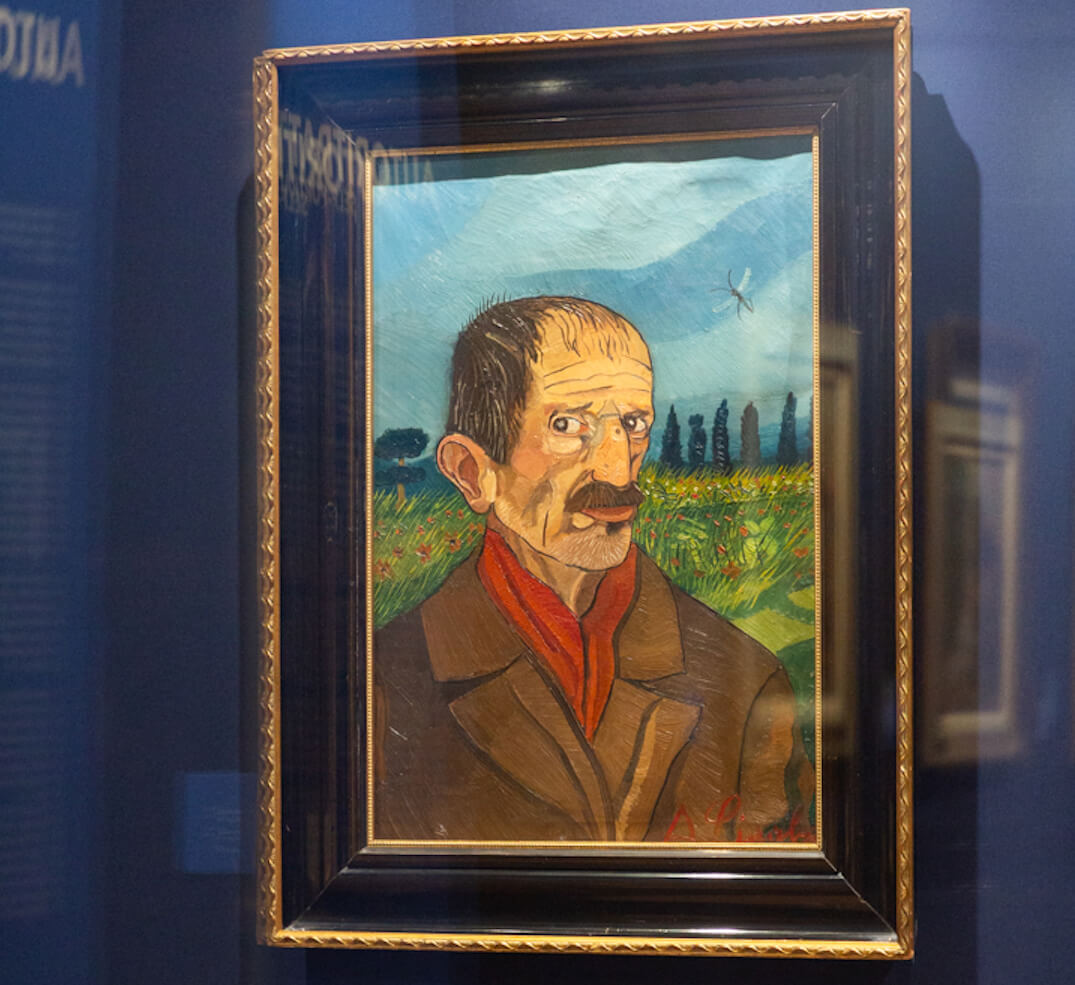
Antonio Ligabue, Self-Portrait (oil on hardboard, 1956).
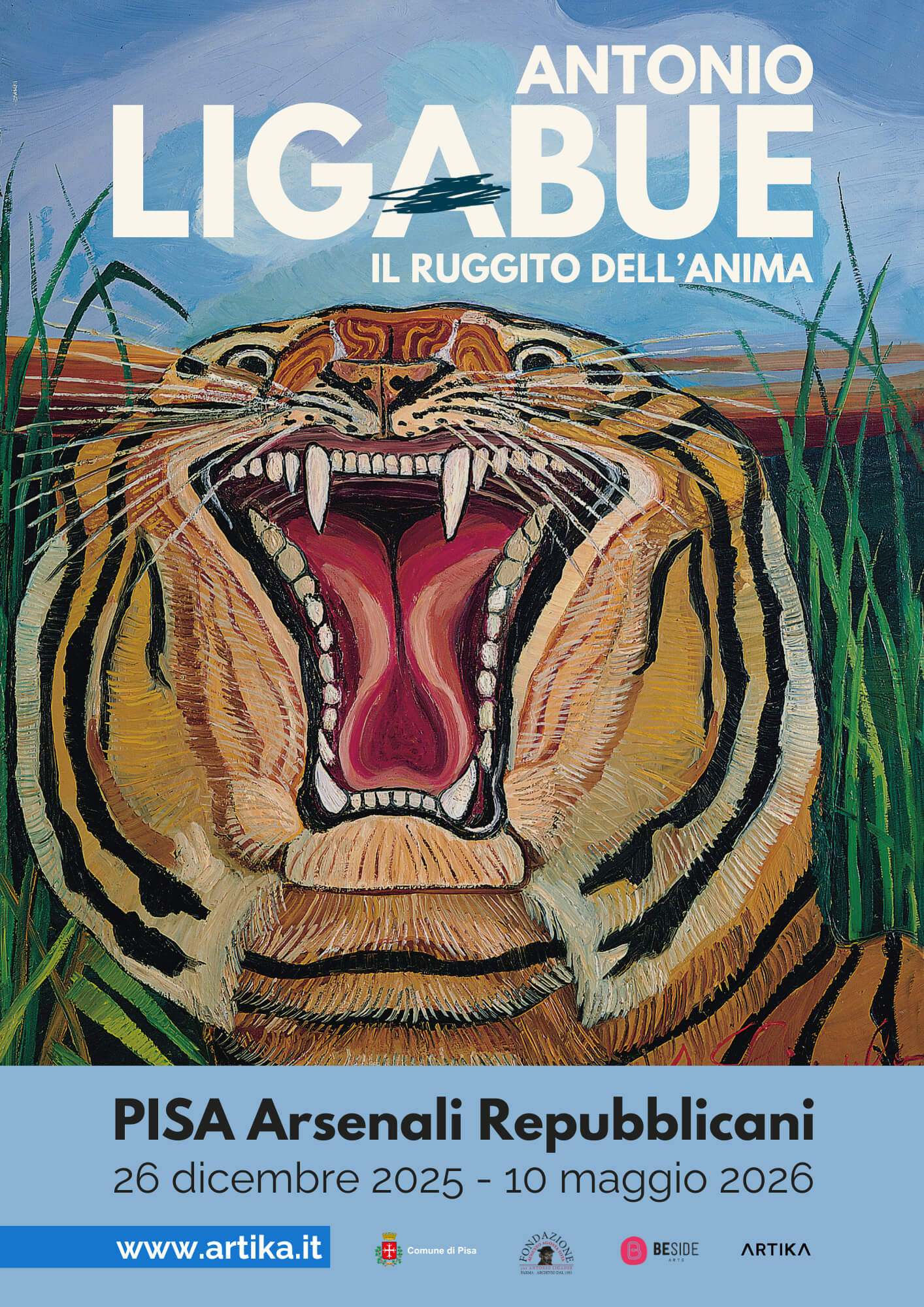
The poster for the exhibition in Pisa.
Augusto Agosta Tota Foundation, Parma (Italy), 1983 Archive:
https://fondazioneaatperligabue.it/
https://www.facebook.com/csAntonioLigabue
The location: The Republic Shipyards of Pisa.
https://www.terredipisa.it/en/attrazione/pisa-the-republican-shipyards-arsenali/