
“ART, TECHNIQUE AND EMOTION” IS THE MOTTO OF THE TEAM THAT DEVELOPS WINNING MOTORCYCLE PROJECTS, PRESENTED DURING THE MEETING AT THE APRILIA RACING HEADQUARTERS IN NOALE
February 2026 - Article and photos from QuartodiLitro.
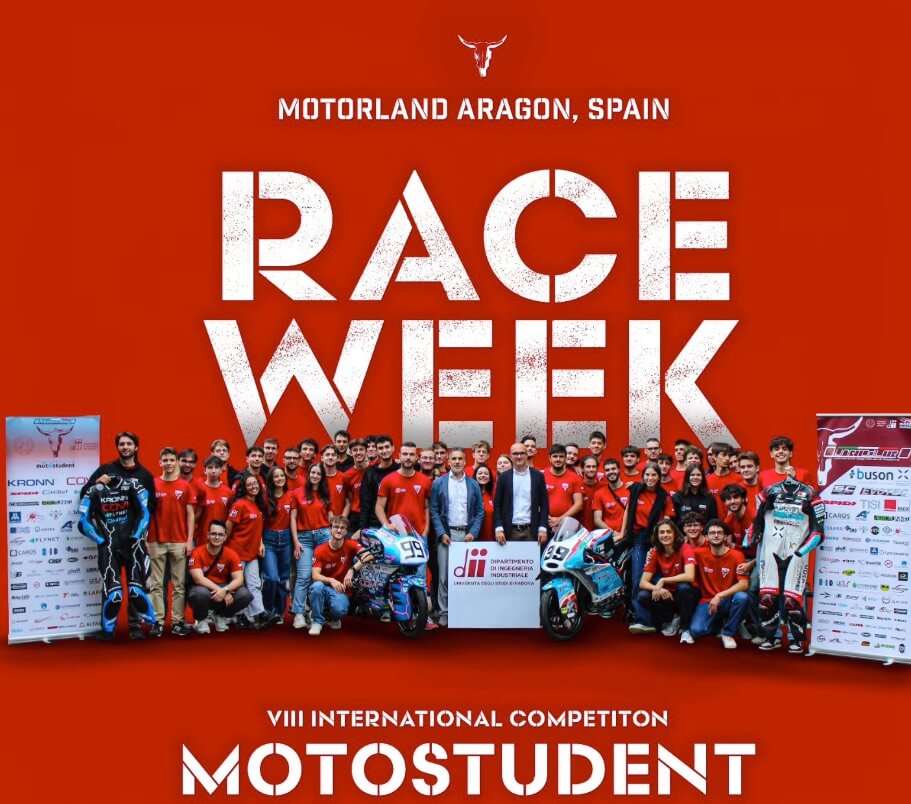
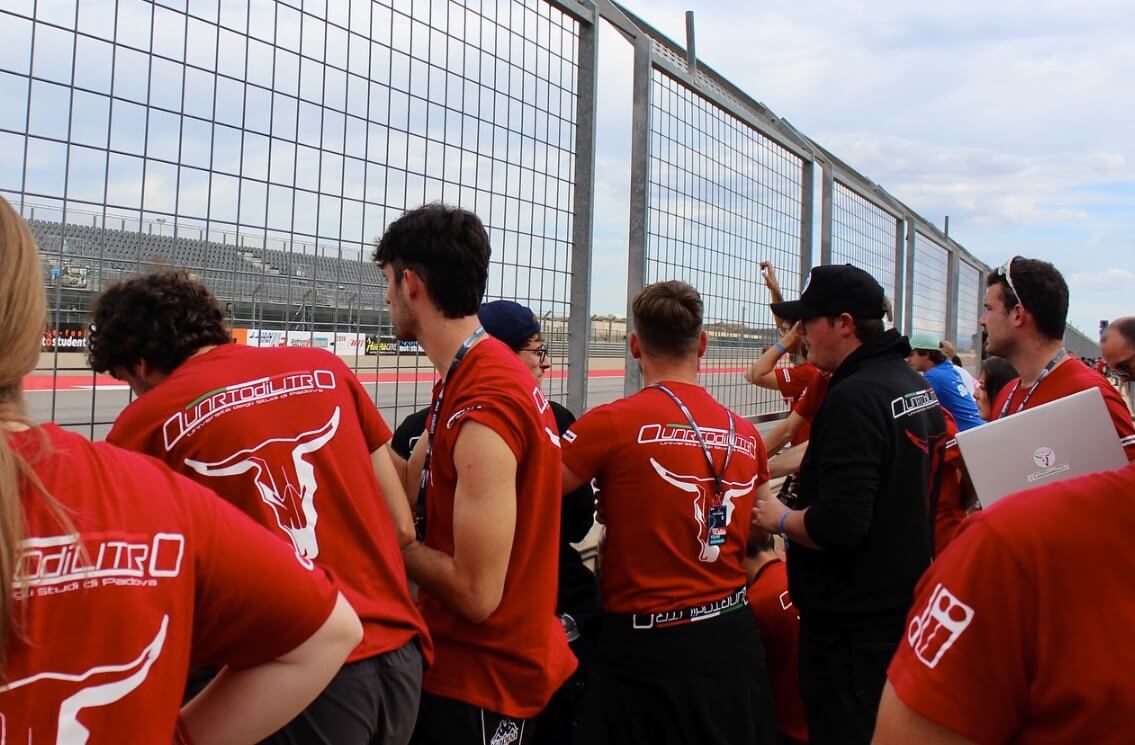
QuartodiLitro is the student motorcycle project established at the Department of Industrial Engineering (DII) of the University of Padua, founded in 2014 by Prof. Vittore Cossalter, with a view to combining ‘art, technology and emotion’ - a motto that still embodies the team's identity today. Since its birth, the project has had one clear goal: to offer students a practical educational experience, providing them with the opportunity to design, build and race competition bike prototypes, competing against other universities from all over the world.
QuartodiLitro operates within the broader context of the MotoStudent International Competition, a biennial international university event that takes place at the MotorLand Aragón circuit in Spain. The competition is not limited solely to the performance on the track, however - instead, it evaluates the teams as a whole, taking both the quality of the technical-industrial design phase and the management, organisation and prototype development skills of each group into consideration.
https://www.motostudent.com/
https://www.facebook.com/MotoStudentOfficial/photos
“At MotoStudent, every prototype is more than a student project; it's a testing ground for the future of mobility. Each team pushes the boundaries of engineering, introducing innovations that transcend competition. From advanced electronics to energy management systems and aerodynamics, to new materials and mechanical solutions, many of these ideas are later adopted or inspire real-world applications in the automotive and motorsports industries. MotoStudent serves as a living laboratory, where students test, optimize, and validate solutions under real-world racing conditions, an experience that mirrors industry processes. Every lap on the track is more than just performance: it's a ‘proof of concept’ for the engineers of tomorrow. Innovation, creativity, and practical engineering converge here. Each team's contribution is a step toward the technologies we'll see on our streets and tracks in the near future.”
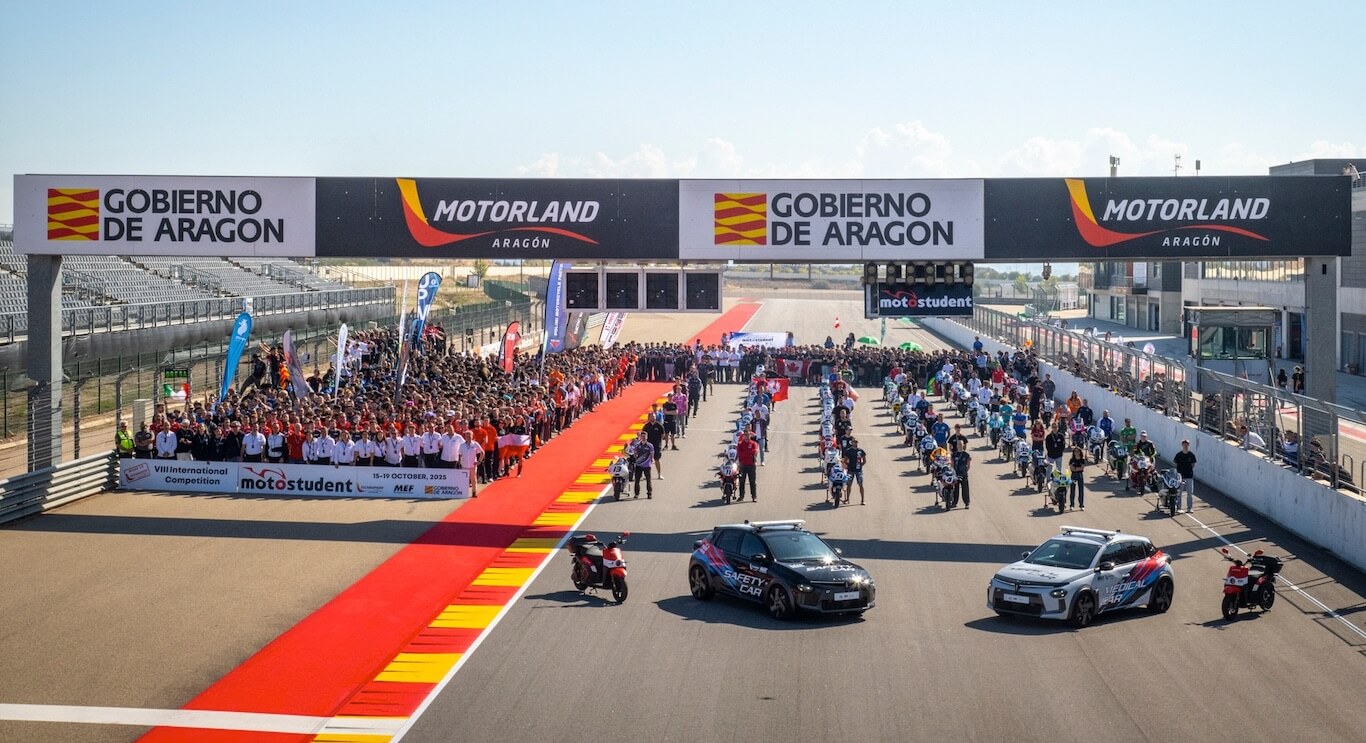
MotoStudent 2025 - 8th edition, over 13,000 participants, 1,200 students from 20 countries:
https://www.motostudent.com/blog/index.php?entryid=23
Over the years, the initiative has grown and evolved, gradually expanding the scope of its activity. Beginning in 2021, the development of the internal combustion prototype was coupled with the development of the electric prototype, kicking off a period of significant technical and organisational growth. In addition, since 2023, the combustion prototype has been converted to the E-Fuel category, and now uses 100% sustainable fuel.
Today, QuartodiLitro is developing two motorcycles in parallel, one electric and one E-Fuel. This choice represents a real challenge, both from a technical and an organisational perspective, making the team one of the very few universities competing in both the MotoStudent categories, whilst maintaining a single, cohesive team and a shared approach to work. Working on two projects has not resulted in the division of resources, but instead, has strengthened the collaborative relationship and the exchange of skills between the departments.
The team is composed of approximately one hundred students from various degree programs, organized into technical and management areas: mechanics, vehicle dynamics, aerodynamics, engine and powertrain, electronics, as well as marketing, business, and logistics. The project is conceived, developed, and managed entirely by the students, who independently manage both the technical and organizational and management aspects, from team coordination to activity and resource planning. They all collaborate in an integrated manner, following the entire vehicle development cycle. Students participate in every phase of the project, from CAD design and numerical simulations to component manufacturing, assembly, testing, and track activities, providing a comprehensive learning experience, from the roles of designers to mechanics during competitions.
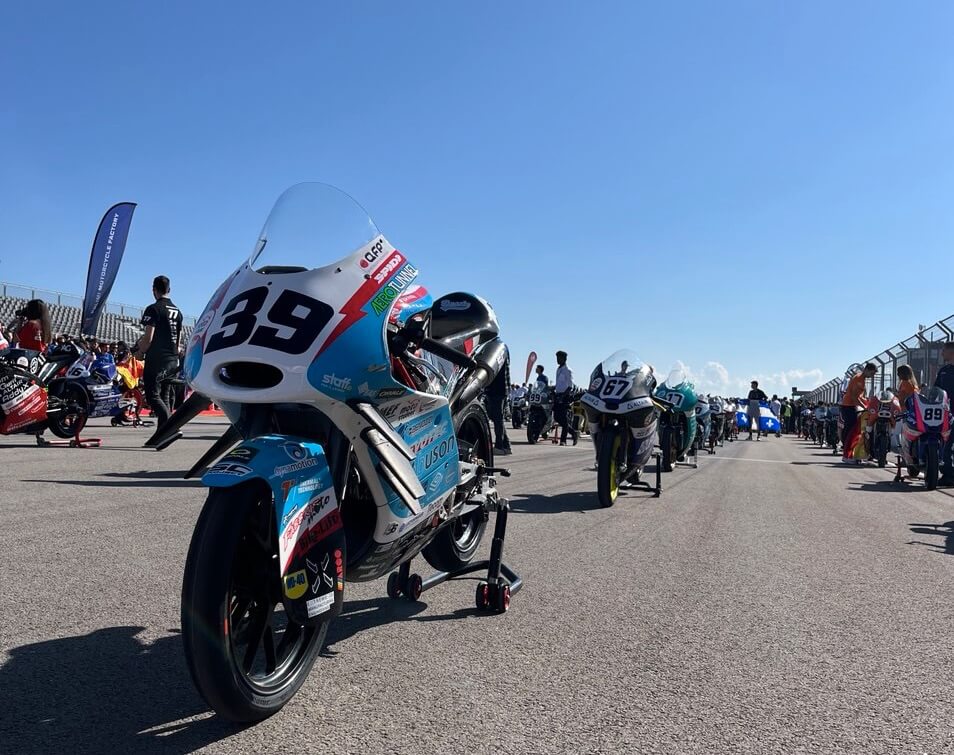
MotoStudent is divided into two main phases: the first, MS1, is dedicated to the industrial project stage, and includes the presentation of exhaustive technical and managerial documentation which describes the prototype from conception to realization. The second phase, MS2, takes place on the track and includes static tests, dynamic tests and the final endurance race, where reliability, performance and strategy are put to the test under real conditions.
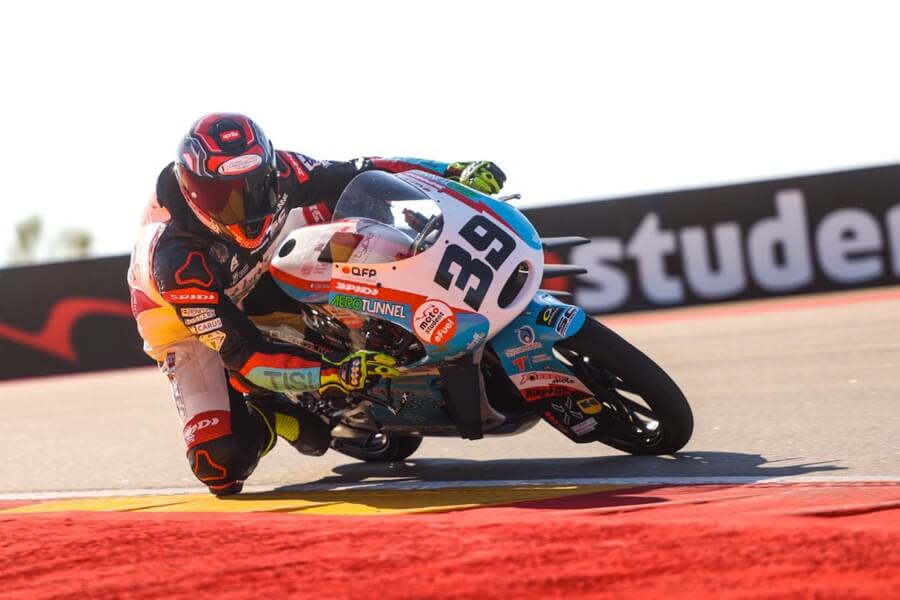
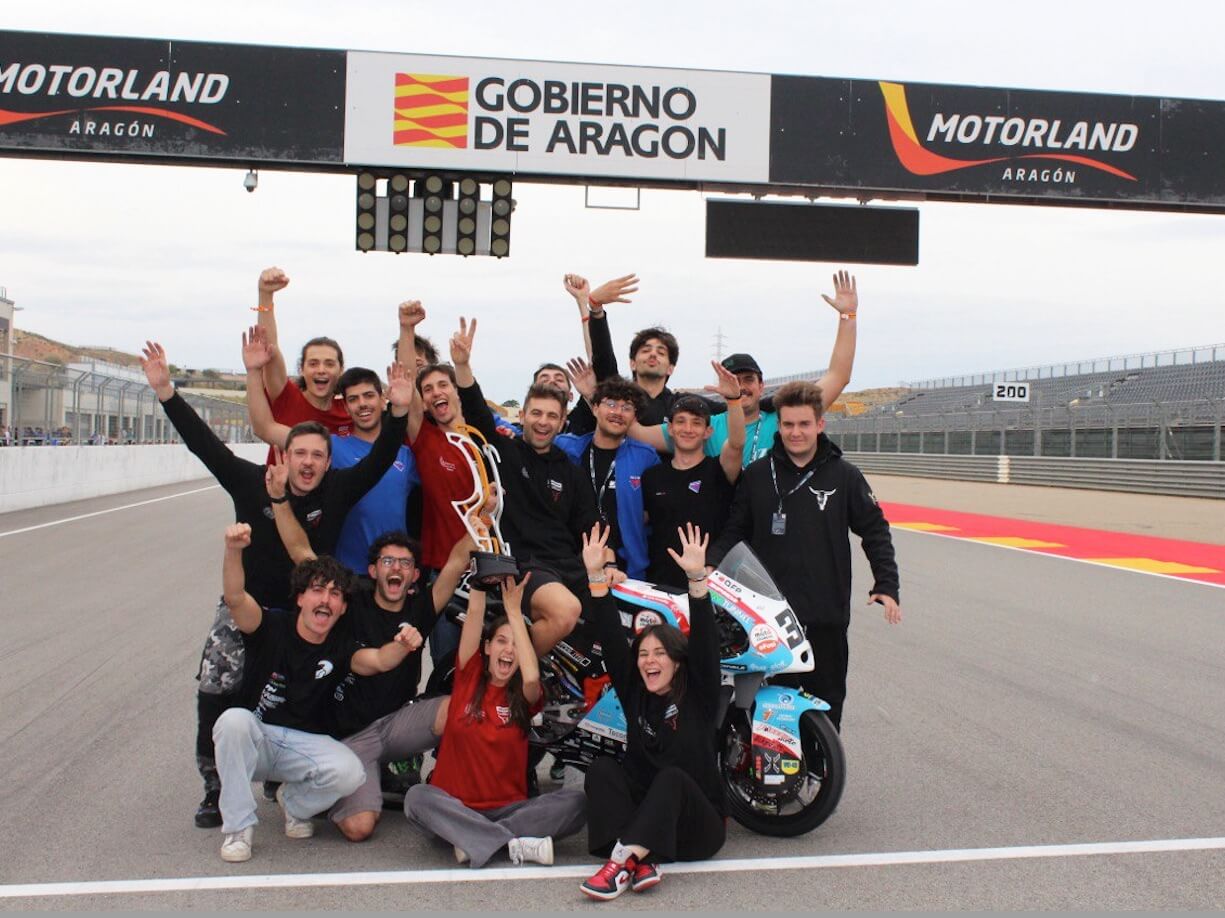
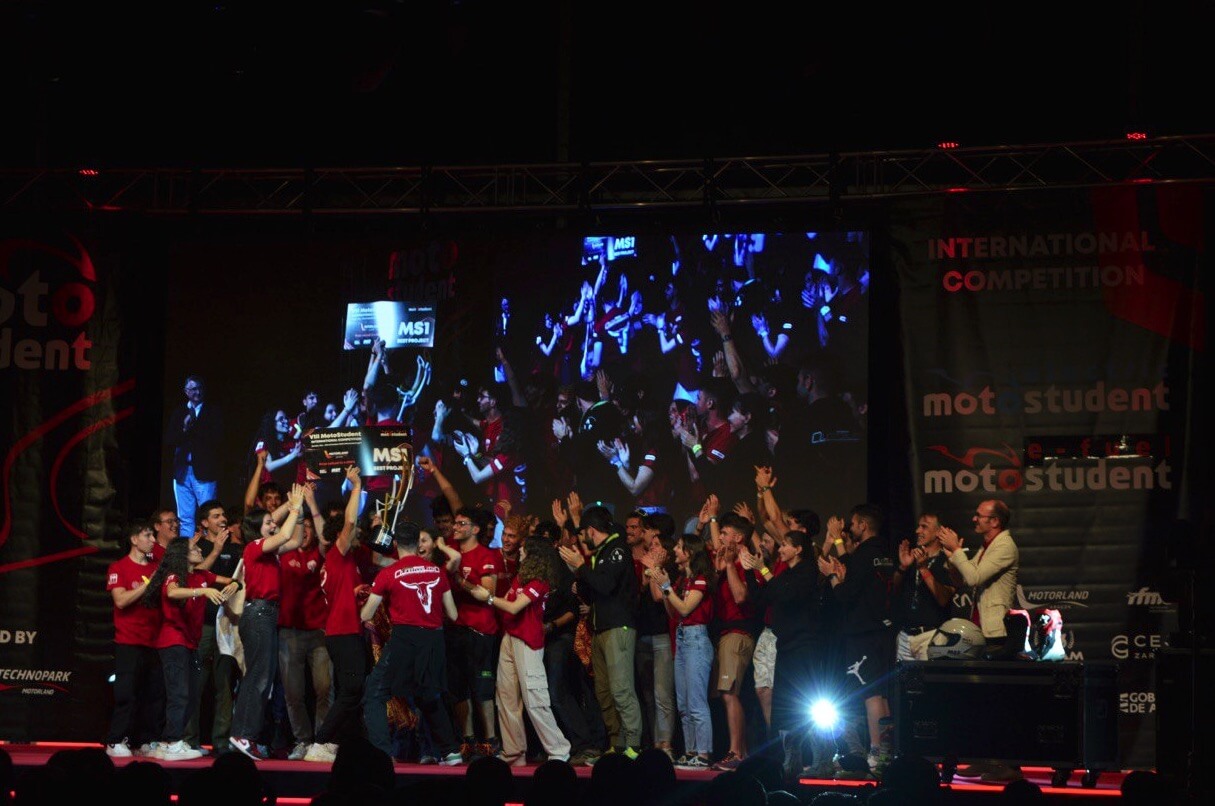
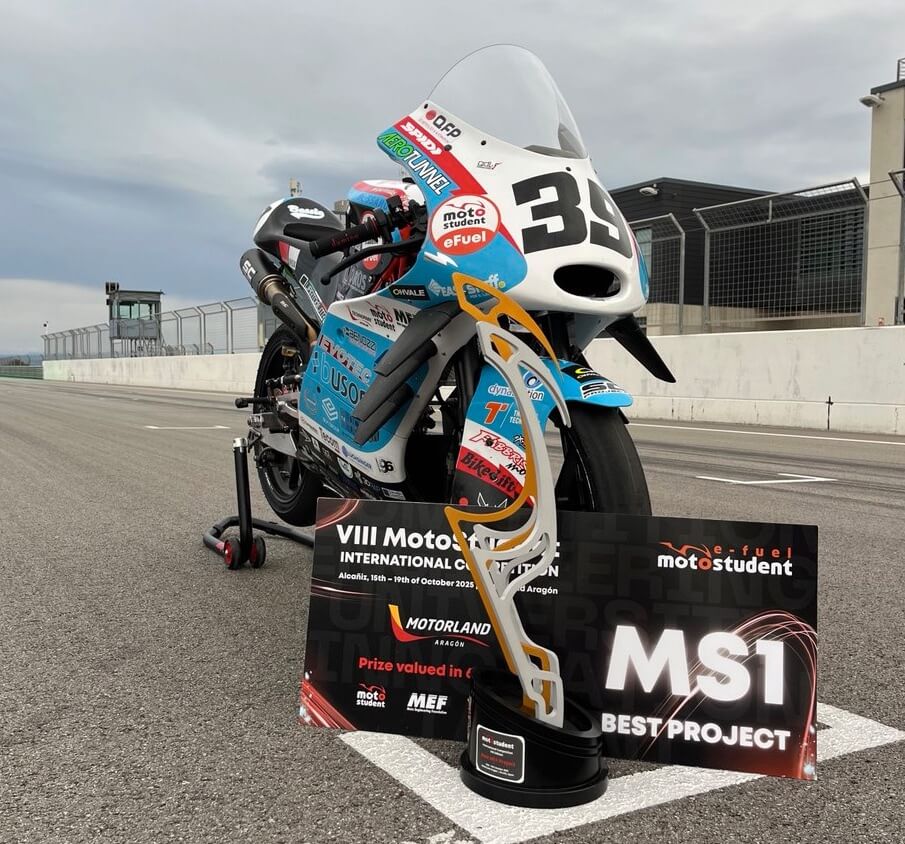
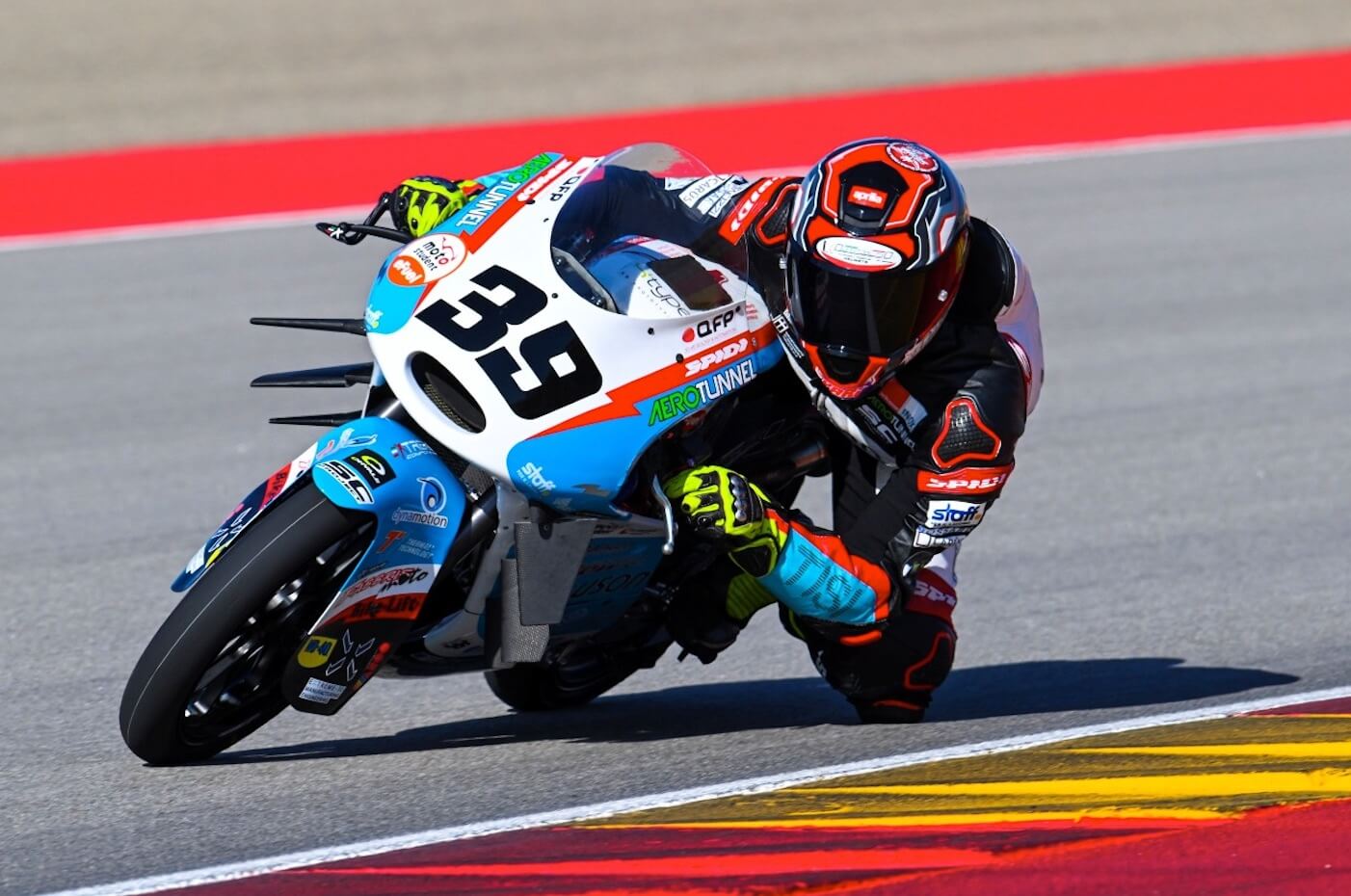
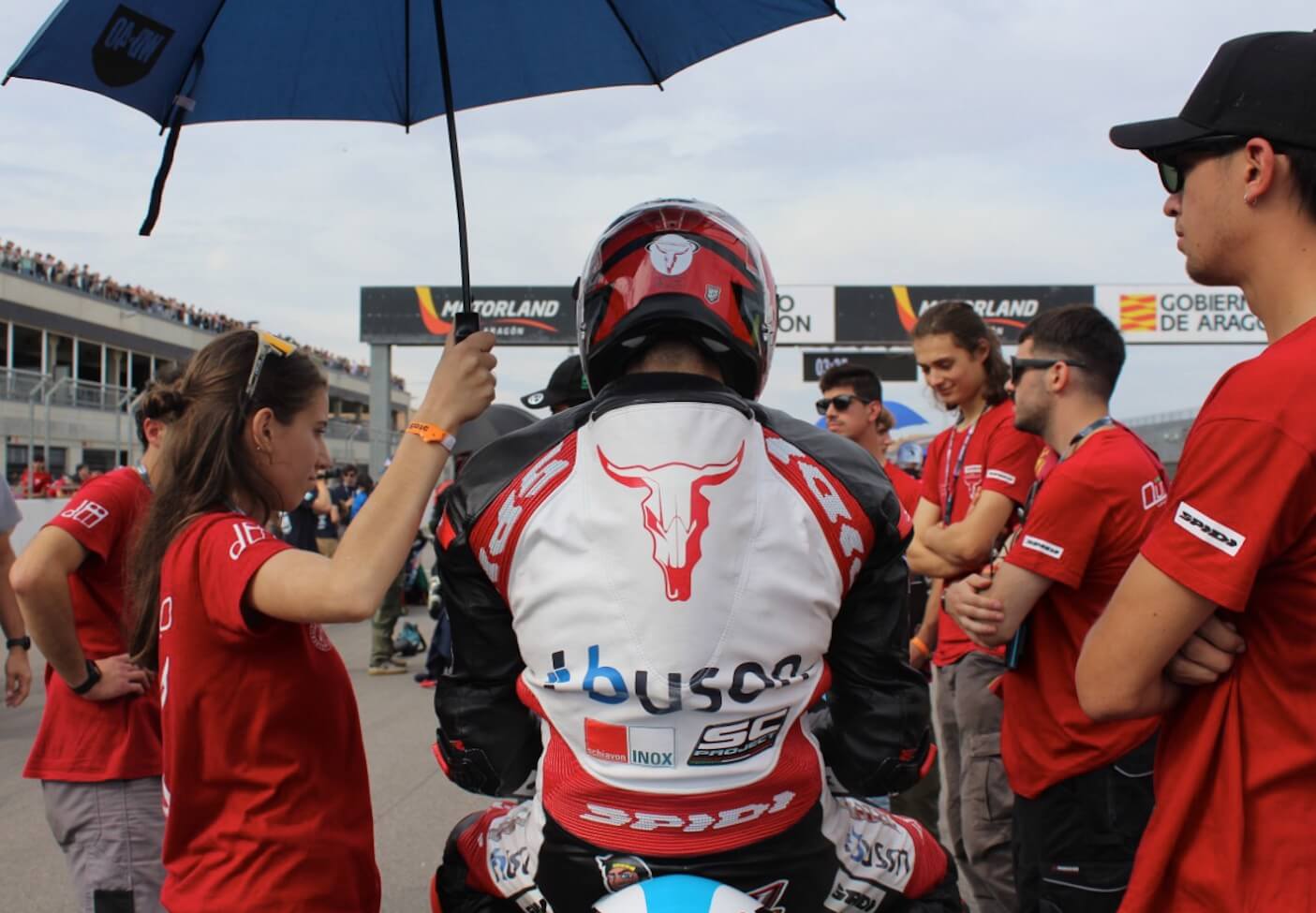
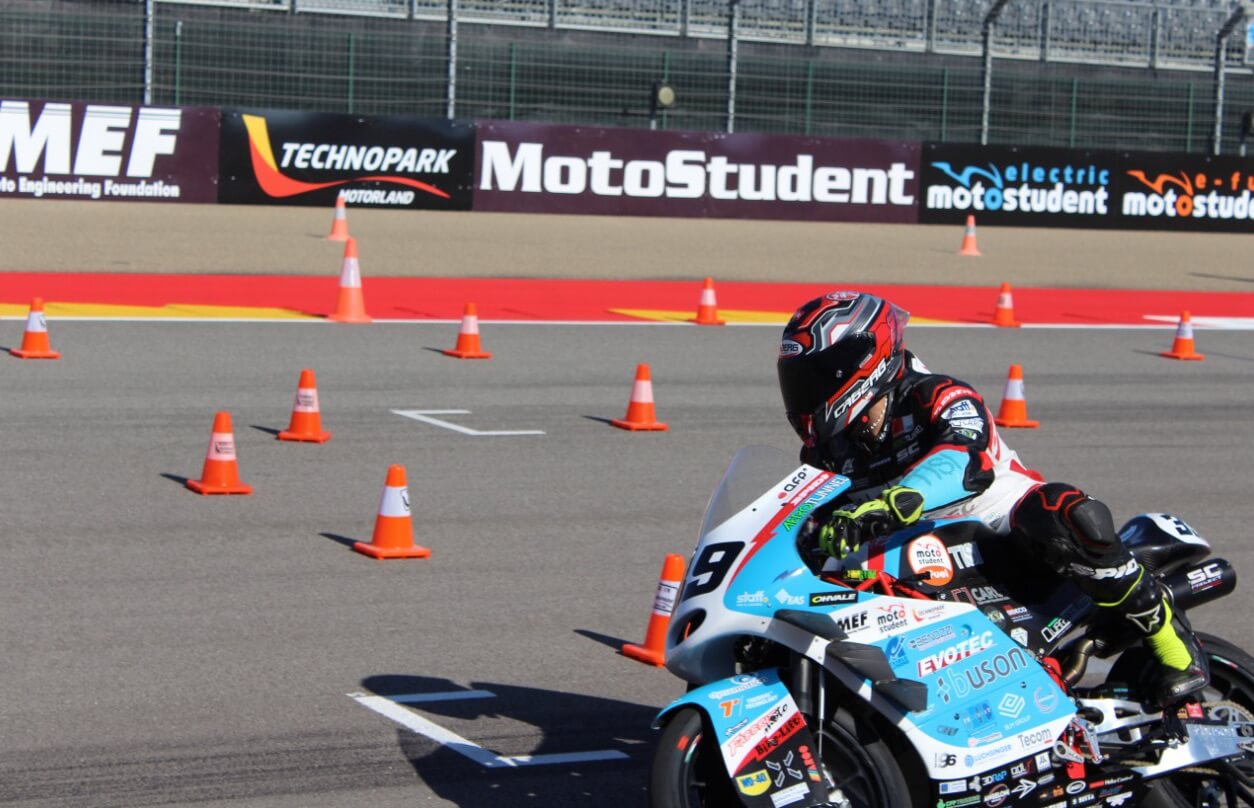
The MotoStudent VIII edition, which saw the team take to the MotorLand Aragón circuit between 15-19 October, led to historic results being achieved by QuartodiLitro, especially in the E-Fuel category. The work carried out during the entire two-year cycle was awarded with the 1st place in the MS1 Best Project (E-Fuel) ranking and 2nd place in Best Design, awards that recognise the quality of the technical project, and the top-level engineering approach of the team. The prototype also proved to be reliable and competitive on the track, enabling QuartodiLitro to finish the final race in fifth position and earning 3rd place Overall in the E-Fuel category, confirming the solidity of the work done not only on paper, but also in real operating conditions.
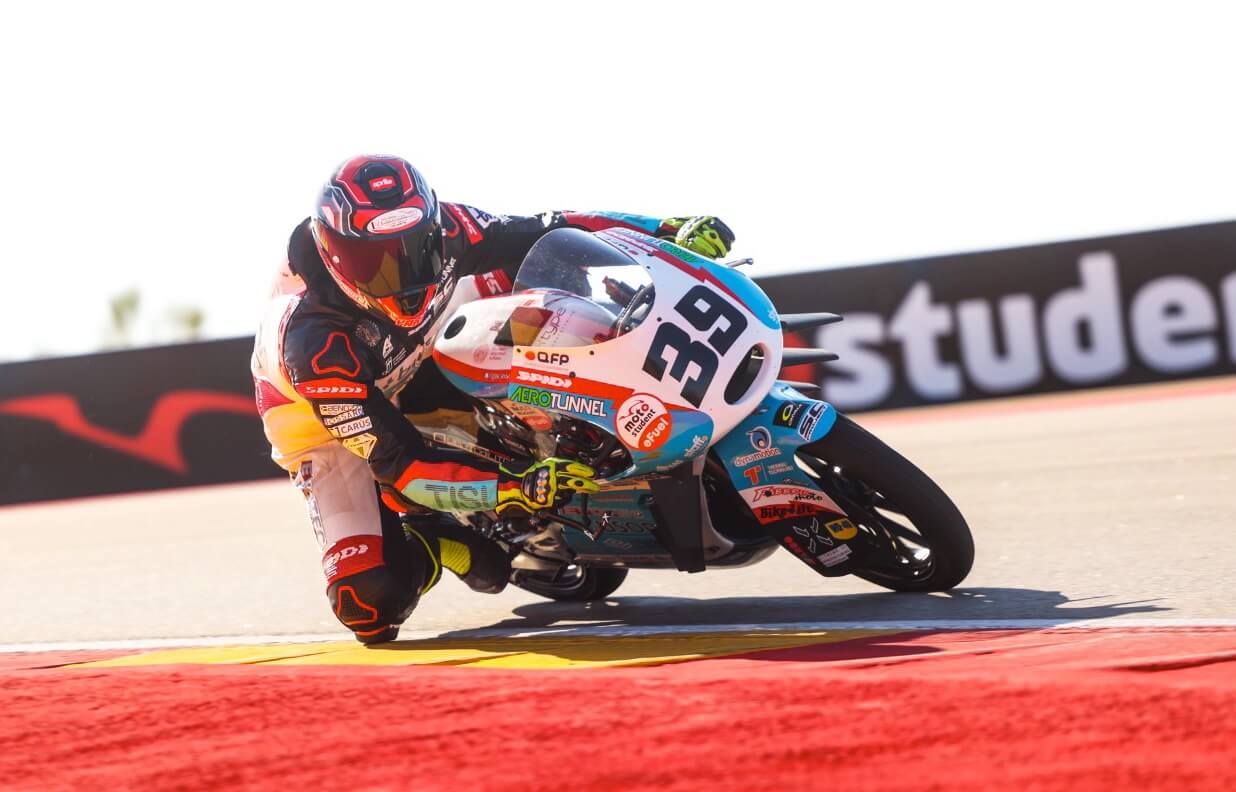
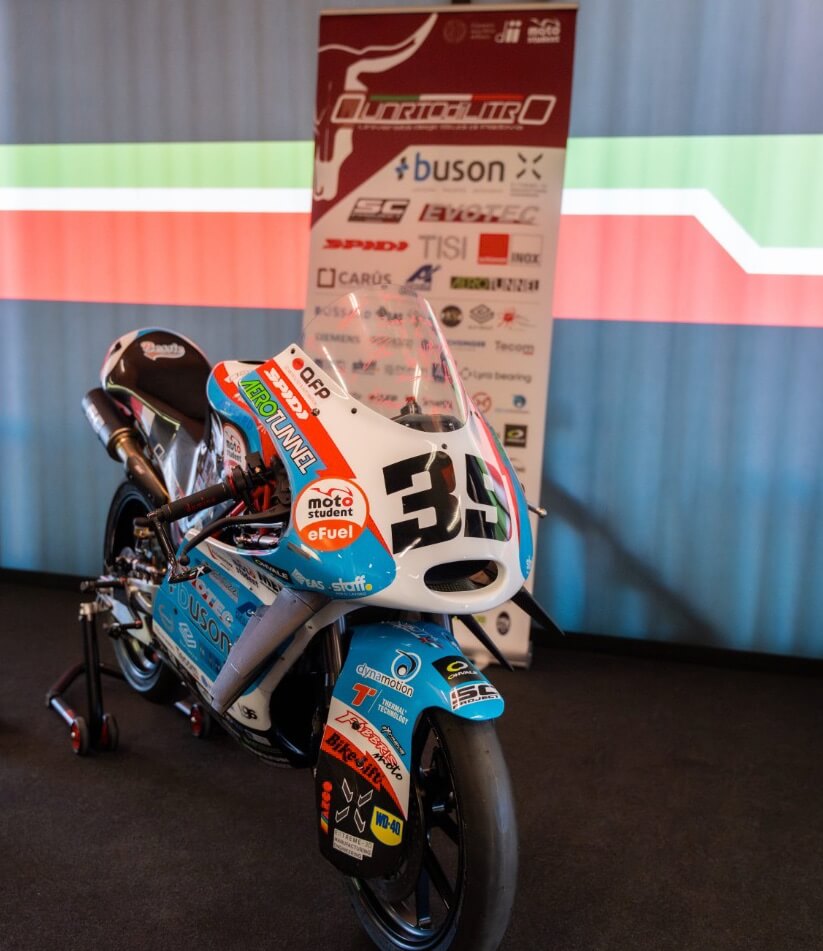
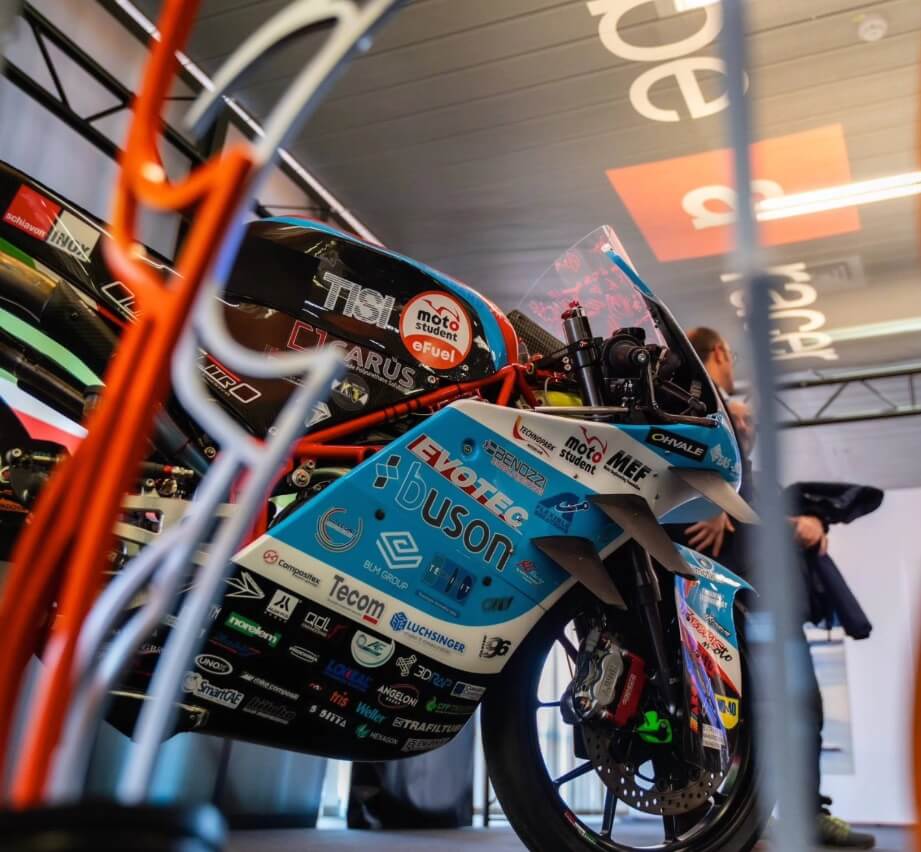
Prototype e-Fuel category, motorcycle no. 39 by QuartodiLitro.
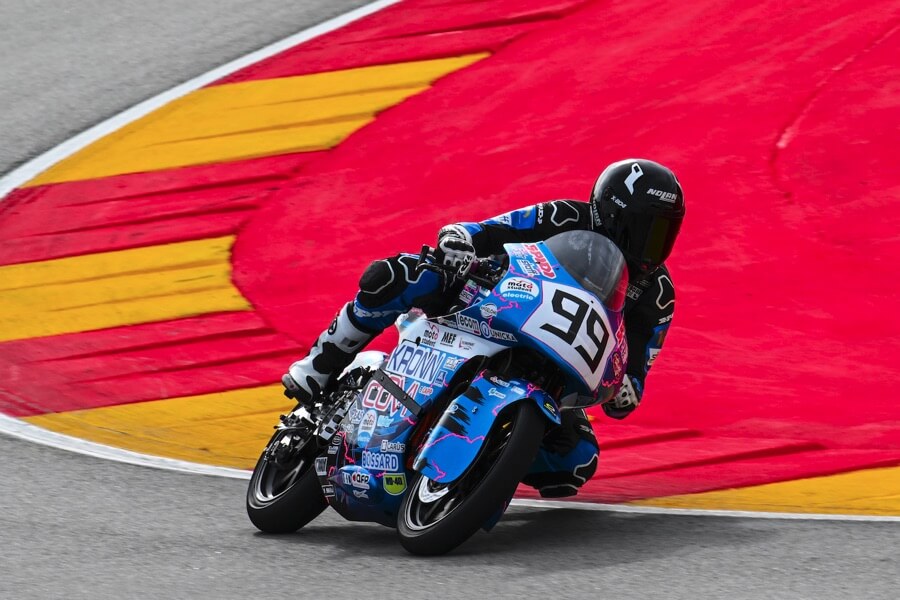
In the Electric category, QuartodiLitro finished this highly-competitive edition in 8th place overall, both in the MS1 and MS2 stages, at the end of a path made even more complex by the supply problems of some components of the battery pack, which forced the team to postpone the assembly until the last weeks before the competition. The team only had a week to test the prototype, but despite this, it achieved a great result, as well as providing key data for the development of the next bike.
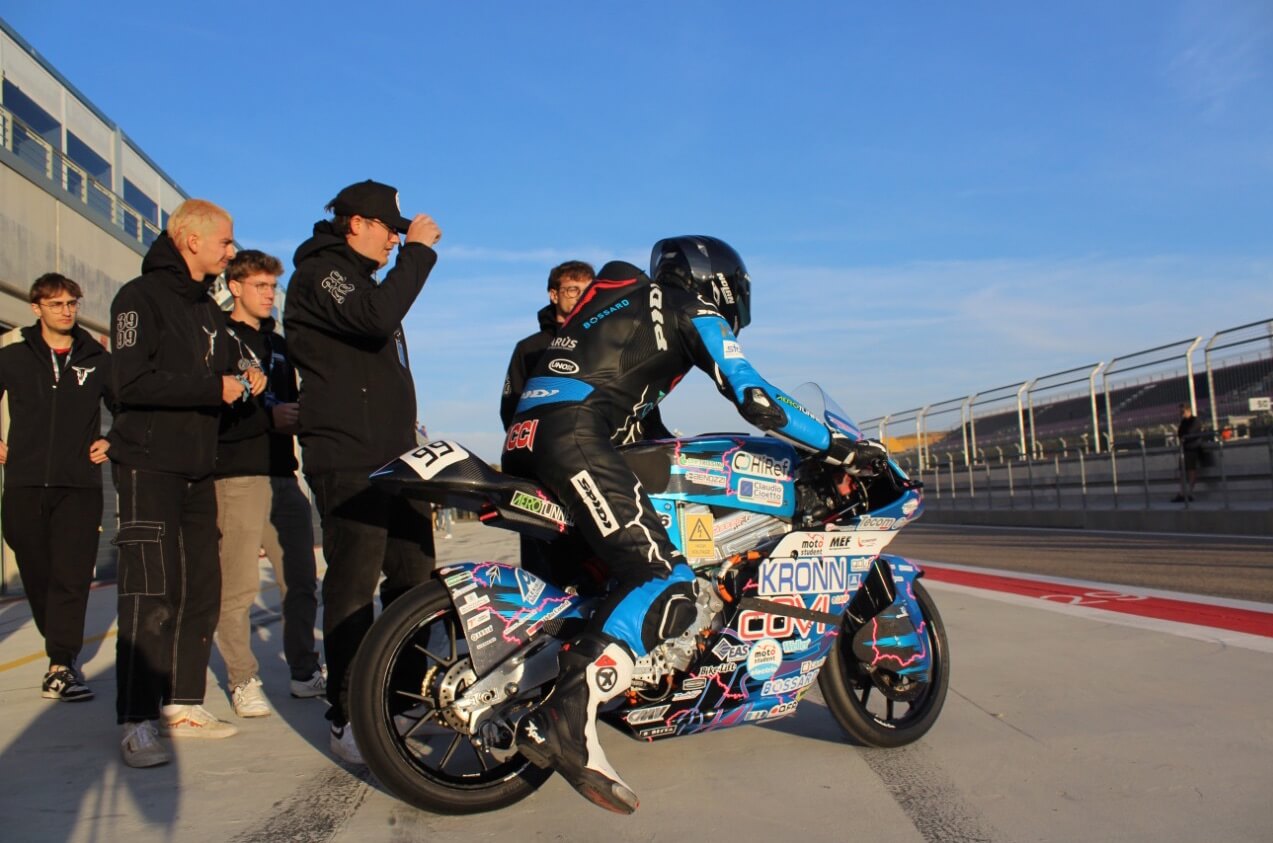
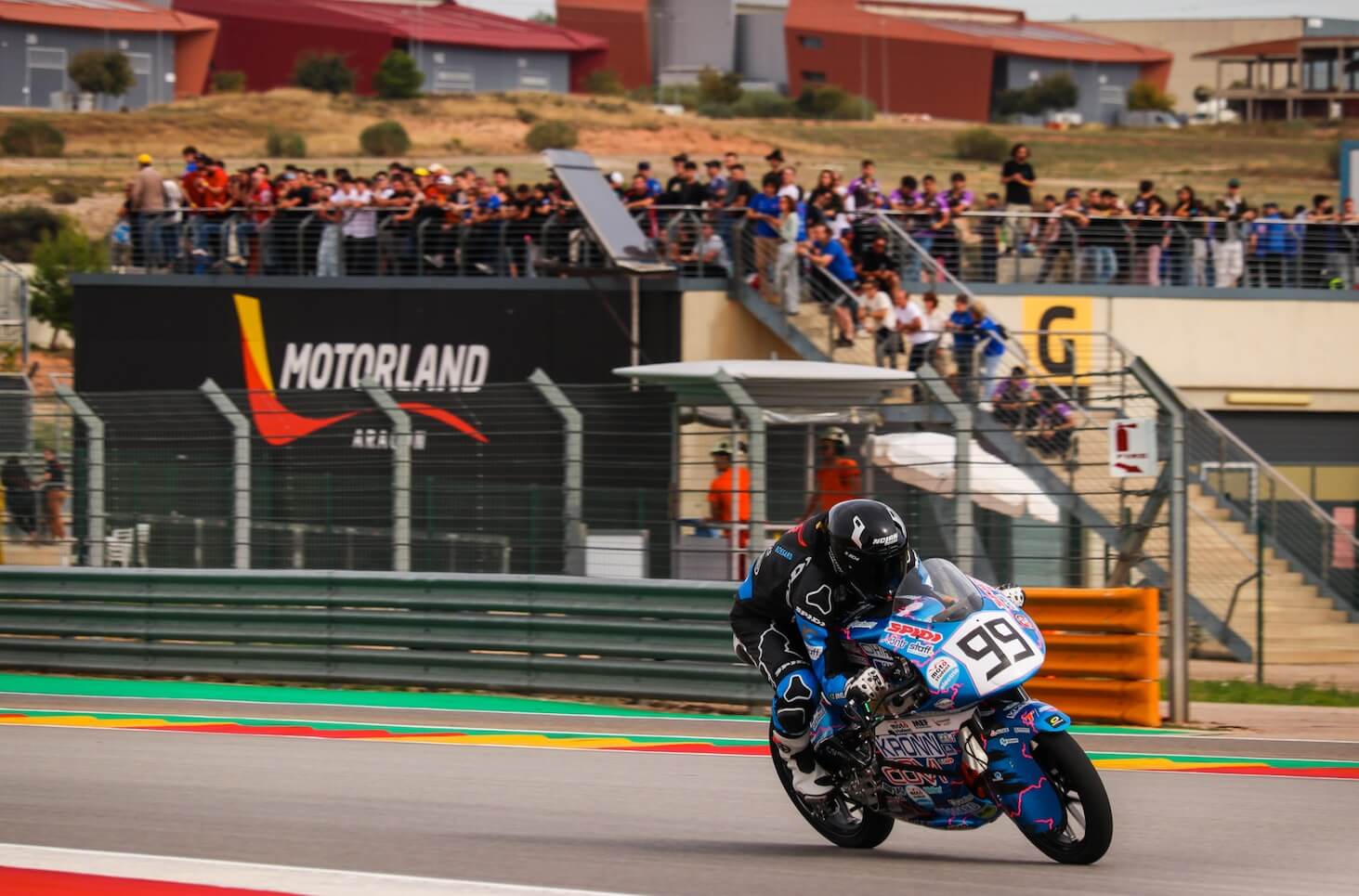
Electric category prototype, motorcycle no. 99 by QuartodiLitro.
The team’s commitment to getting Rita up and running paid off as she was able to be raced, proving to be a reliable, easy-to-handle and above all very rapid bike. During the MS2 stage, the prototype performed well on the dry lap, securing pole position in P6, before finishing in 11th place and hitting a top speed of 209 km/h, the fourth fastest in the world.
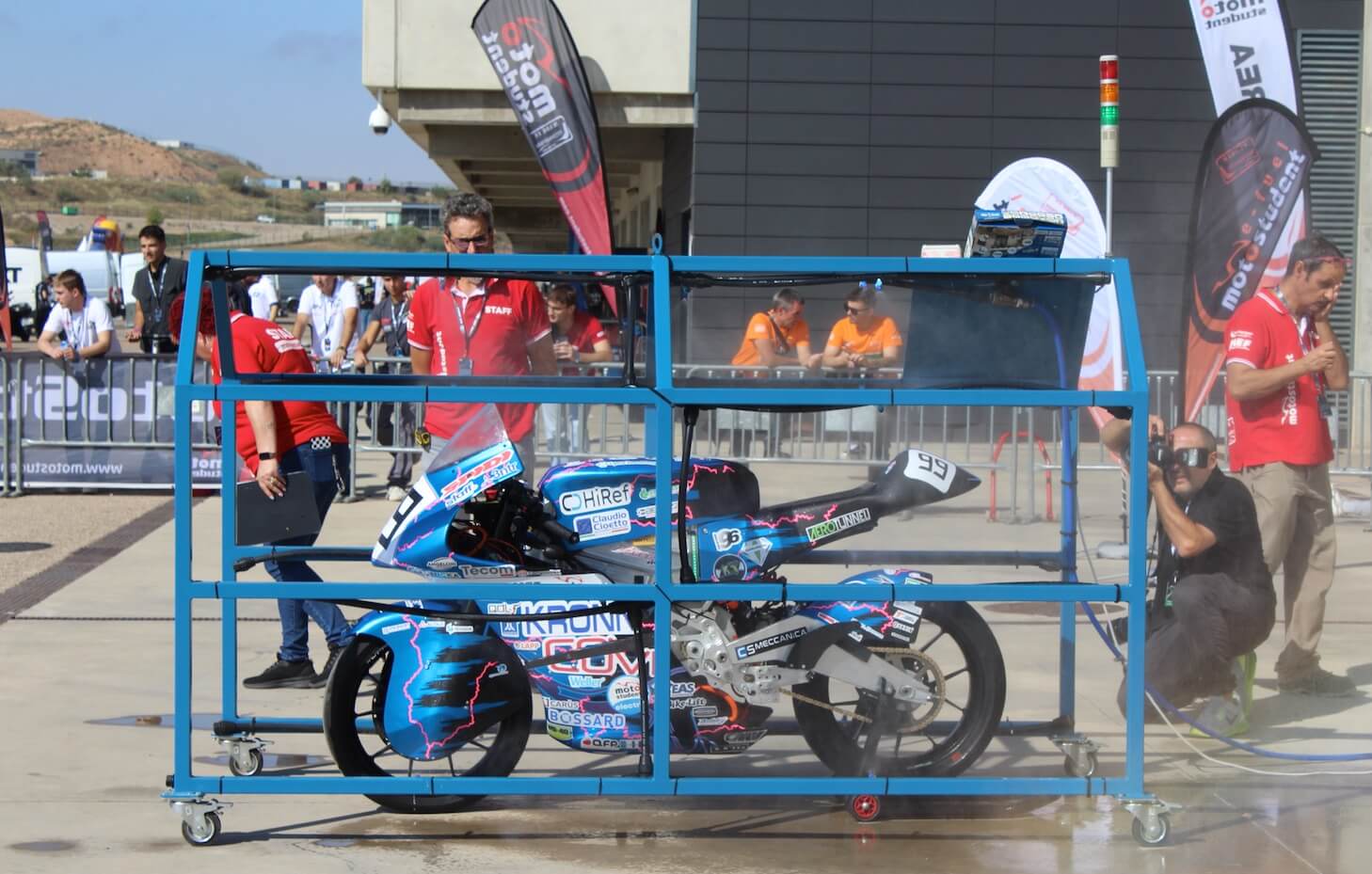
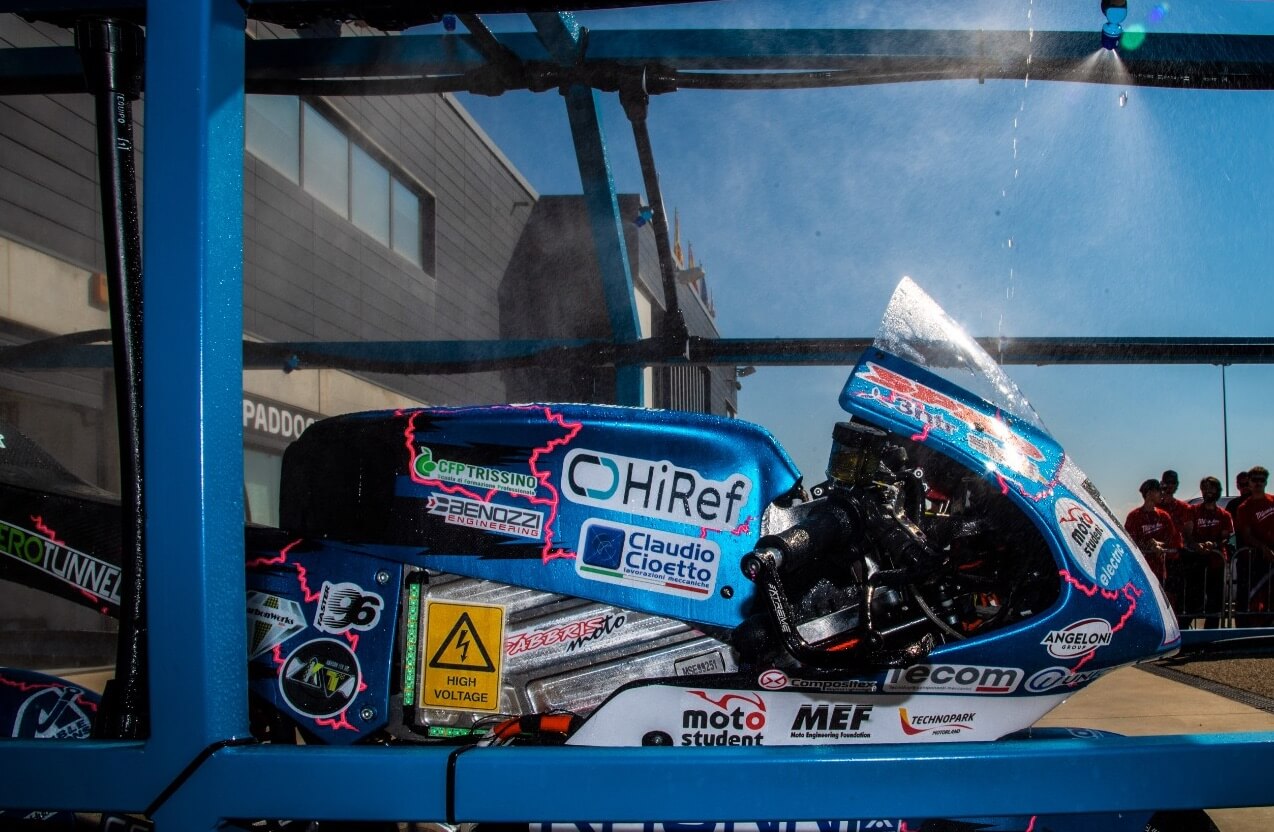
The design process is based on a structured engineering approach: an in-depth study of the regulations, advanced CAD design and numerical simulations are accompanied by intensive testing, which accompanies the evolution of the prototype right until it is rolled onto the track. The tests days represent the final verification stage, when the design choices are assessed in a real competitive context.
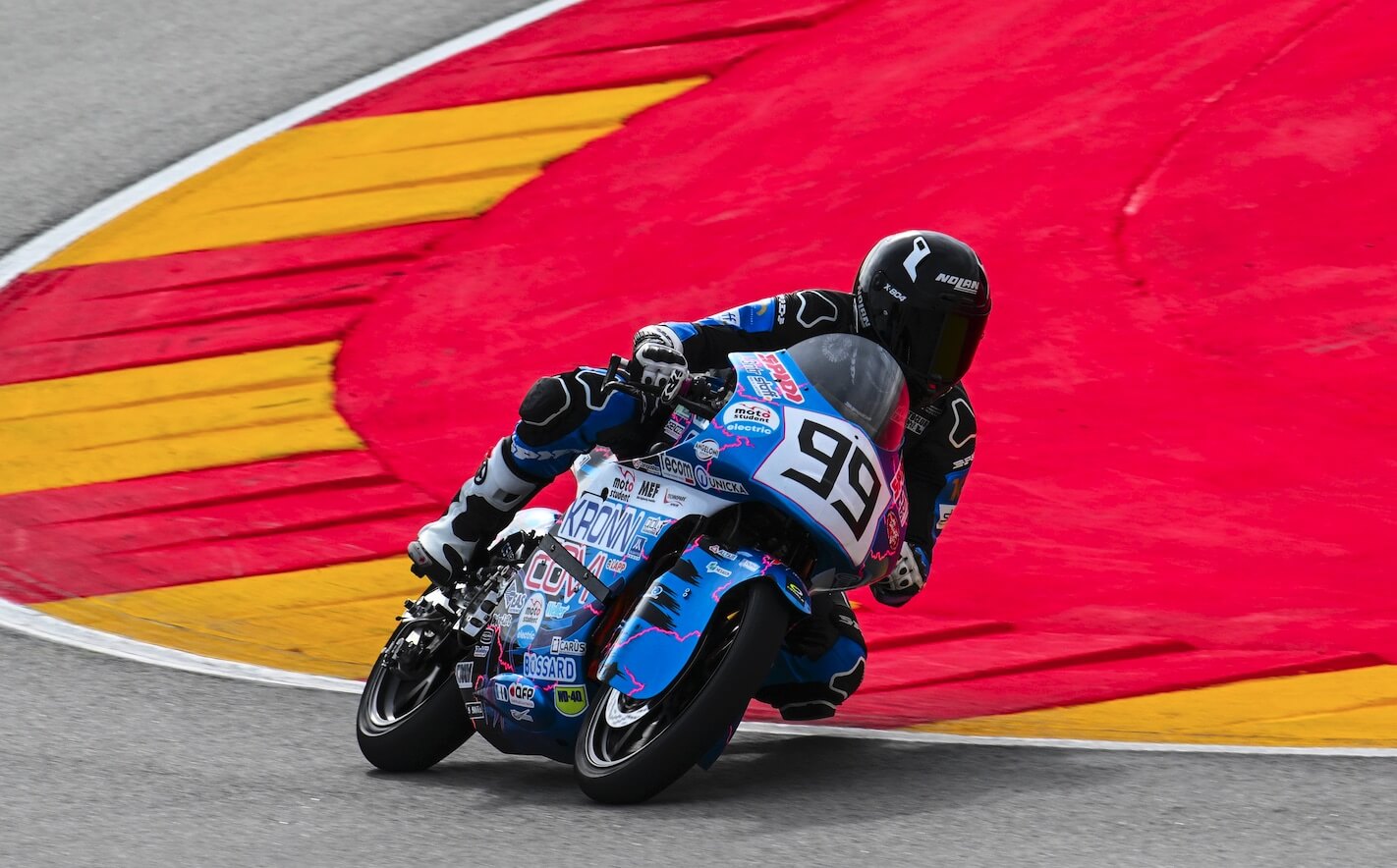
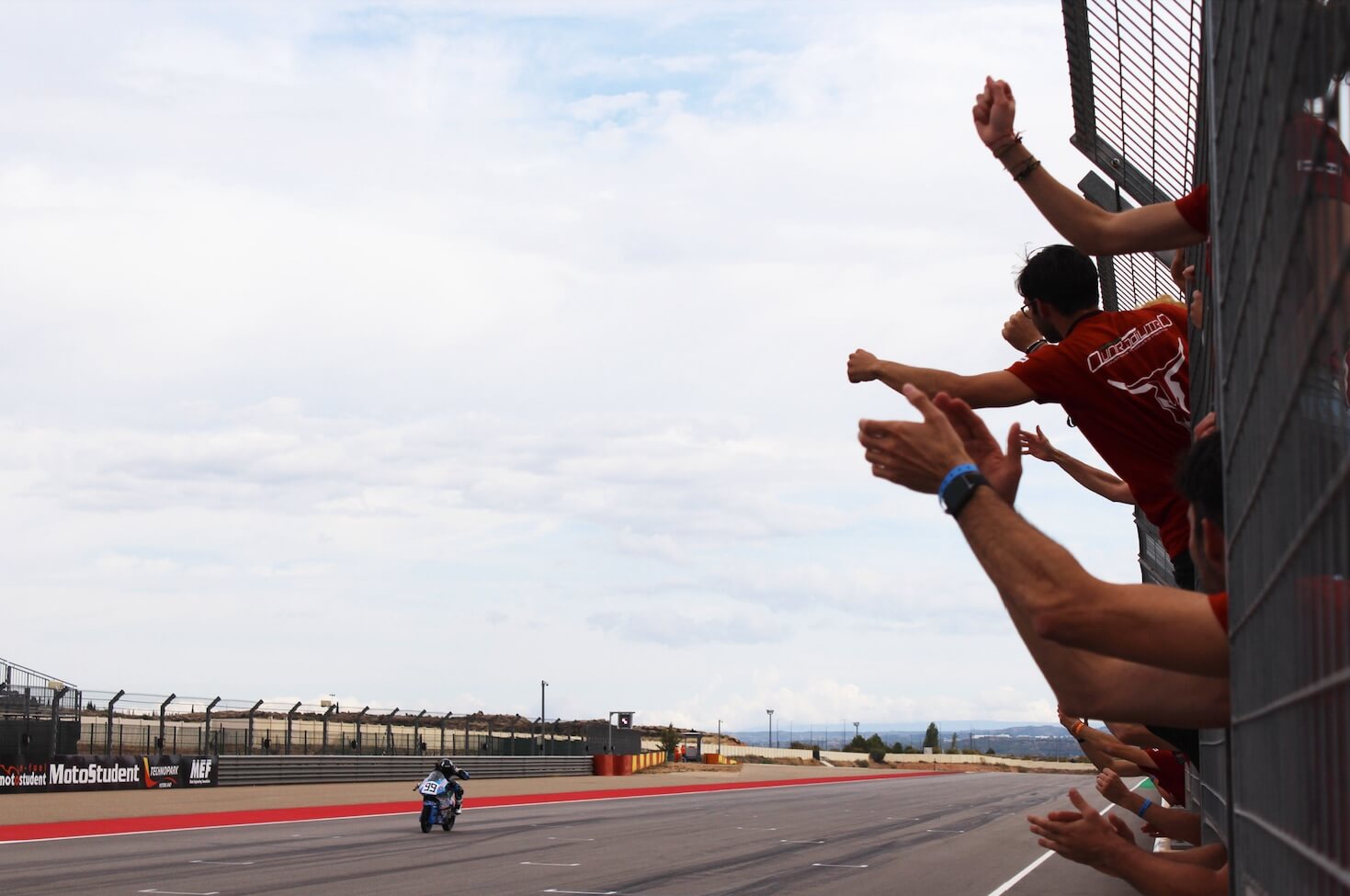
At every stage, the educational value of the QuartodiLitro initiative is at its core. The project provides students with the opportunity to tackle a range of complex technical and organisational challenges, working within multidisciplinary teams and developing skills that are directly applicable within the spheres of industry and motorsport. As part of this journey, the support of sponsor companies is fundamental, fostering a constant dialogue between universities and the industry and contributing to the growth of the project.
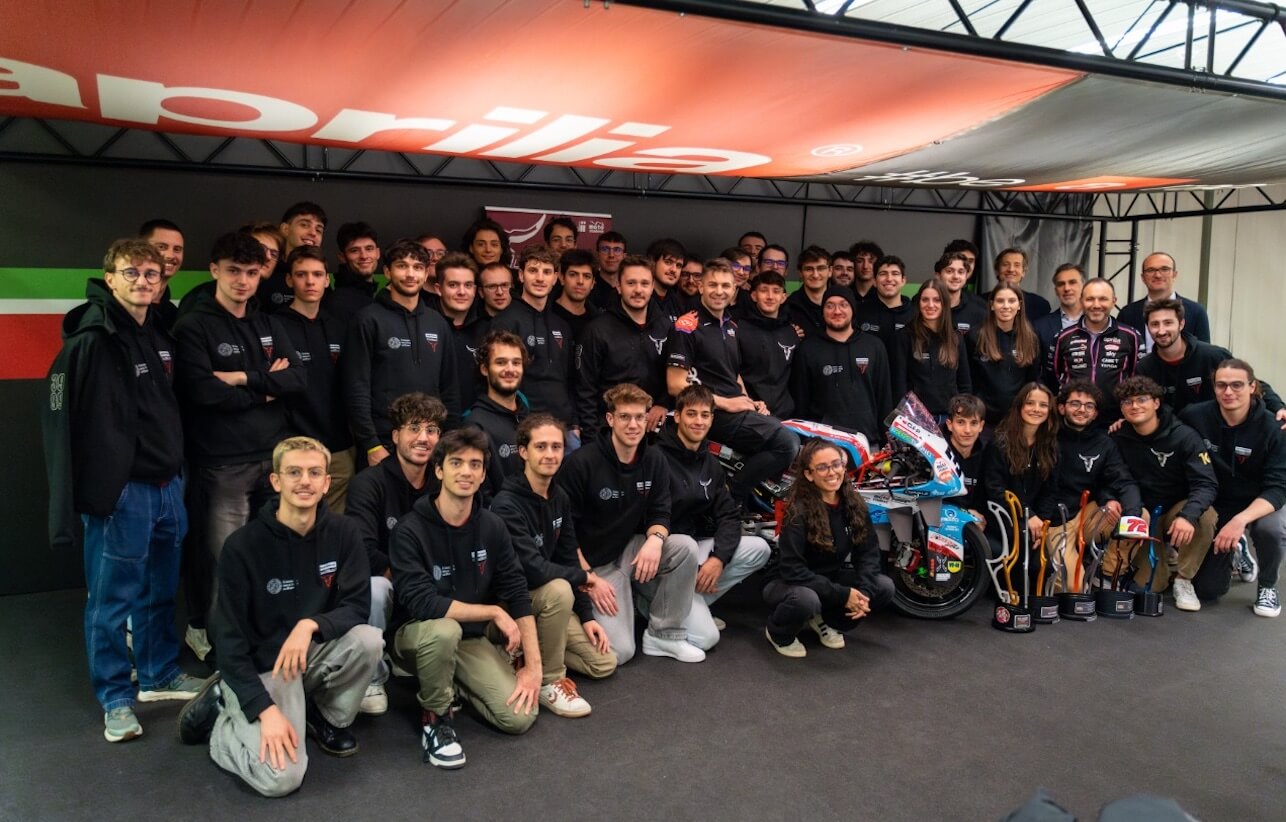
THE ‘QUARTODILITRO’ TEAM AT THE APRILIA RACING HEADQUARTERS IN NOALE. On the afternoon of Thursday, 27 November 2025, the QuartodiLitro team visited the Aprilia Racing headquarters in Noale as guests, for a presentation and technical discussion meeting. Accompanied by their relevant teachers (Prof. Matteo Massaro e Prof. Roberto Lot), the students presented the project to Massimo Rivola and the heads of the main technical areas of Aprilia Racing (vehicle, engine, dynamics, electronics, etc.), illustrating the technical and training path that they had taken - both from a theoretical and practical perspective - which had resulted in them competing in the MotoStudent International Competition at the MotorLand Aragón circuit last October.
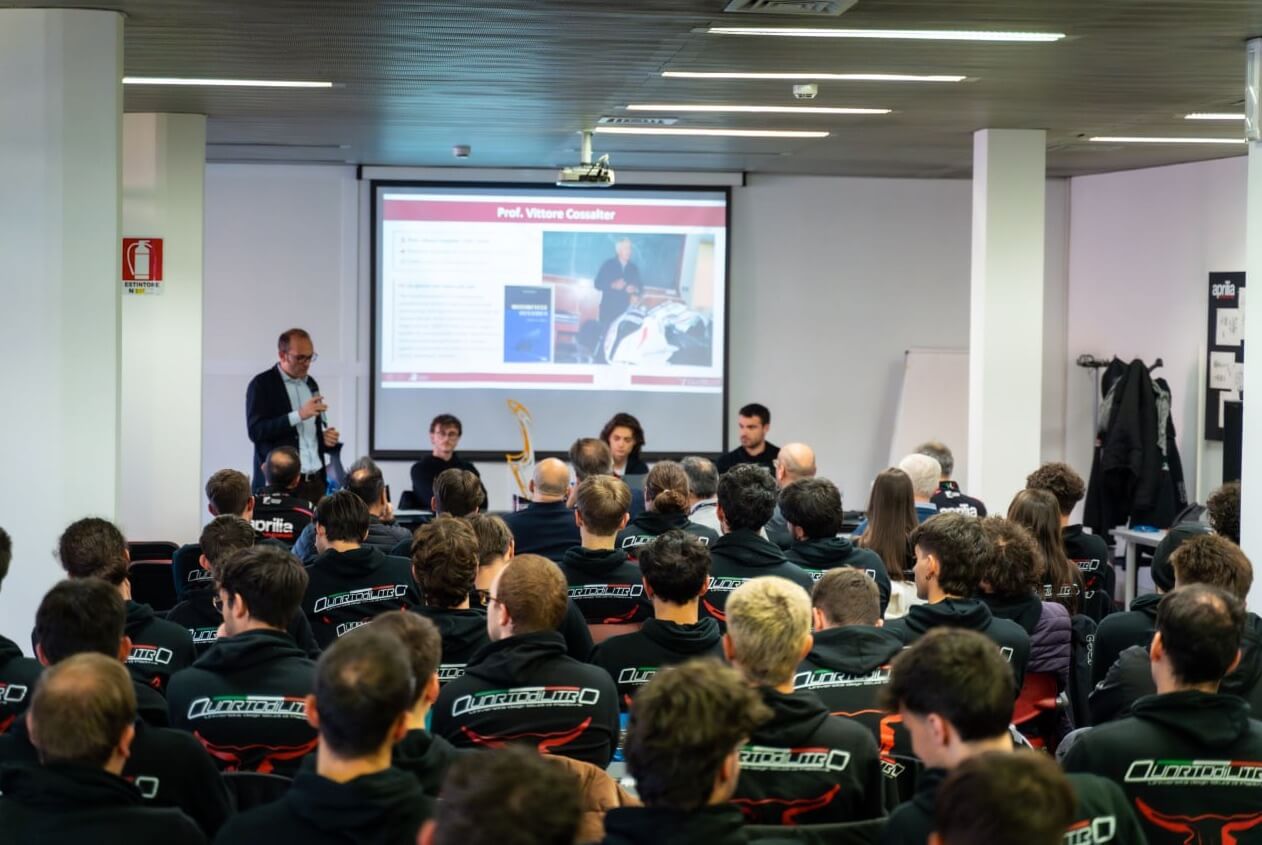
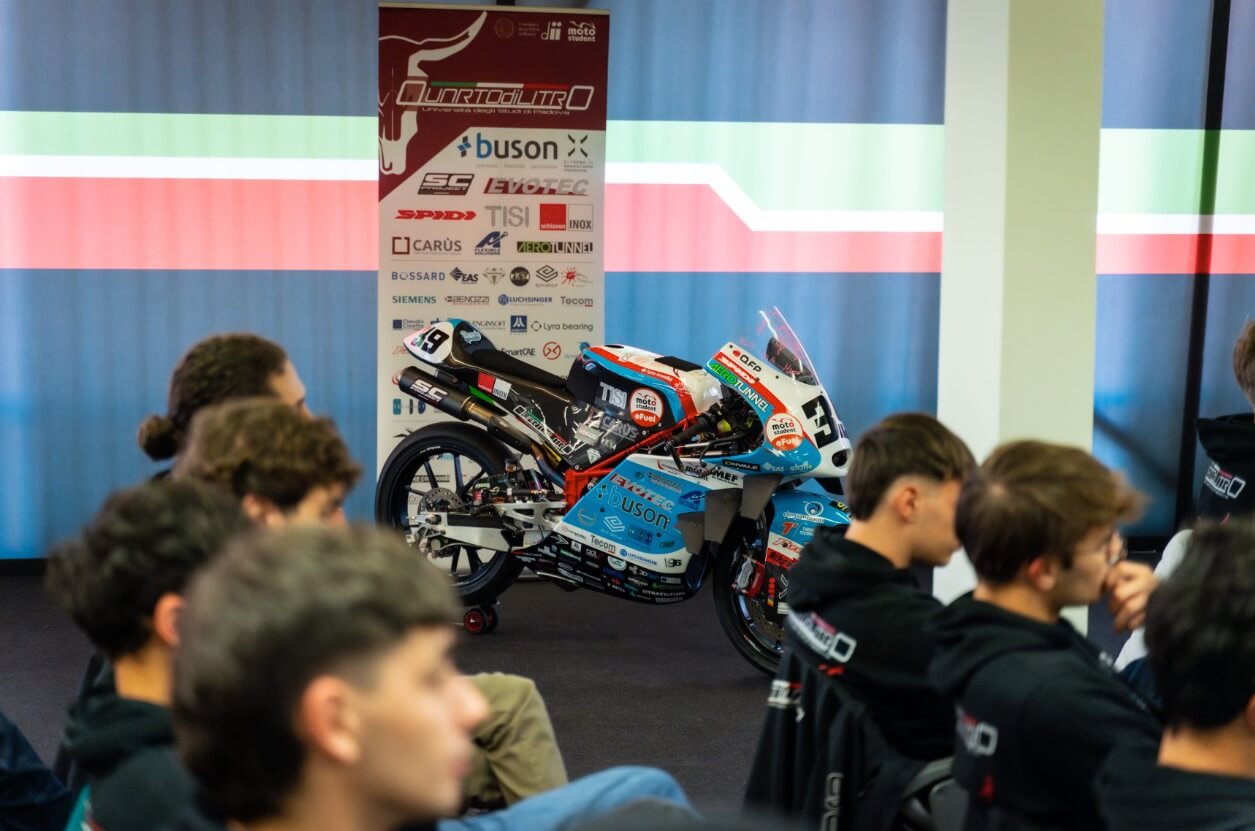
The meeting opened with an introduction to the QuartodiLitro project by Prof. Matteo Massaro, who provided a brief outline of the team structure and the educational value of the experience. Next, the team leaders for the 2023–2025 edition, Matteo Cerretani and Gloria Dal Bianco, presented the QuartodiLitro team, describing its internal organisation and the roles and responsibilities of the various departments, as well as the key main challenges that guide their daily work. The presentation turned its focus to the MotoStudent International Competition, illustrating how it works, exploring the various stages of assessment and touching upon the international context that provides the backdrop to the project.
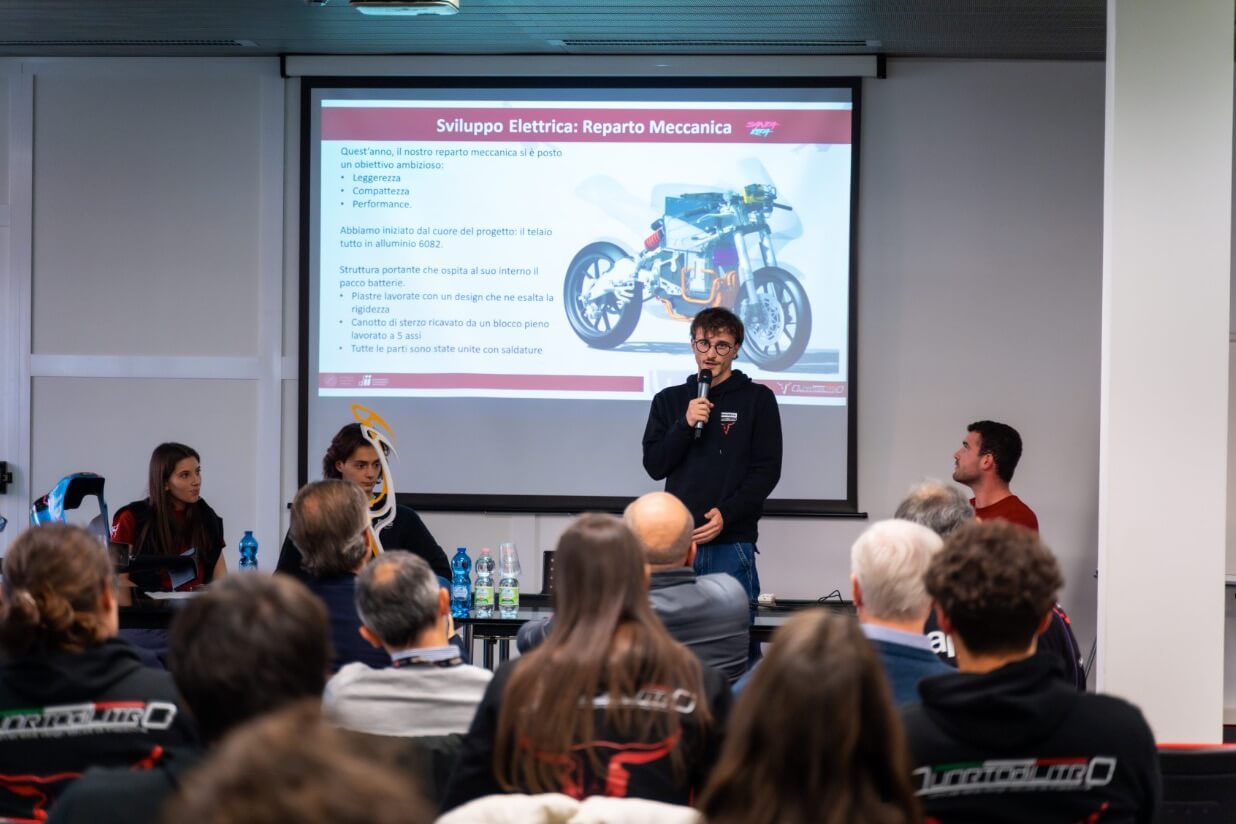
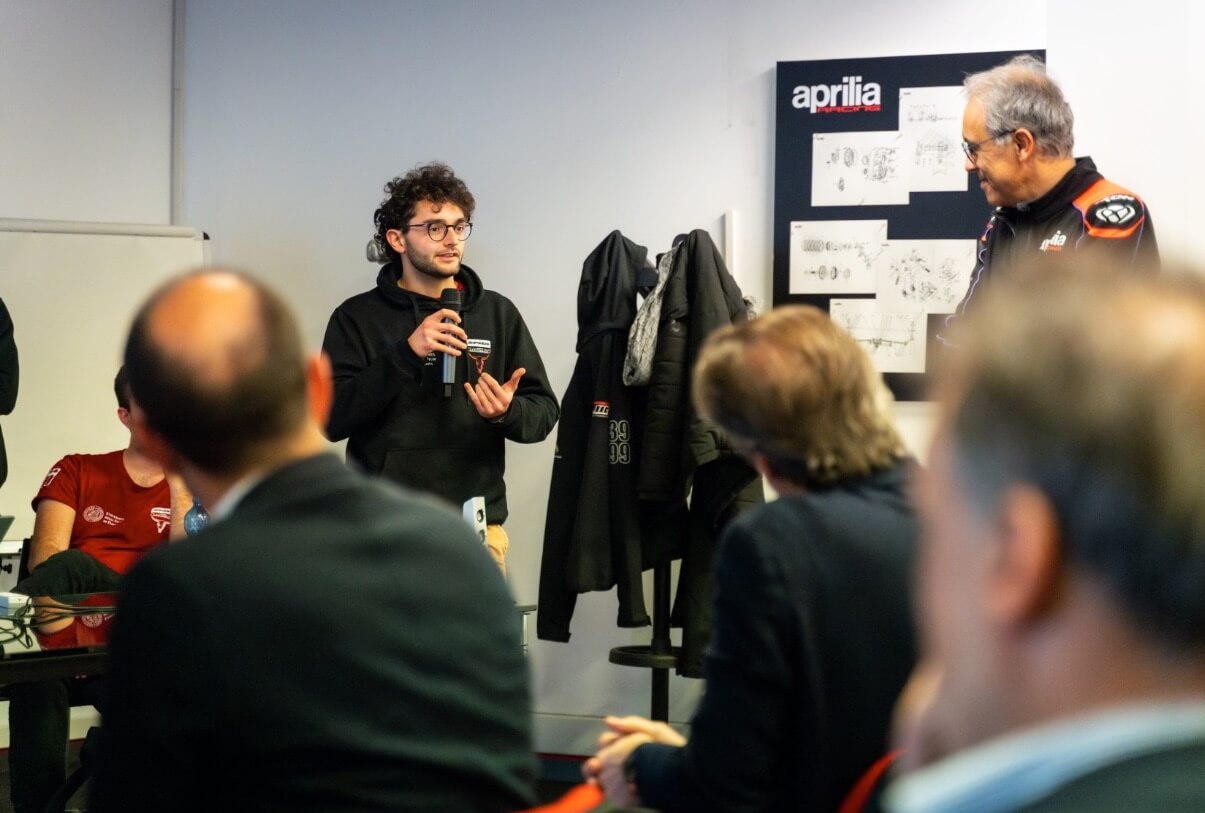
The middle part of the afternoon was dedicated to the prototypes developed by the team. Project manager Marco Carletti presented the RITA electric prototype, detailing the main design choices made and the critical issues encountered during development. Project manager Marco Rivola then presented the E-Fuel prototype, summarising the work carried out over the course of the two-year project and highlighting the contribution of the various departments, from design and construction to testing and the final competition.
At the end of the two presentations, Pamela Bertoncello (Electric category) and Alessandro Manente (E-Fuel) presented two separate active aerodynamics designs, developed specifically for each prototype. Both solutions were presented at the competition as Innovation projects, and represent an innovative element designed to improve the overall performance of the vehicle, contributing to the reduction of the total race time. During the presentations, the E-Fuel BESSIE motorbike was on display at the Aprilia Racing headquarters, accompanying the event and providing an opportunity for discussion with the technicians present, enabling a real dialogue to take place regarding the solutions adopted and the development of the prototype.
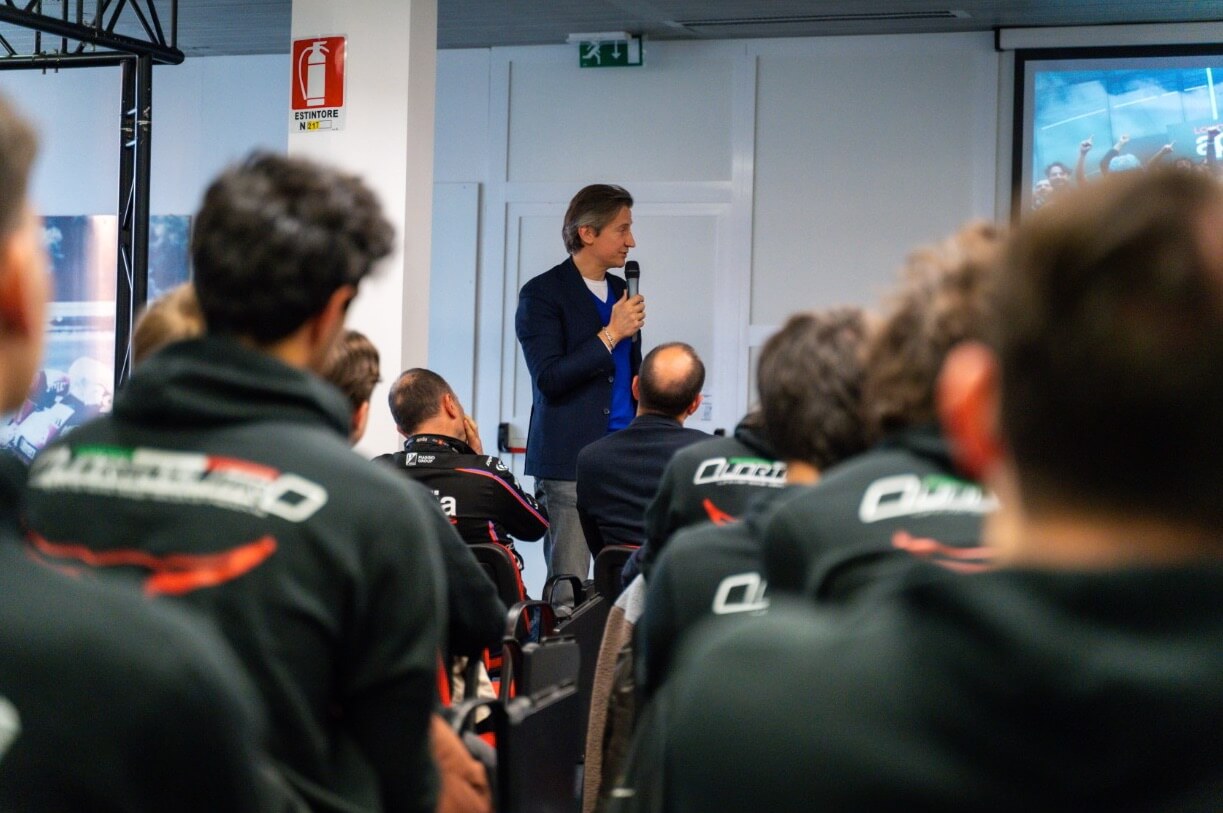
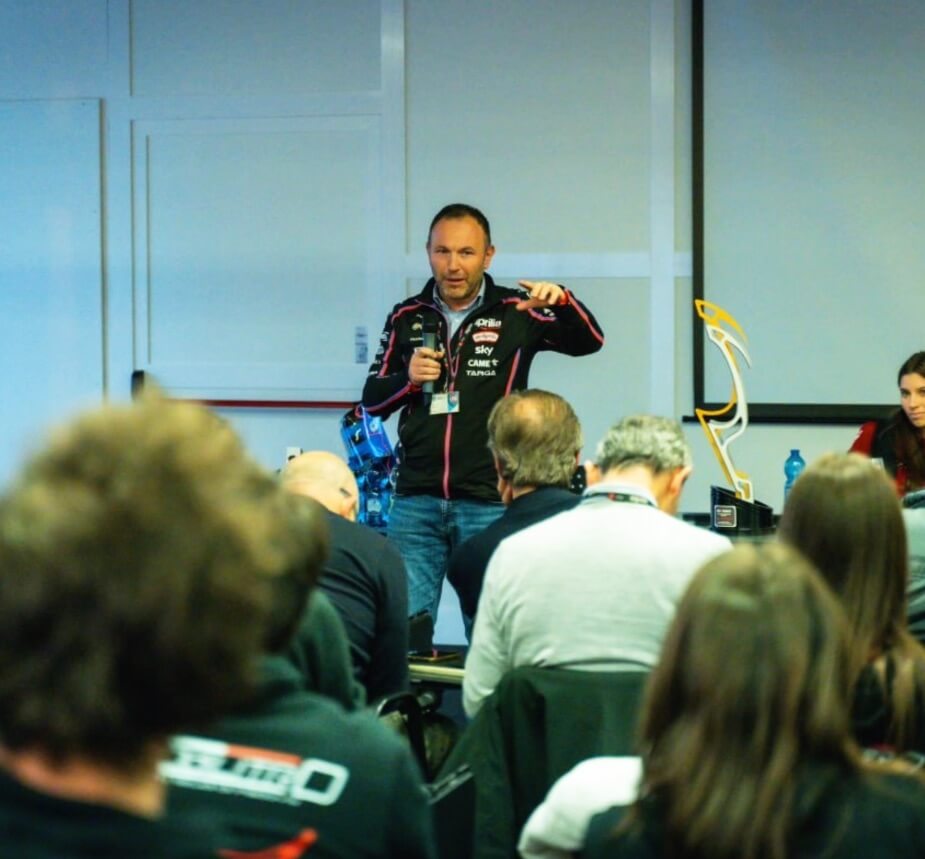
Massimo Rivola, CEO of Aprilia Racing.
During the presentations, a direct dialogue took place with the Aprilia Racing technicians, who asked the students questions about the solutions adopted, the working method and the ways they managed the challenges they encountered, giving rise to a practical, stimulating discussion.
Massimo Rivola (CEO of Aprilia Racing, editor’s note) also spoke during the meeting, highlighting the notable similarities between QuartodiLitro's journey and that of a professional racing team. Specifically, he emphasised the value of determination and continuity, highlighting how the team had continued working on the project for two years without ever giving up, even at the most difficult times: an approach that - as Rivola pointed out - is also key in the world of professional motorsport.
The visit ended with a factory tour within the Aprilia Racing headquarters, where students were able to take a closer look at the places where real racing motorcycles are created and developed, bringing them into direct contact with the organisation and processes of a centre of excellence in international motorsport.
THE COMMENTS. Gloria Dal Bianco, eFuel team leader: “Our day at the Aprilia Racing headquarters was a big moment for the whole team. Over the last two years, we’ve done more than just develop a motorcycle - we have also built an organisation that comprises people, roles, methods and responsibilities, learning how to make it work even in the most challenging moments. Presenting our work within a professional context like Noale and getting the chance to see this facility and the technical work carried out here by those who live and breathe motorsport every day was a very powerful experience for all of us on the team. The fact that Massimo Rivola also echoed the message that we must 'never give up' added even more value to our achievements: it means that what we have built - despite the fact that it is a student project - is heading in the right direction, and already speaks the language of motorsport.”
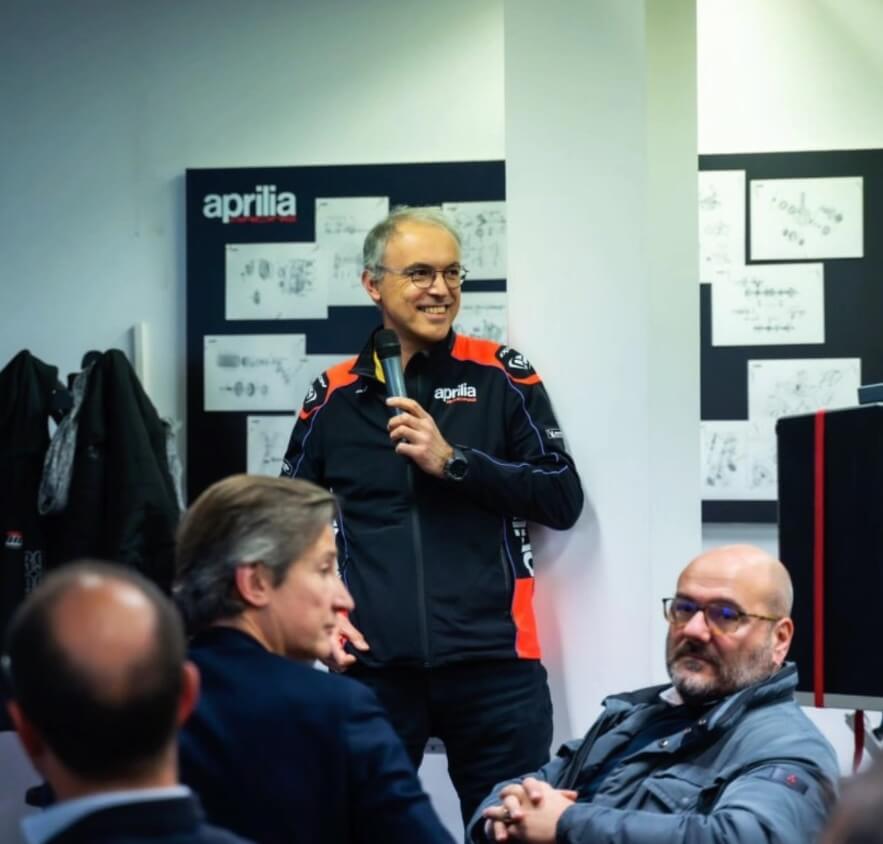
Mirco Magrograssi, Head of the eFuel mechanics department: “The meeting at the Aprilia Racing Headquarters was amazing right from the welcome - it’s such an open atmosphere and there’s a real family feeling within the organisation. The technical discussion with the professionals was very stimulating, and their willingness to engage with us enabled a practical, direct discussion to develop. Being able to observe the MotoGP environment up close, see the engine test benches in action and get a sense of the dedication of the people who work on these projects daily added even more value to the experience, showing us what it really means to work in a high-level racing environment like this one.”
Sofia Caloi, member of the electrical mechanics department: “The thing that struck me most about my day with Aprilia Racing was the genuine interest that we were welcomed with. We were given space to explore and talk, and above all, the passion with which we have pursued the project was truly recognised: an aspect that everyone noted, and which for me was a real sign of the personal approach. During the factory tour, I felt the same openness: the time the various professionals dedicated to us and the natural way they shared their experiences and real-life lessons really showed us how far their work is driven by passion. For us as young students and engineers, being able to admire Aprilia Racing's technological excellence up close was an incredible opportunity.”
Michele Manzato, Head of the electrical electronics department and electrical project manager for the 2025-2027 edition: “It was an amazing day. We really appreciated the space and attention we were given by the Aprilia Racing technicians, allowing us to present our project and openly discuss the technical choices we made. Something that really struck us was the way our project was viewed with the same passion that we felt when we were shown the MotoGP factory. It was as fascinating as it was disorienting to realise how every single airflow and every element of the geometry is studied and optimised to the finest detail to ensure the best performance. These are the details that make the difference, as does the unity of the people at Aprilia Racing, who are driven by the same passion, the same desire to continuously improve, and an approach to work that we feel is very close to our own experience of the QuartodiLitro project.”
Aprilia Racing: “We welcomed the QuartodiLitro team to Noale with great interest. Accompanied by their teachers, the students presented their motorcycle projects and explained to Massimo Rivola, CEO of Aprilia Racing, and our technical area managers (vehicle, engine, dynamics, electronics, etc.) the technical journey (theoretical and practical) that led them to compete on the Aragon track in Spain last October, participating in the VIII International MotoStudent Competition. The visit concluded with a factory tour: the young people were able to see firsthand the places where Aprilia racing bikes are conceived and built. Hearing their experiences was certainly an interesting moment for us at Aprilia Racing and, above all, an opportunity to interact with young people who expressed true enthusiasm and great passion.”
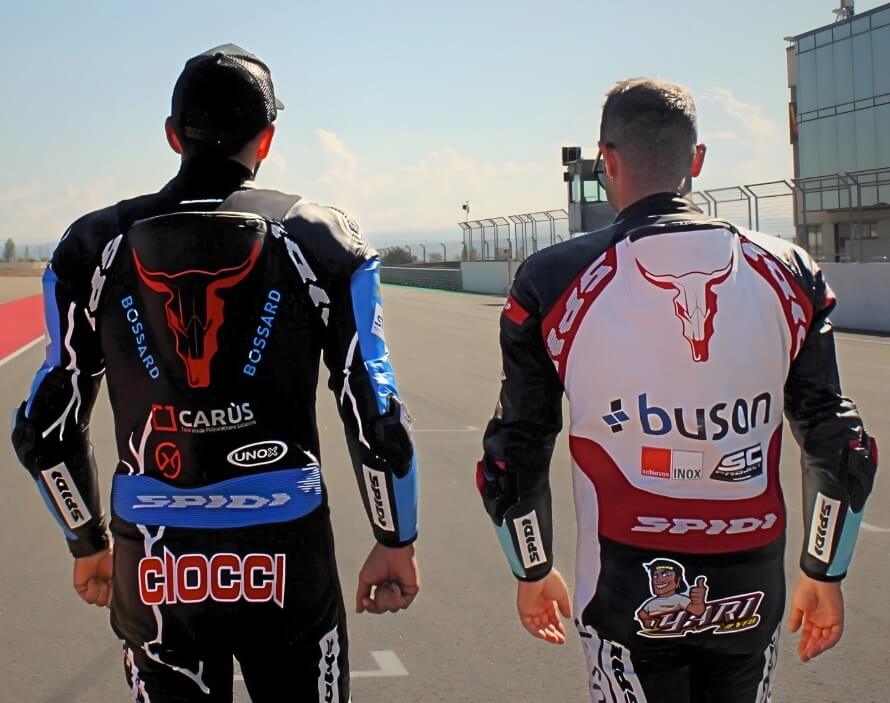
https://www.facebook.com/quartodilitroUNIPD?locale=it_IT
NEXT CHALLENGES OF THE QUARTODILITRO TEAM. With the MotoStudent VIII Edition behind us, QuartodiLitro is now looking ahead to the next challenges, with a view to consolidating the achievements of recent years. The team's work continues on various fronts: on the one hand, the technical evolution of the two prototypes, and on the other, the strengthening of the internal organisation and the transfer of skills between different generations of students. The parallel management of two complex projects has drawn attention to the importance of method, planning and consistency. As such, the next editions of the event will present a fresh opportunity to render the project even more structured, improving the development, testing and validation processes and continuing to grow as a means of supporting training and technical skill within the context of MotoStudent. For the next edition, then, the team has set itself clear objectives, with a view to reliving and further enhancing the thrill experienced on the circuit, transforming it into a new stimulus for growth from both a technical and design perspective.
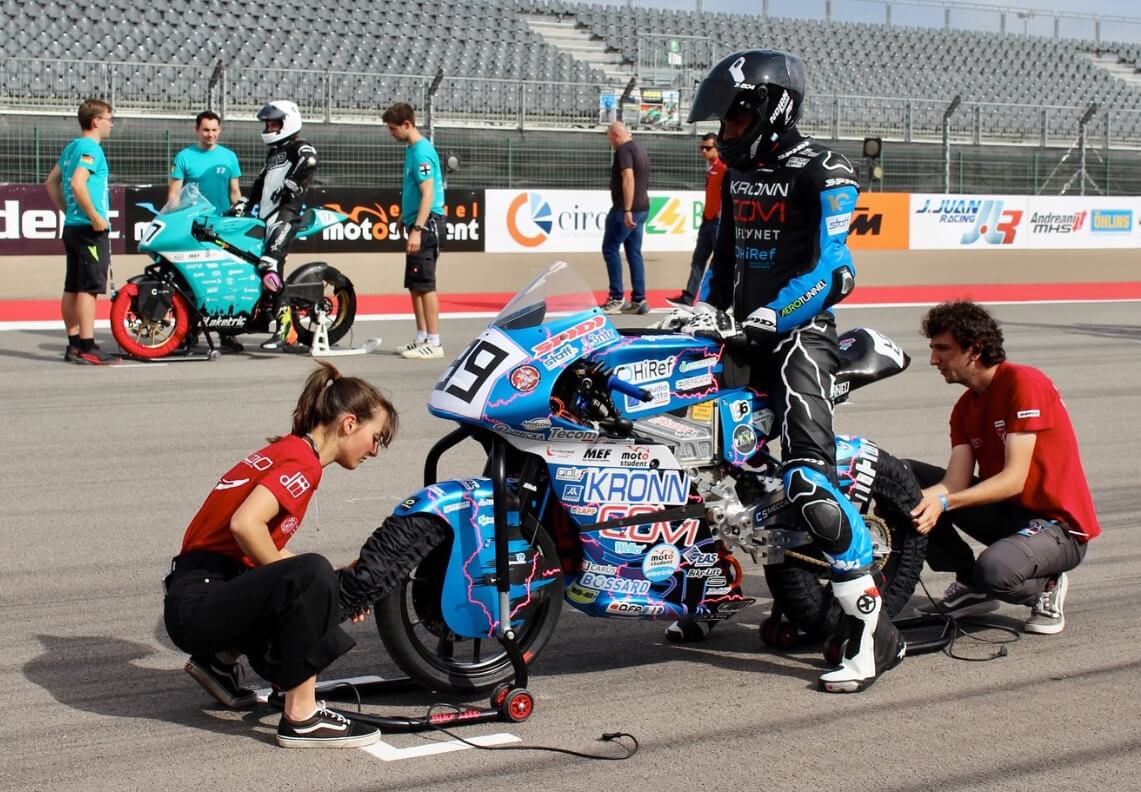
Regarding the electric prototype, the goal is to redesign the battery pack, introducing cells featuring new technologies and developing custom components such as inverters and BMS. At the same time, the team aims to further enhance its knowledge of composite materials, in order to apply this at structural level, particularly in the tailpiece and on the battery pack.
In terms of the E-Fuel, too, the targets are ambitious. The next edition will mark a significant change in direction in terms of the design, transitioning from a trellis chassis to a boxed aluminium frame - a solution that will enable a further leap forward in terms of rigidity and potential for development. This will be accompanied by the decision to separate the engine from the swingarm pivot, expanding the potential for adjustment and development of the chassis. In terms of the engine, the focus will remain on the ongoing development of the intake and exhaust systems, with a view to achieving optimal tuning and increasingly effective delivery.
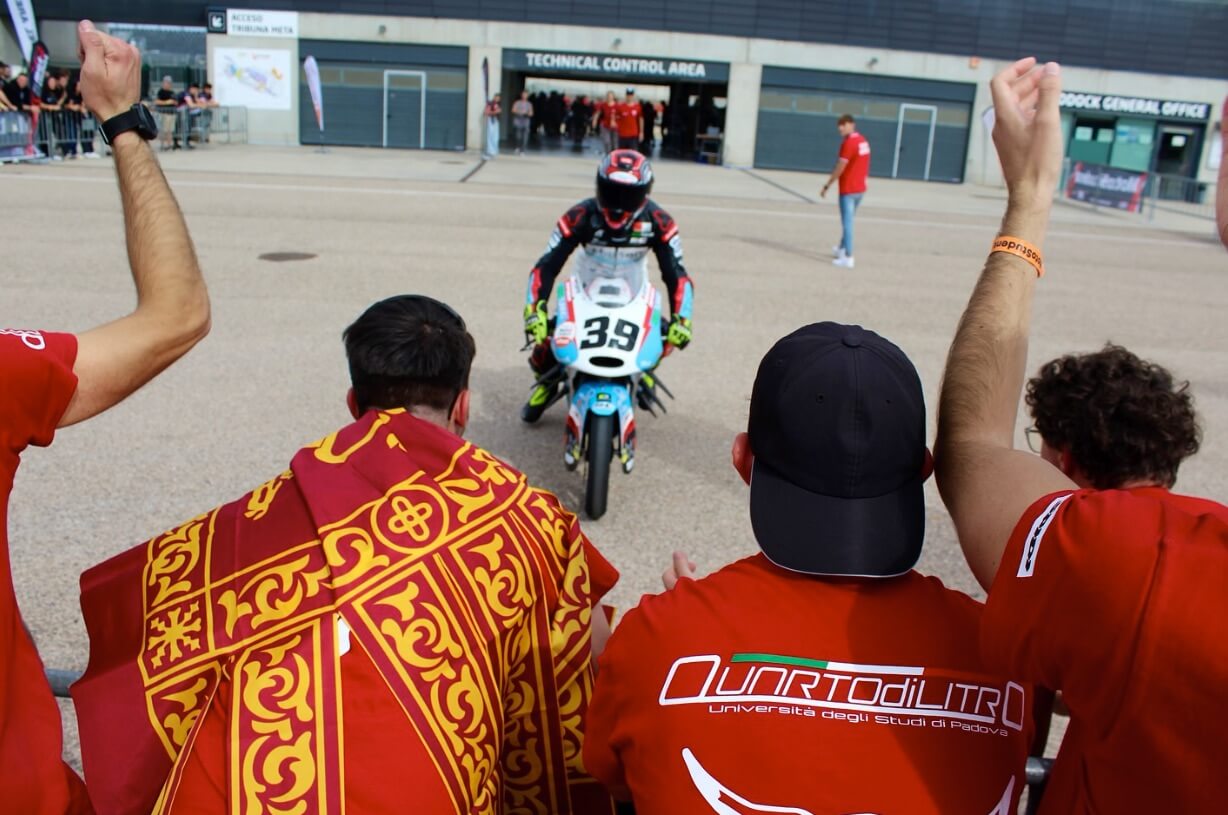
The goal remains to head into future competitions with the same approach that has guided QuartodiLitro to date: determination, teamwork and attention to detail, keeping the bond alive between universities, industry and motorsport.
QuartodiLitro:
https://www.quartodilitro.com/
Wide magazine thanks the following for their collaboration: Gloria Dal Bianco, QuartodiLitro, University of Padua, and Francesco Bezze (Racing Marketing, Aprilia Racing). Special thanks to Professors Matteo Massaro and Roberto Lot, Department of Industrial Engineering, University of Padua.