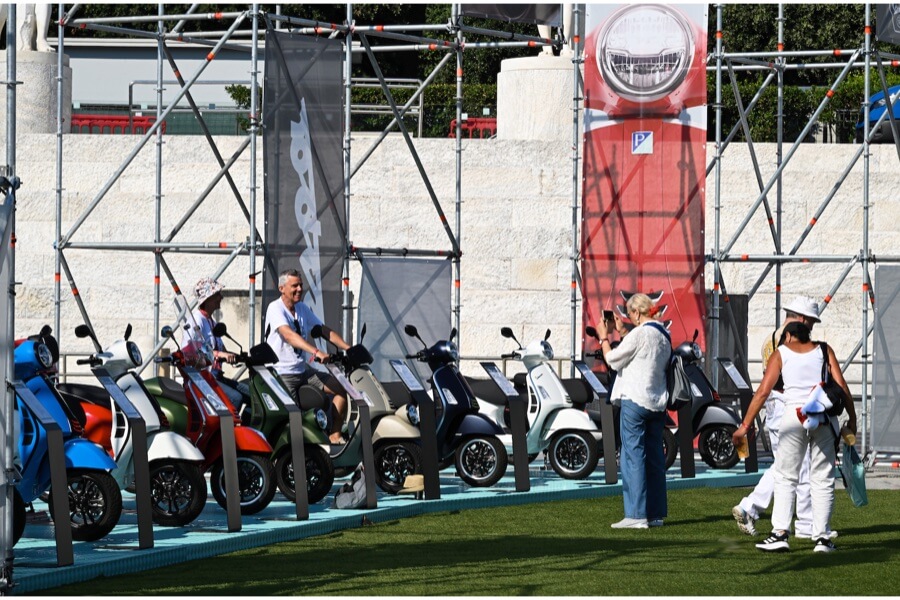
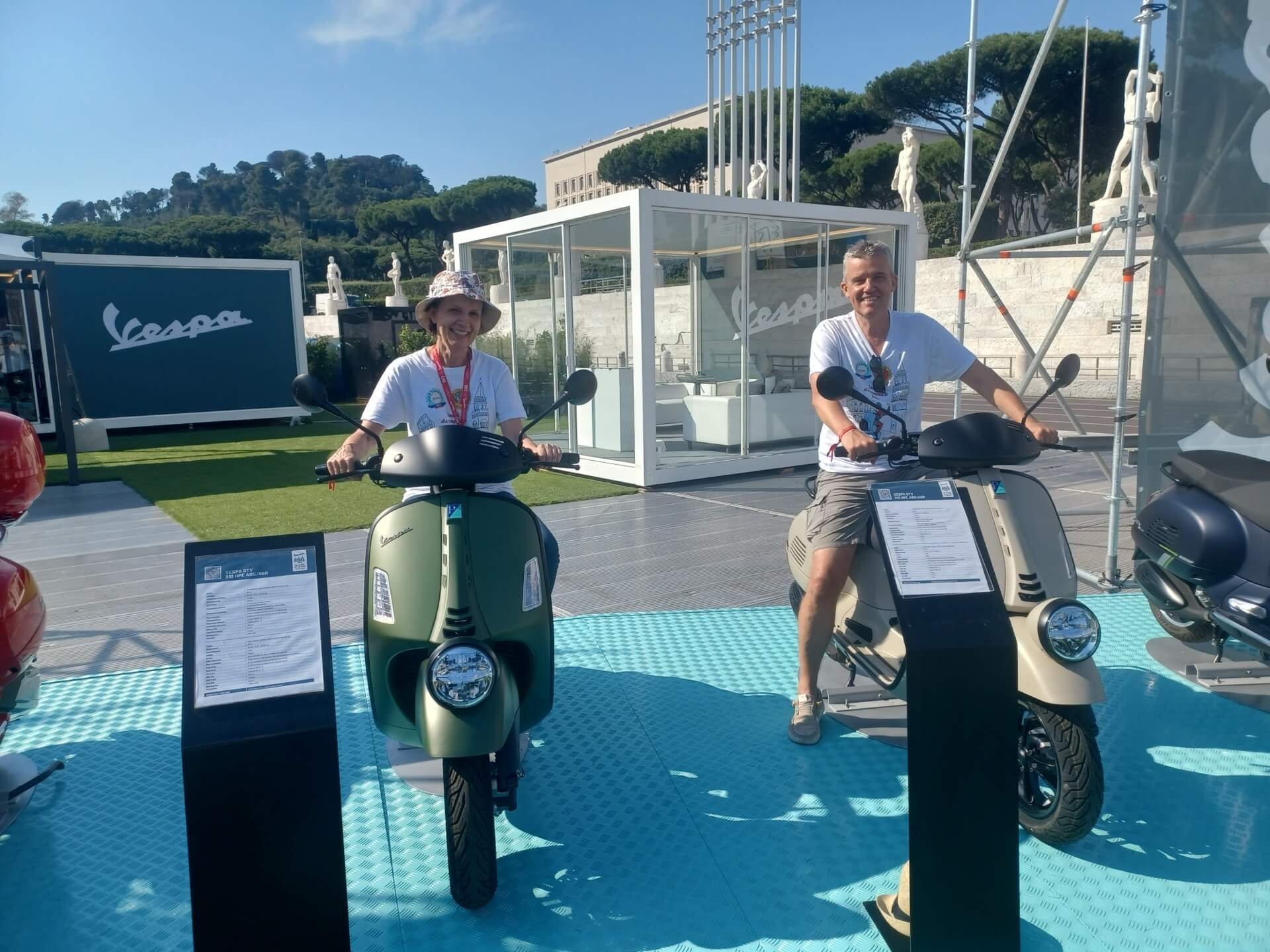
Vespa Village, Stadio dei Marmi, Foro Italico, 27 June 2026. Edgar E. Russ and his sister Astrid Oberhauser, who are both Austrian; he lives in Italy, she is based in Switzerland. Their passion for the Vespa brought them together, to take part in the major event entitled ‘Vespa: 80 Years of an Icon. Roma 2026’. Posing for Wide magazine on the GTV 310. (Wide mag photo).
EDGAR E. RUSS IS AN AUSTRIAN WHO HAS BEEN LIVING AND WORKING IN CREMONA FOR YEARS, A CITY FAMOUS WORLDWIDE AS THE CAPITAL OF VIOLIN MAKING AND THE BIRTHPLACE OF ANTONIO STRADIVARI. HE SHARES A LOVE FOR THE ICONIC ITALIAN SCOOTER WITH HIS SISTER ASTRID. WIDE MET THEM AT A MAJOR EVENT ‘VESPA: 80 YEARS OF AN ICON – ROMA 2026’
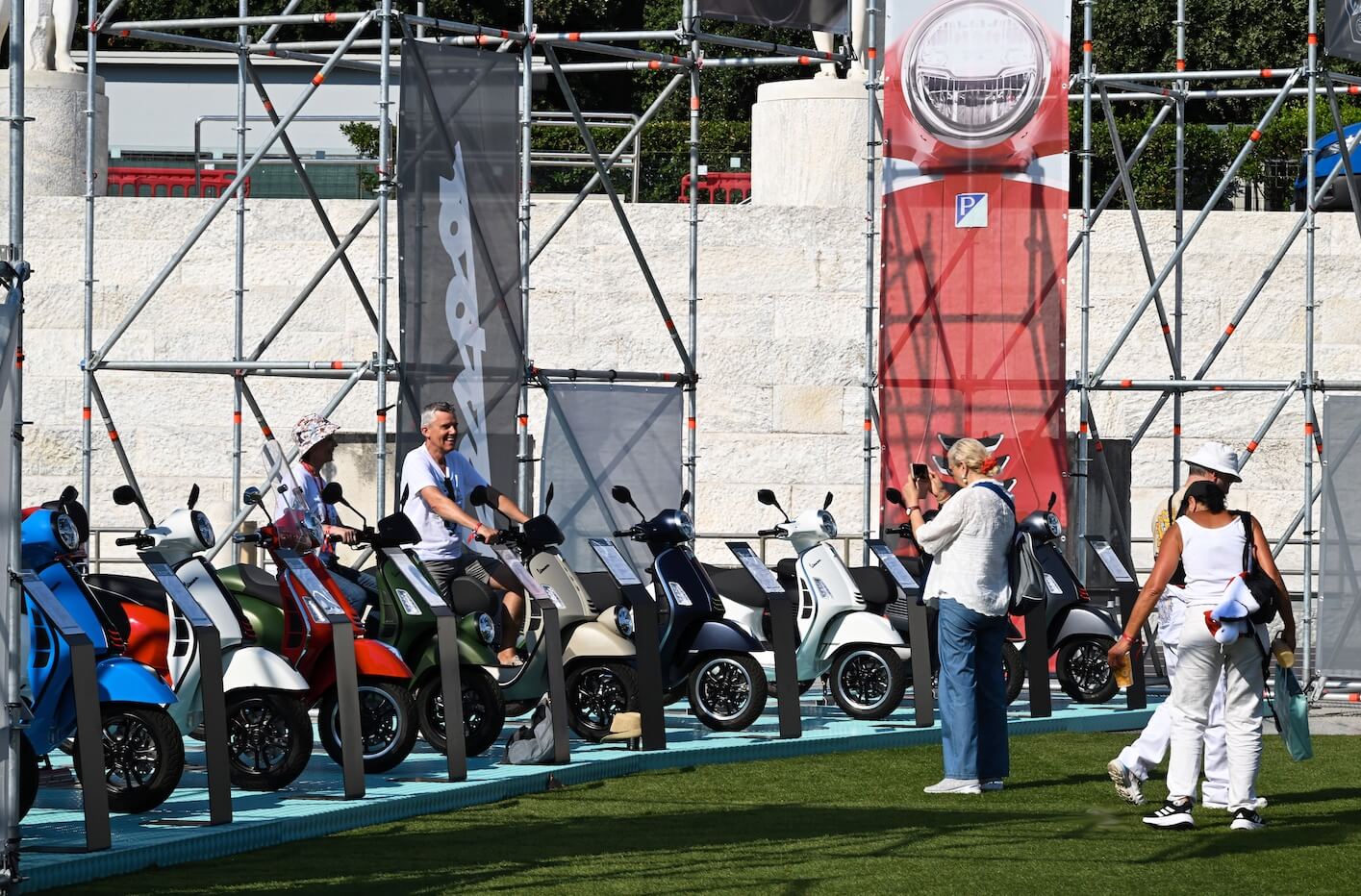
Double photo shoot in Rome: Edgar and Astrid pose for Wide magazine; the event photographer captures the moment.
July 2026. Reporting from Rome, 27 June 2026 (G.T.) – “I’m not Italian, but I live in Italy! I own 9 Vespas and I’m taking part in the Roma 2026 event…”: a quote from the self-declared huge fan of the Italian legend on two wheels, known and loved all over the world. We first saw this enthusiastic post by Edgar E. Russ (an Austrian native who has been living and working in Cremona, Italy for decades) on the Facebook page dedicated to the ‘Vespa: 80 Years of an Icon - Roma 2026’ event (Foro Italico, June 25–28); we asked him for an interview, right on the eve of the big opening day. He responded immediately: “I’d be delighted to do an interview! And I’ll also send you a photo with my sister Astrid, who just arrived here in Cremona from Switzerland to pick up one of my Vespas so we can go to the Vespa World Meeting in Rome with the Vespa Club Cremona together.
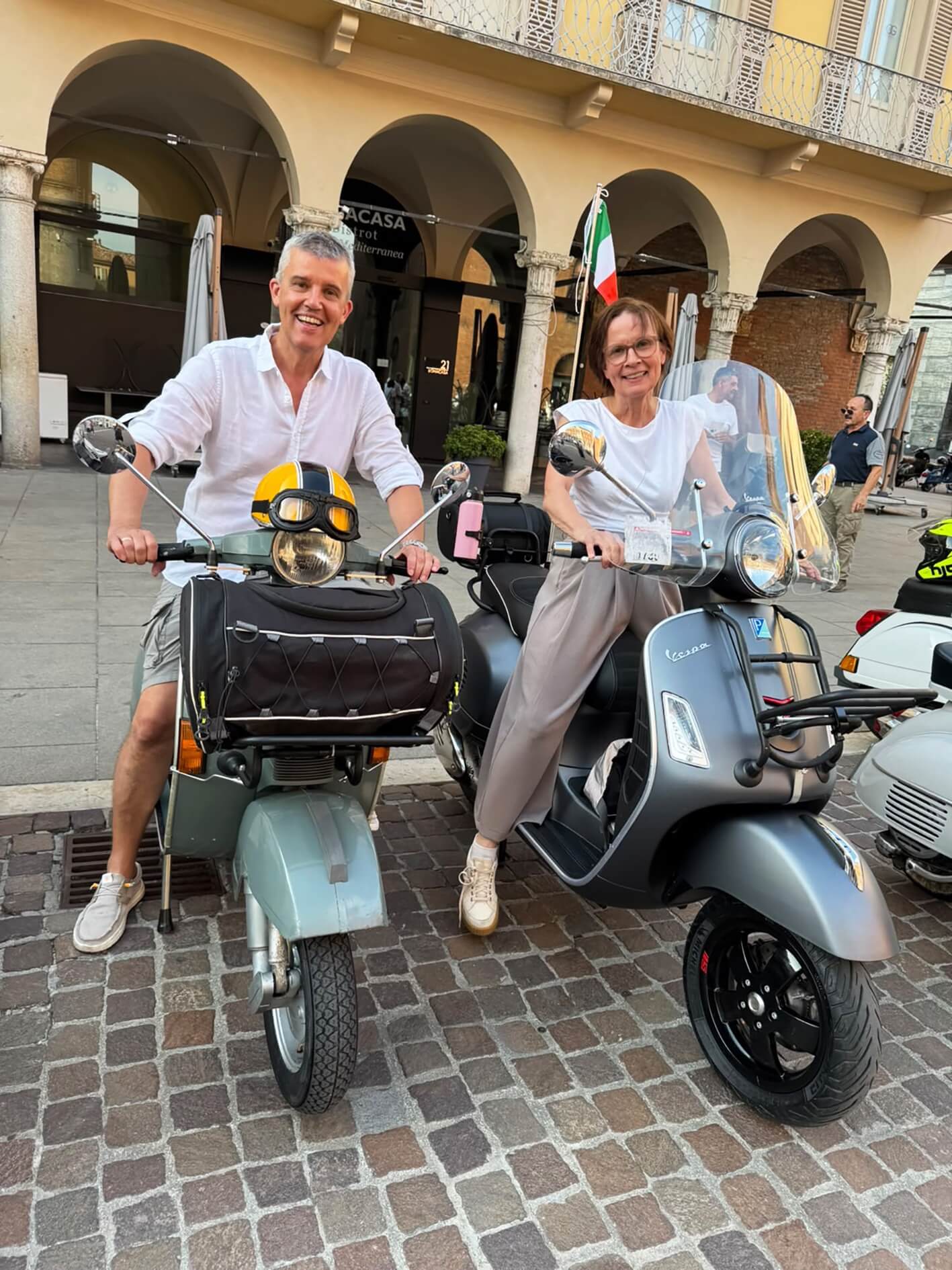
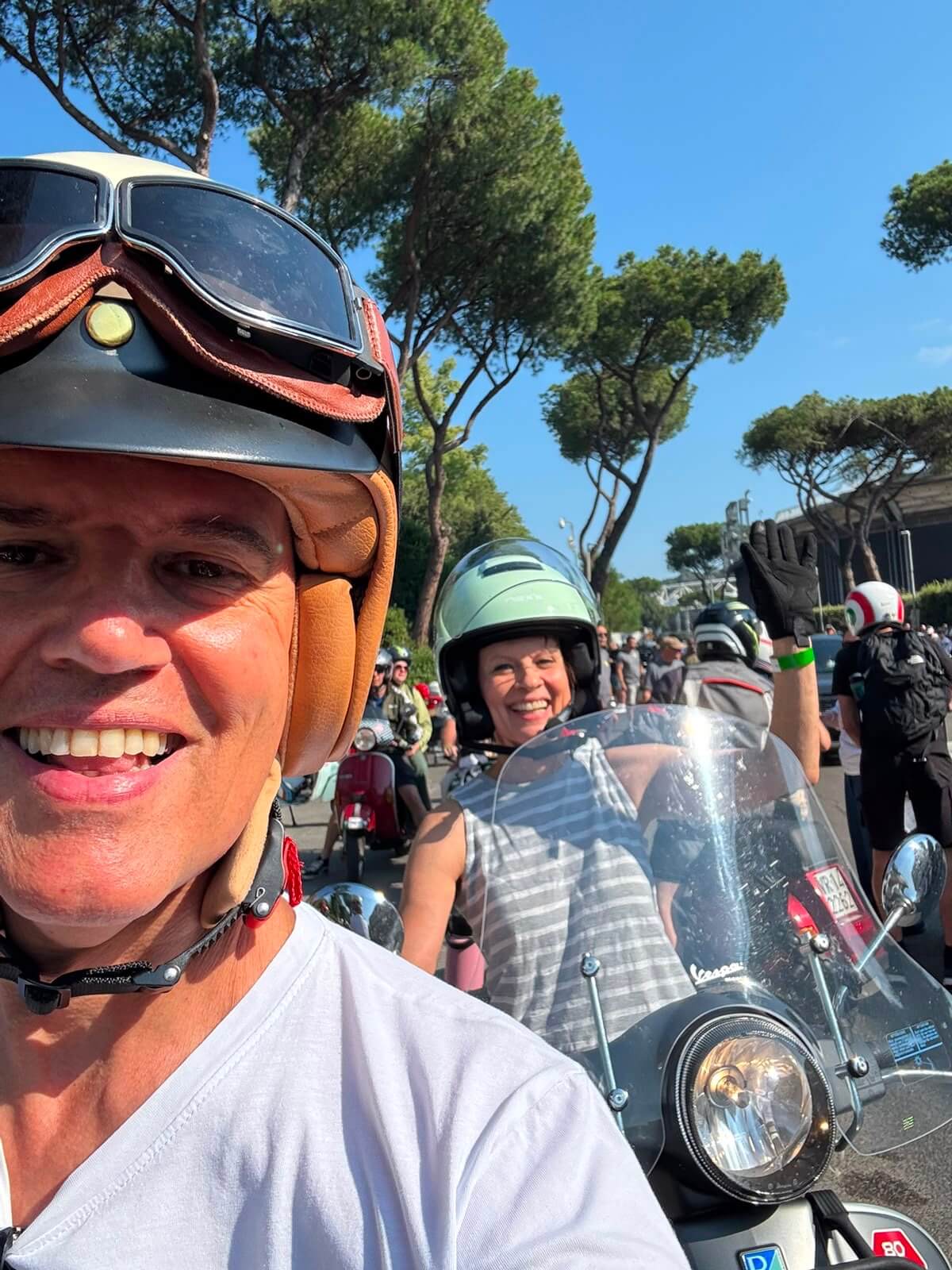
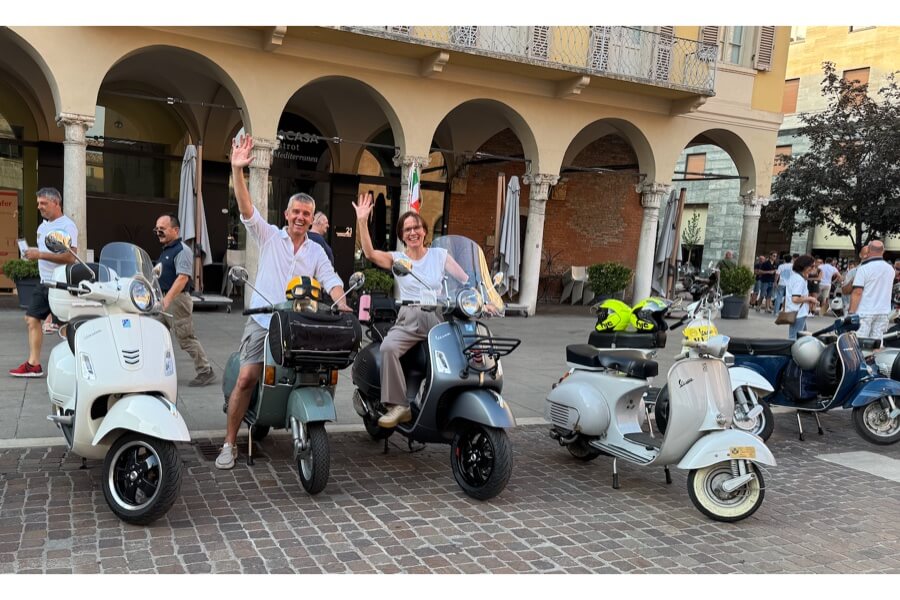
Left: On the eve of the ‘Roma 2026’ event, Edgar and his sister Astrid in Cremona, in the saddle of their Vespas and ready to set off (5 and a half hours on the road, over 520 km, plus the return trip); right: with the Vespa riders at Foro Italico. Photo courtesy.
She’ll be riding my GTS 300, and I’ll ride a PX 150 Arcobaleno.” He adds: “Astrid has just bought the latest Vespa 310 model in Basel, and she’s absolutely delighted!”
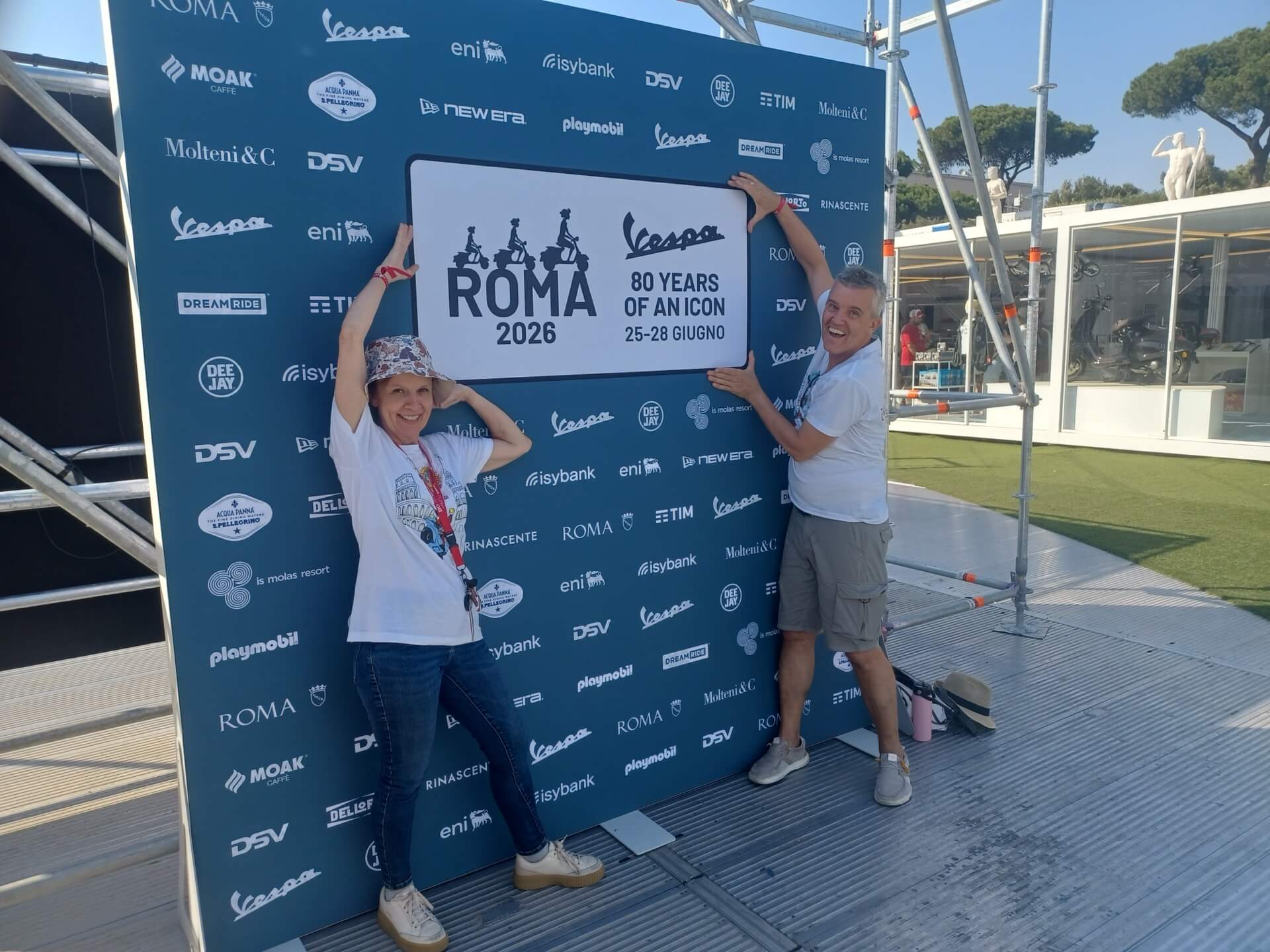
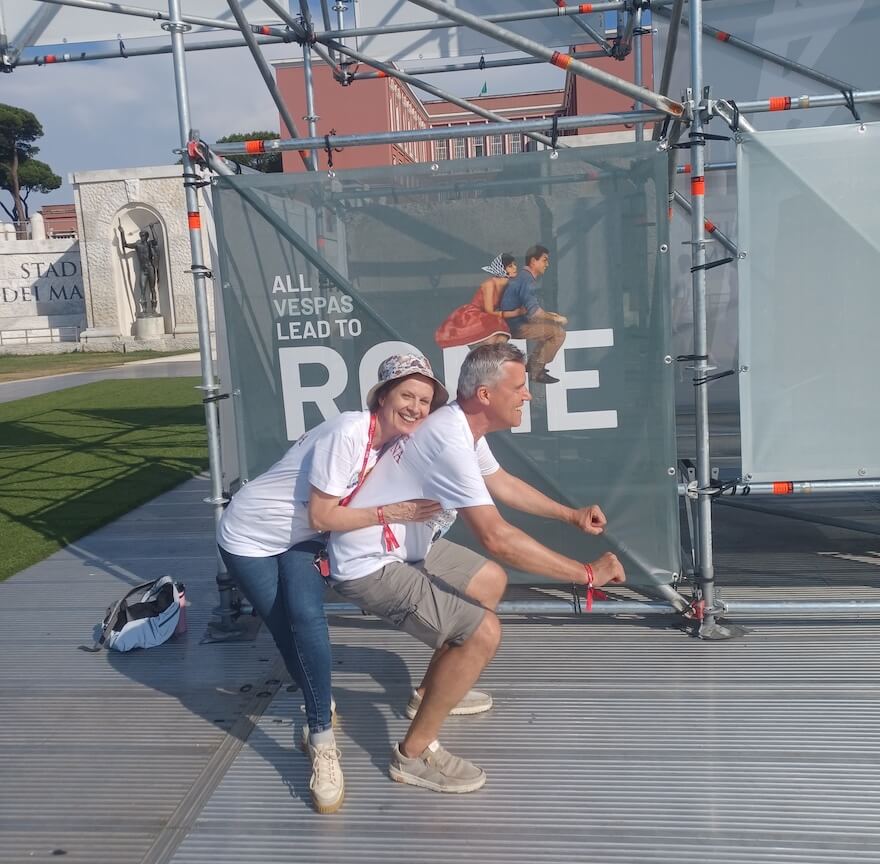
Vespa Village, Rome. Smiles and playfulness: a close relationship between Edgar and Astrid, posing in front of the event’s iconic image (Wide mag photo).
We meet Edgar and Astrid at the Foro Italico in Rome, in the Vespa Village, and have a chat over an excellent shaken iced coffee; they’ve just returned from a busy morning, having taken part in the grand parade that started at the Baths of Caracalla and crossed the Eternal City, followed by a lunch of Italian specialties (which they love), and then a tour of Rome’s most iconic sites, from the Pantheon to the Trevi Fountain. Finally, the return to the Vespa Village.
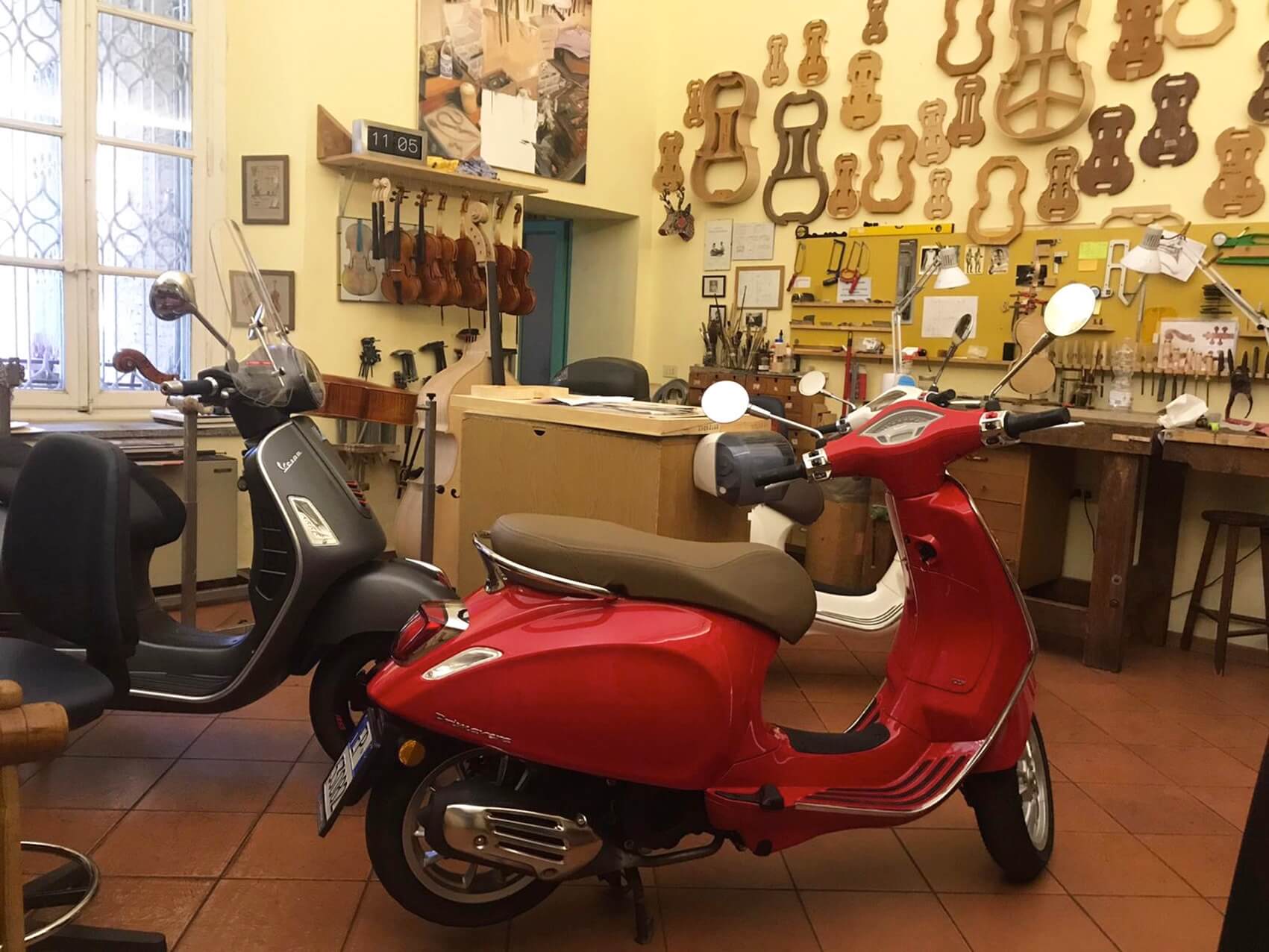
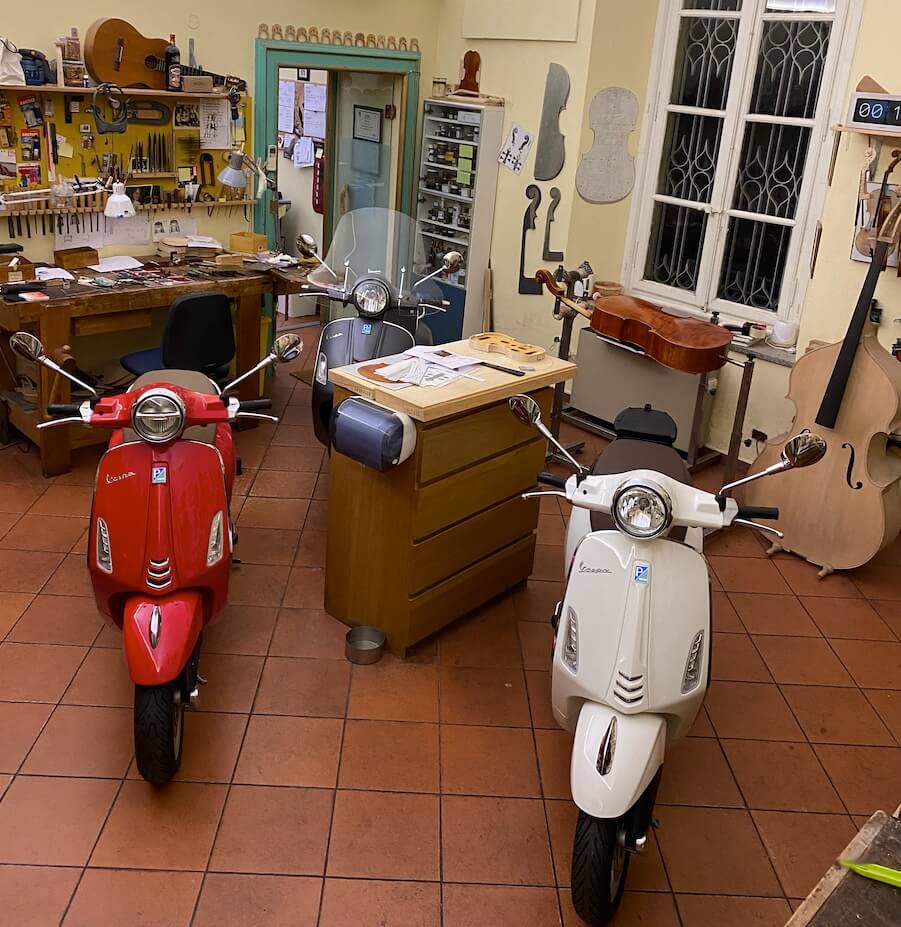
Edgar’s workshop in Cremona and some of his Vespas. Photo courtesy.
“VIOLIN-MAKING IS LIKE A VESPA: IT REALLY EMBRACES YOU
AND GETS UNDER YOUR SKIN…”
Edgar, can you tell us how you became a ‘master luthier’, even crafting some of the most valuable violins in the world?
“I started building guitars when I was 14, then at 17 I came to Cremona, initially to sign up for an evening course on guitar making. But after a few months, I enrolled in the ‘Antonio Stradivari’ violin-making school in Cremona. Violinmaking is like a Vespa: it has an ‘octopus’ effect, it gradually draws you in. When I arrived in Cremona at the age of 17, I knew very little about violins. The only thing that I had in my favour was my good manual dexterity. Then, while I was in violin-making school, I started working whenever I had a free moment. After training in Cremona, I went to the United States to learn new techniques in violin making that were a long way from the European tradition. A little less than a year later, I returned to Cremona and immediately opened my first workshop. This is back in 1990, and I worked every day from 9:00 a.m. to midnight. Those weren’t easy years, but bit by bit, I began to make a name for myself and win some customers; first a few musicians from the Vienna Philharmonic, and then a violin for the Sultan of Oman. I built this violin, then decorated it with 427 diamonds, 70 rubies, 70 tsavorites, 200 grams of gold, and mother-of-pearl.
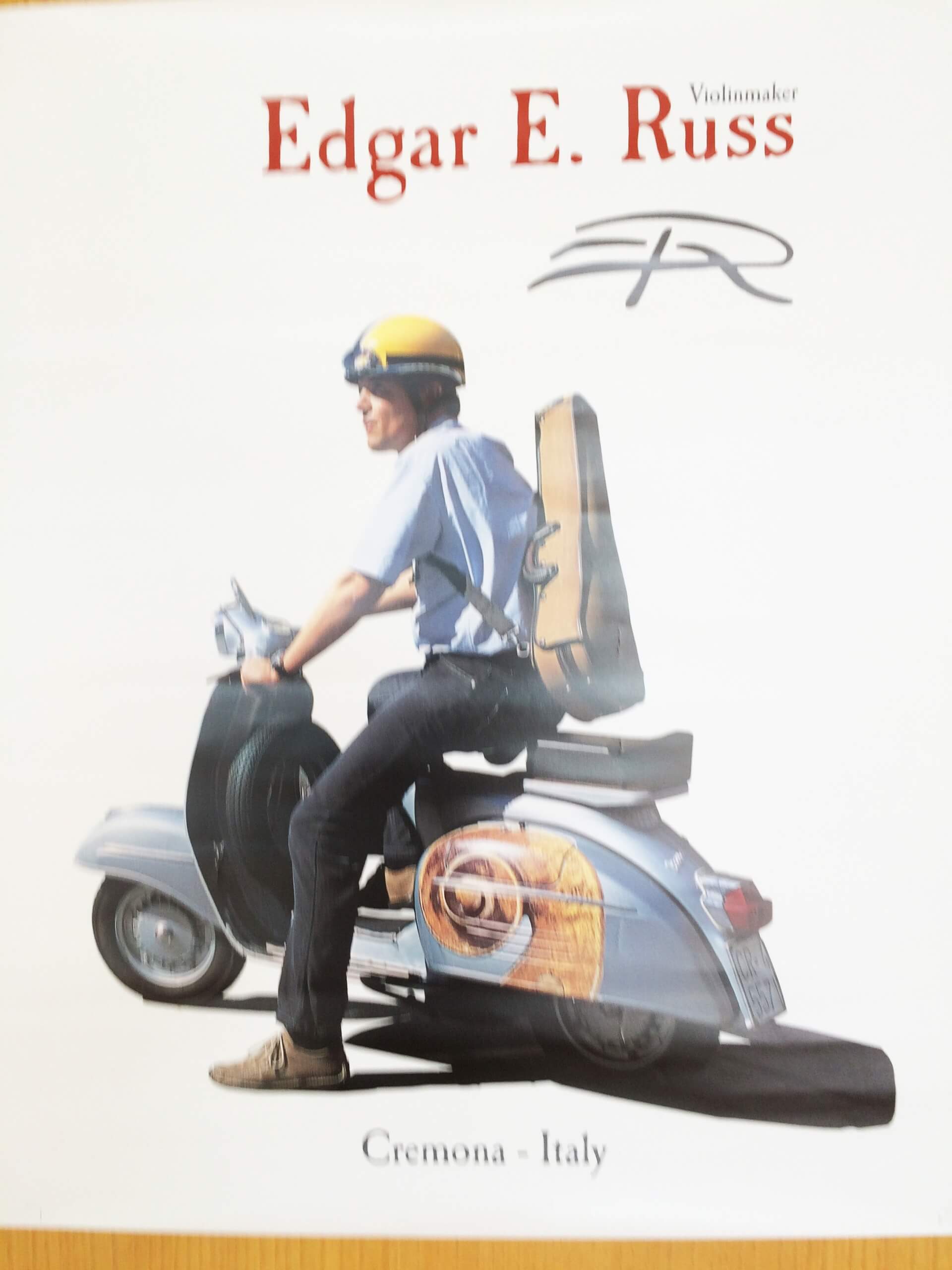
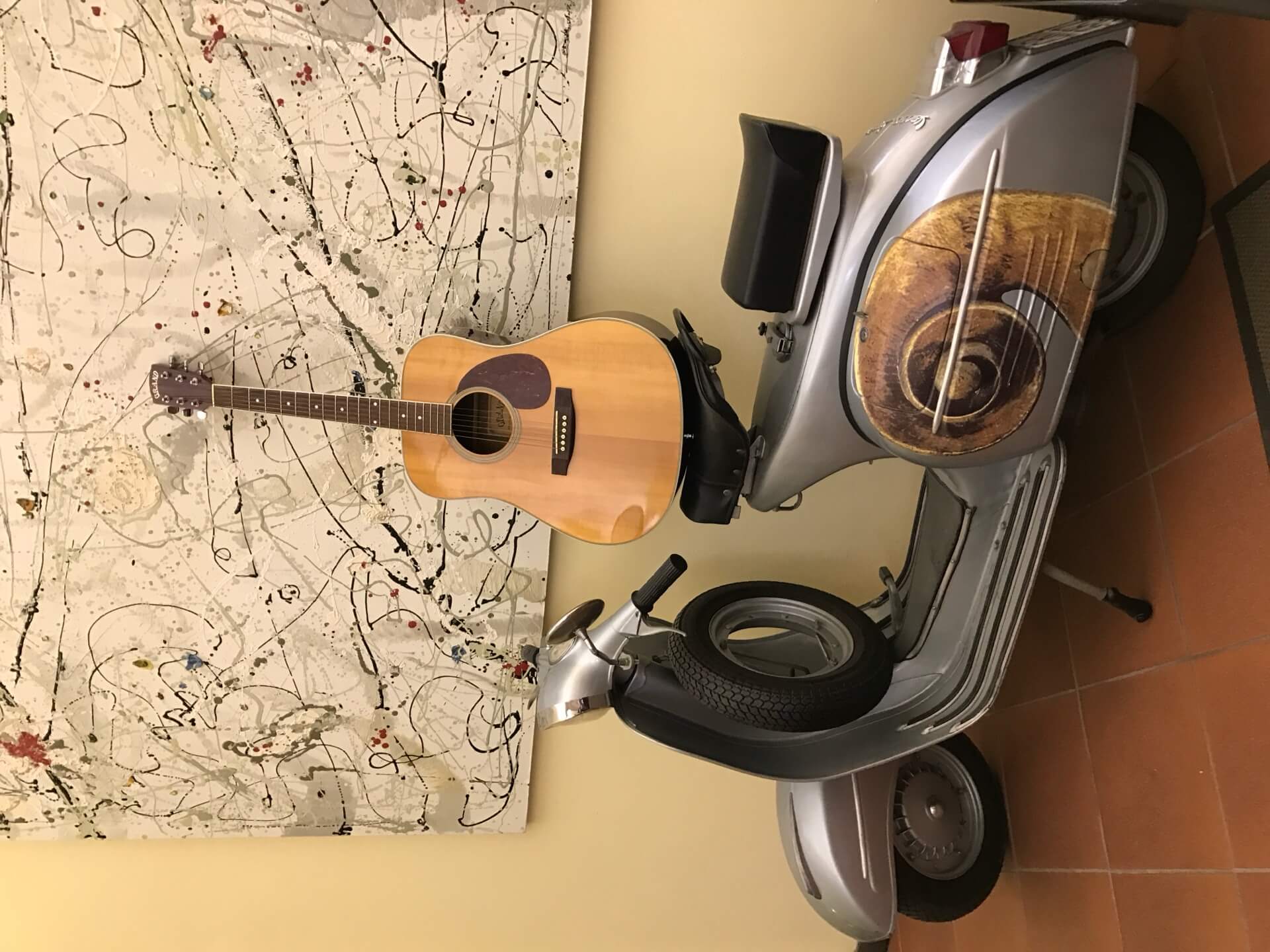
Edgar and his decorated Vespa 50. Photo courtesy.
Throughout this journey, my passion for the Vespa has given me the time I need to think about other things too. I remember back in those early years of my career, I spent a whole summer customising a little Vespa 50 in my violin-making workshop.”
Edgar continues: “My passion for building exquisite and unique stringed instruments first took shape right at the beginning of my journey, when I first saw instruments decorated with inlays. I believe they were made by Nicola Amati (the most illustrious member of a family of luthiers working in Cremona during the 17th century). But it’s also important to note that Antonio Stradivari (the most famous violin maker of all) began his career here in Cremona as a marquetry artist, in a workshop near Amati’s; he was undoubtedly responsible for completing the inlay work for Amati’s instruments for the French court. I was fascinated by this world of highly distinctive, decorated instruments that only the very wealthy could afford. Over the years, I would occasionally build instruments decorated with inlays; then I received a request to create a rendering of a violin decorated with precious materials and family crests, and ideas started going off in my head like fireworks. This is how, in just a few days, I ended up coming up with the design that ended in the construction of a bespoke violin for the Sultan of Oman. Twelve years later, am Austrian friend of mine came up with the idea of creating the Osmium Violin (and in fact, this friend also owns a Vespa VBB125).”
“I CREATED THE MOST PRECIOUS VIOLIN IN THE WORLD: THE OSMIUM VIOLIN.”
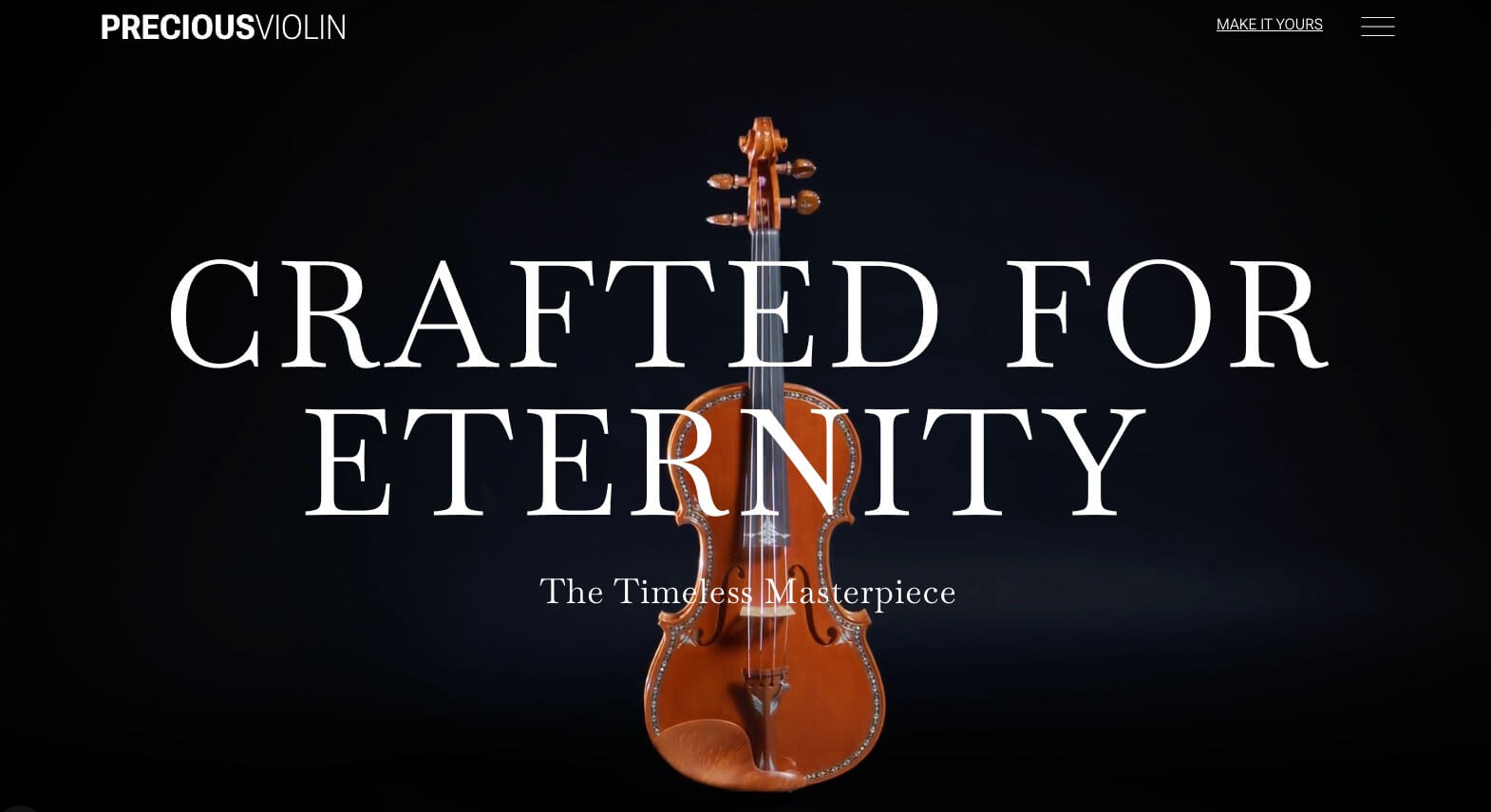
The world’s most valuable violin was created by Edgar Russ, and decorated with the rarest and most expensive material on Earth (crystalline osmium); see and hear it here: https://www.preciousviolin.com/
What are the greatest rewards and challenges of your art?
“In over thirty years of passionate work, one of my greatest sources of satisfaction has certainly been building the Sultan of Oman’s violin and creating the most precious instrument in the world: after 32 months of work, three years ago I unveiled the Osmium Violin (which is currently for sale) in Vienna, decorated with the most expensive and rarest material on earth: crystalline osmium. The most difficult moment? I’d say around 20 years ago, when the violin-making industry was the first to enter the crisis and the last to come out of it. Staying calm, continuing to work every day, and focusing on my skills and quality were my winning strategies. Since COVID, everything has changed: people are focusing more on their passions, and in recent years we’ve had so many requests.”
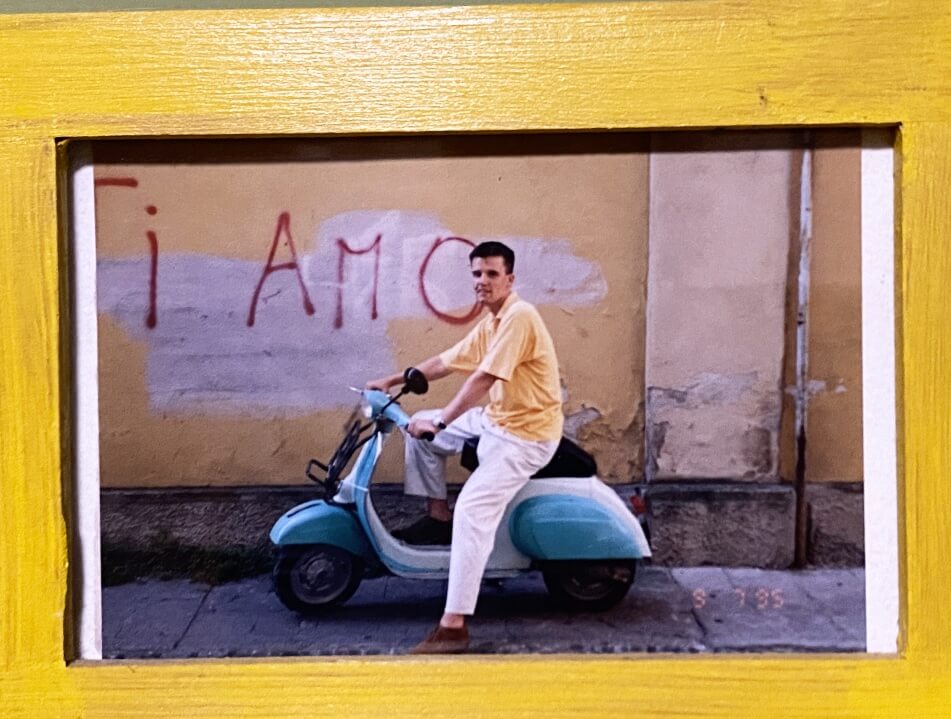
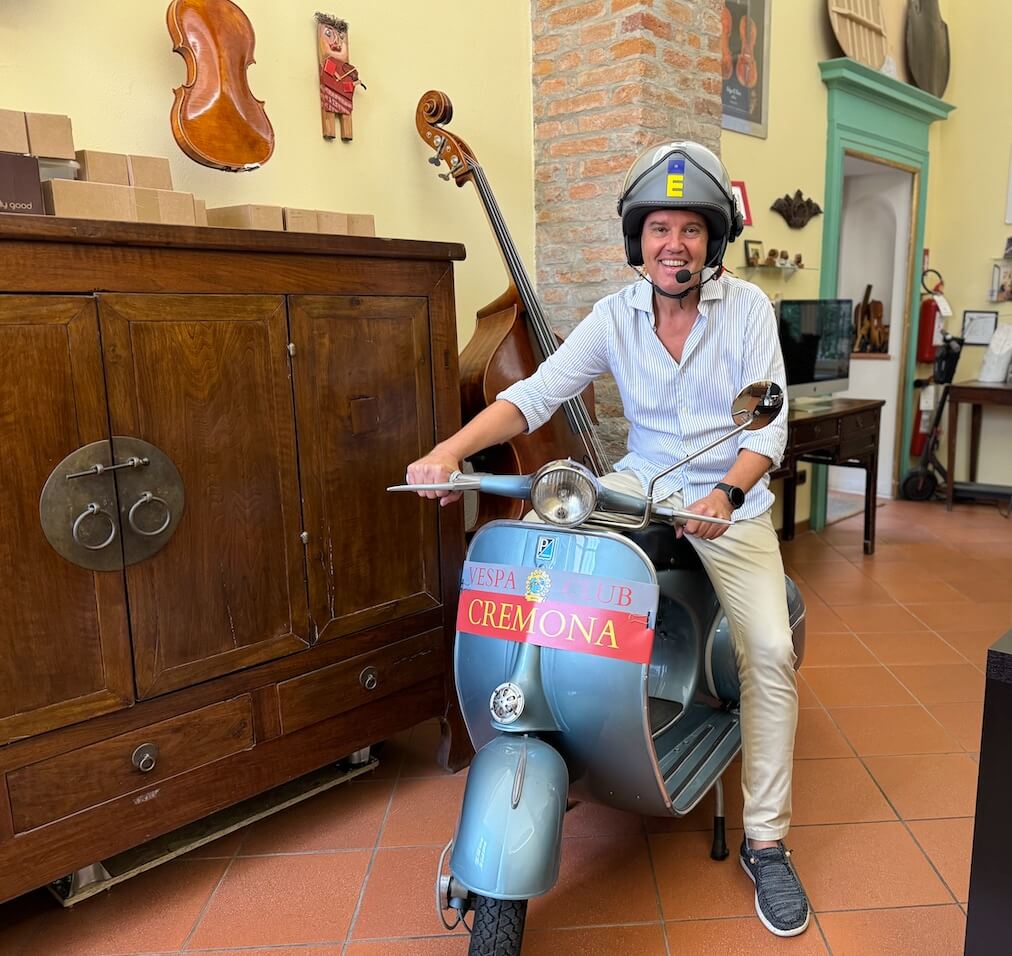
From left: Edgar as a young Vespa enthusiast; Edgar today in his workshop in Cremona, on one of his Vespas; a collection featuring a mix of vintage and modern models. Photo courtesy.
Good to know: Cremona’s violin-making tradition, which has set global standards of excellence for centuries, has been a UNESCO Intangible Cultural Heritage of Humanity since 2012:
https://www.turismocremona.it/en/cremona-le-botteghe-di-liuteria
To find out more about this heritage and admire the instruments, visit the famous Violin Museum (Piazza Marconi) in Cremona: https://museodelviolino.org/?lang=en
“RIDING A VESPA FOR OVER THIRTY YEARS… AN ENDLESS PASSION”.
How did your passion for the Vespa begin?
“It began when my sister Astrid bought her red PX125, when she was 18, in the early 80s in Austria! Back then I was just a boy without a driver’s license, but Astrid let my brother Stefan and I ride it up and down the private road in front of our house. Driving such a beautiful machine was exciting. I still remember that feeling. Then, when I turned 17 here in Cremona, there were a few guys I used to go out with in the evenings. They all had two-wheelers. Back then in Austria, everyone rode with helmets, seat belts, and everything else; meanwhile here in Italy, things were still much more relaxed! So I used to ride scooters like the Ciao, Cagiva, Aprilia, and a Vespa, too.
I bought my first Vespa for 400,000 lire (around 200 euros). Then I met a man outside the city who specialised exclusively in Vespas. It was at his place that I saw hundreds of vintage Vespas for the first time. And back then, a PX seemed too modern to me. I had the Gran Turismo 150. Over the years, I’ve bought at least 20 Vespas from this gentleman for myself and my friends in Austria. I never would have imagined that I would eventually be converted to riding a modern Vespa!”
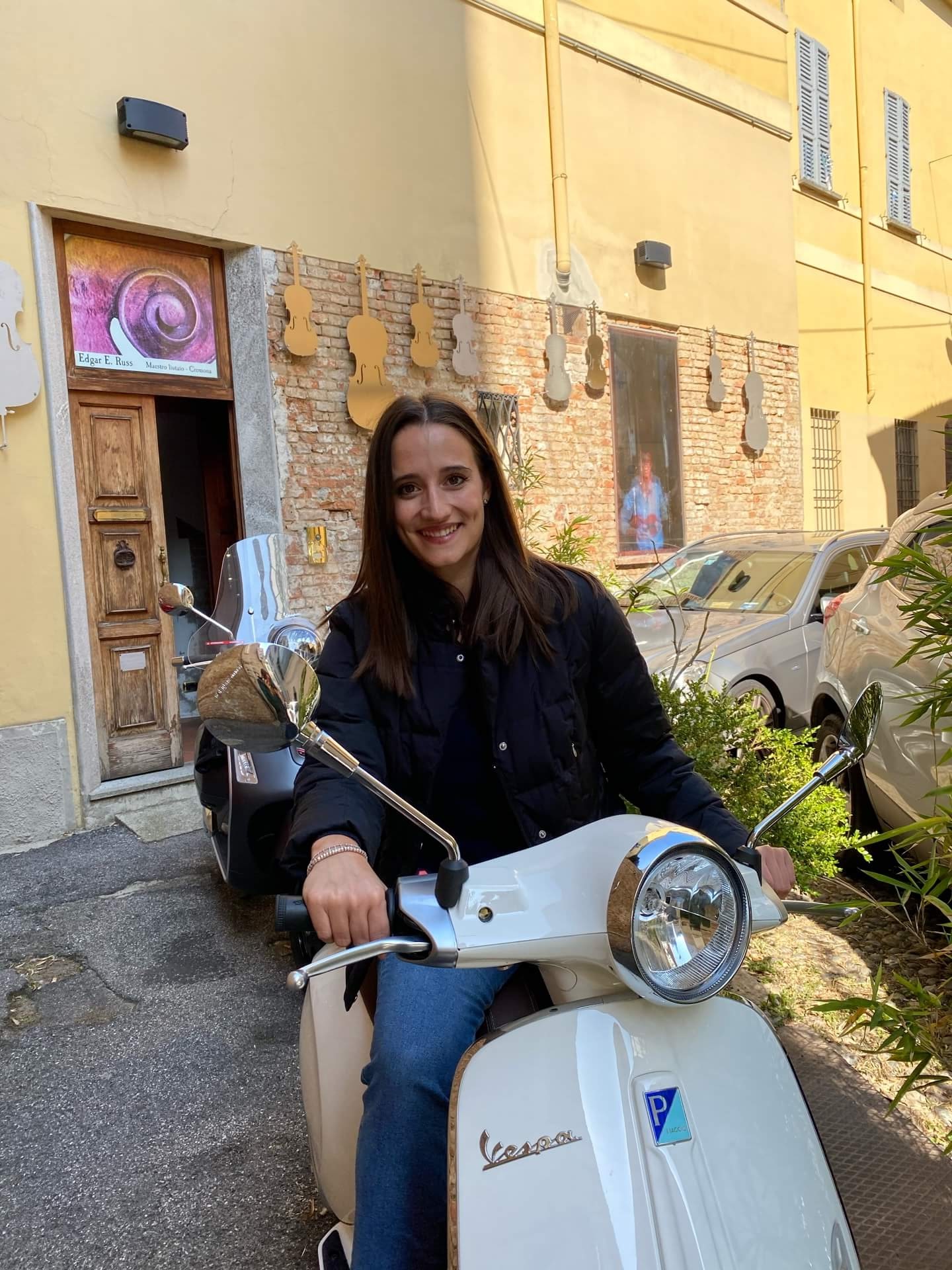

The exterior and interior of Edgar’s workshop: his daughters riding their Vespa Primavera scooters, a gift from their father. Photo courtesy.
But during Covid, my YouTube channel - which I was running at the time with my daughters Nina Zoe Russ and Anna Joy Russ - gained popularity, so I decided to celebrate our first 10,000 followers by giving each of them a modern Vespa (second-hand but with low mileage).”
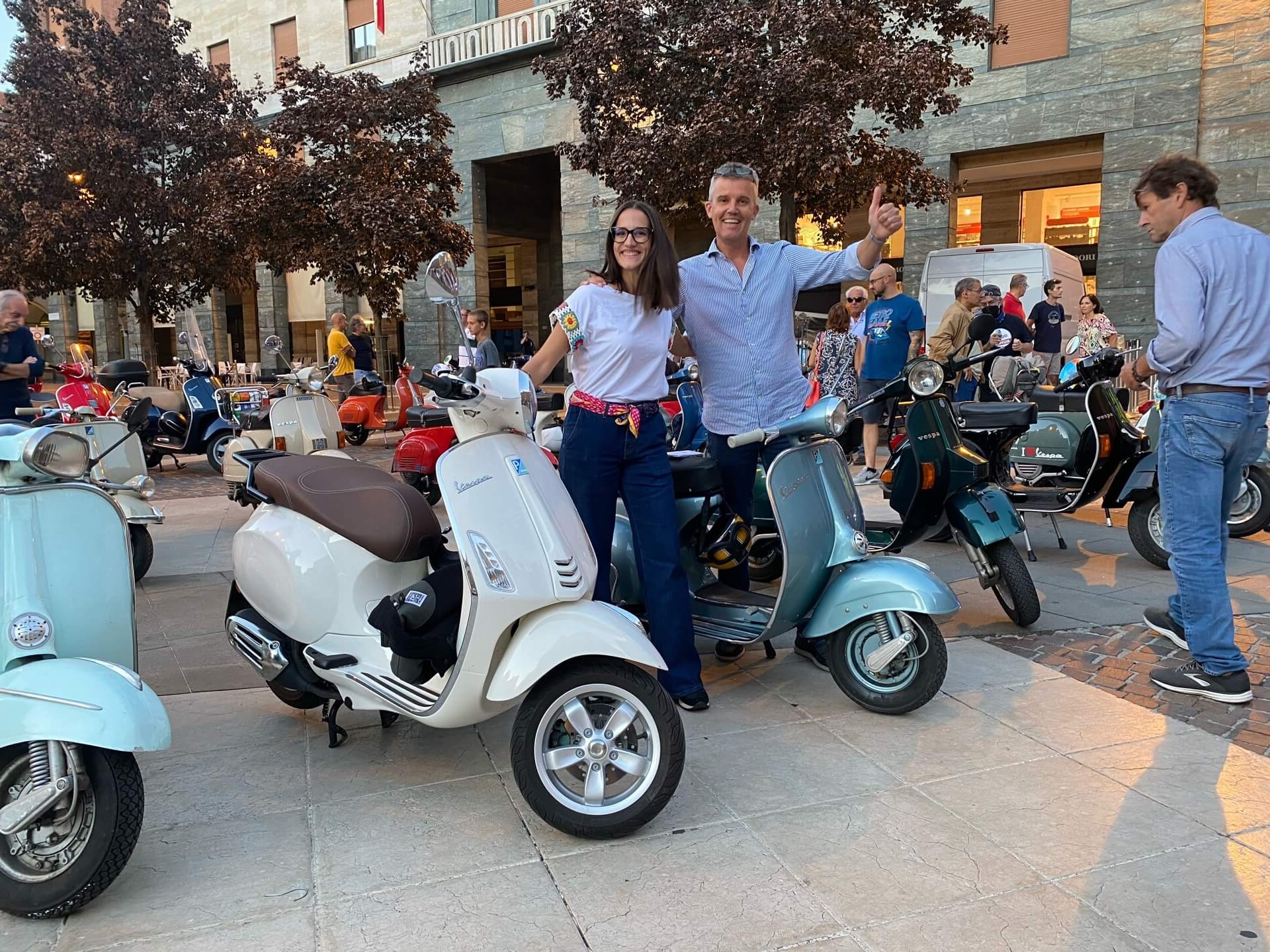
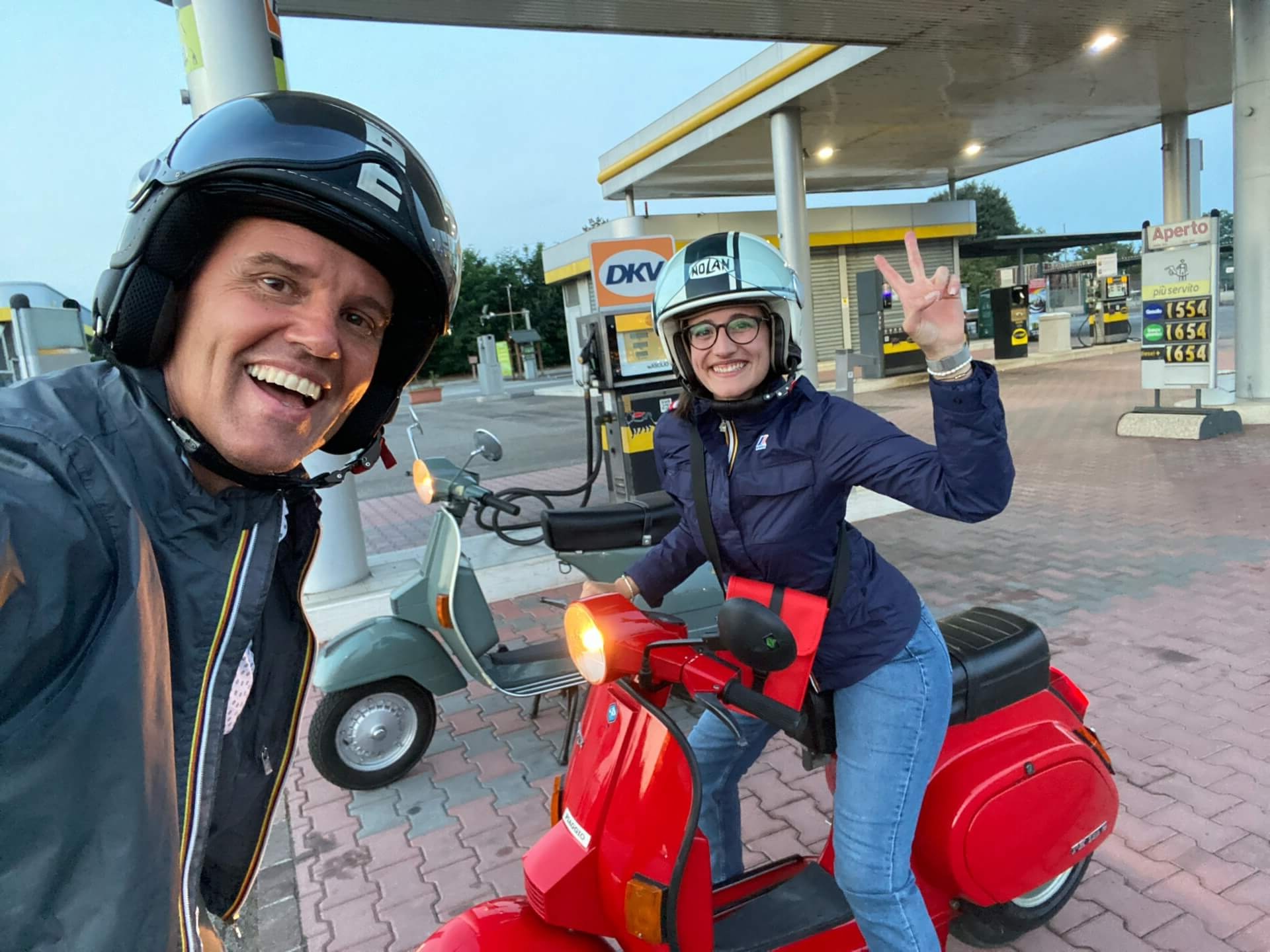
Vespa, a family passion. Photo courtesy.
How long have you been a member of the Vespa Club Cremona? Do you take part in their events and rallies?
“Since back in 2020 at least - as soon as I found out there was a Vespa Club in Cremona, I joined right away. Our club is very active, so it’s not possible for me to take part in all of their events. They often organise as many as three different activities in a single weekend. Straight after Rome, preparations begin for the upcoming Vespa World Days 2027 (in Durrës, Albania, May 13–16, ed.). It’s really nice to see how the number of participants is growing at a crazy rate. Of the nearly 160 members of the club, a good group of about 50 people came to Rome for the Vespa World Meeting. My experience with the Cremona Vespa Club has really opened my eyes: it’s really great to have the chance to meet other people (who aren’t master luthiers or musicians) and learn so many details about the Vespa, and about their travel and riding experiences.”
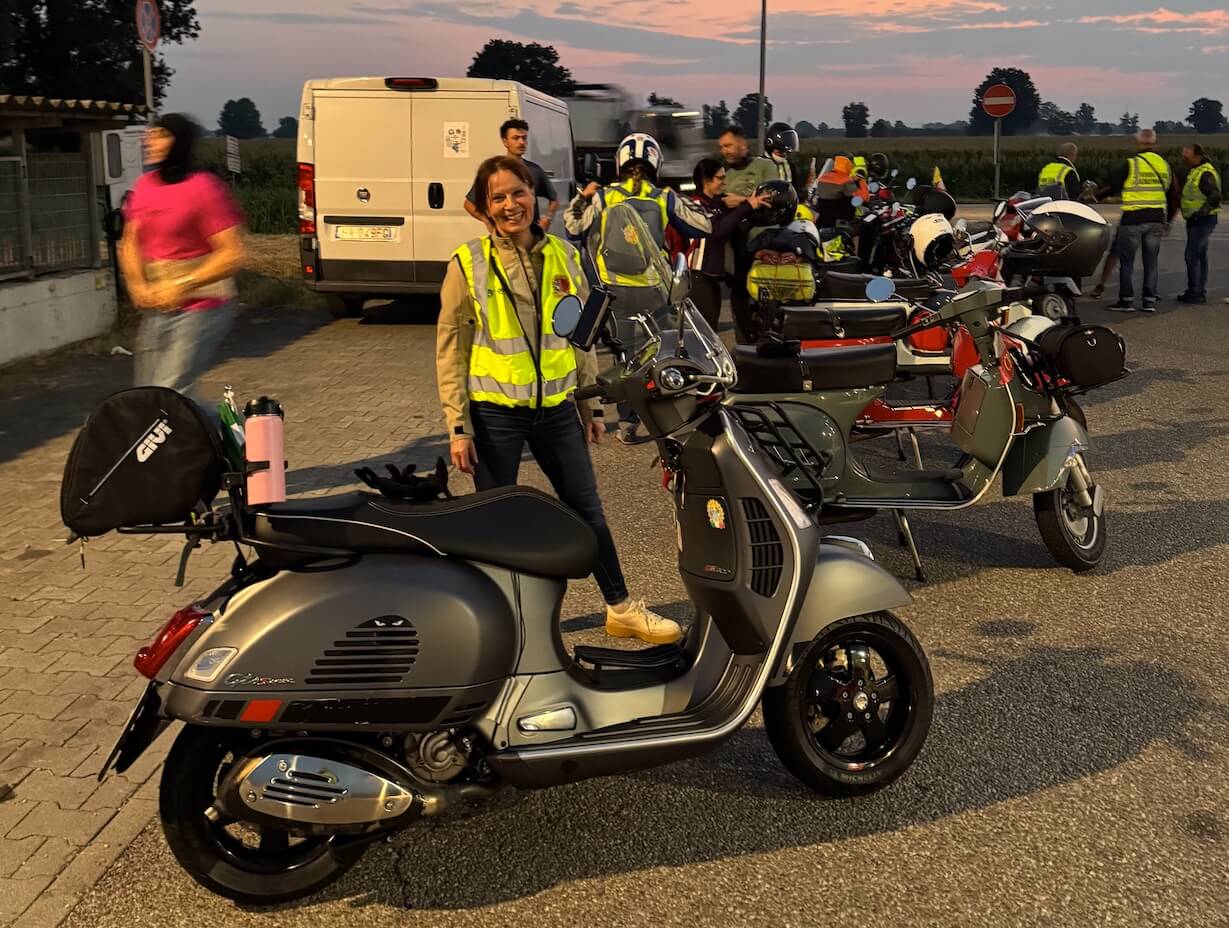
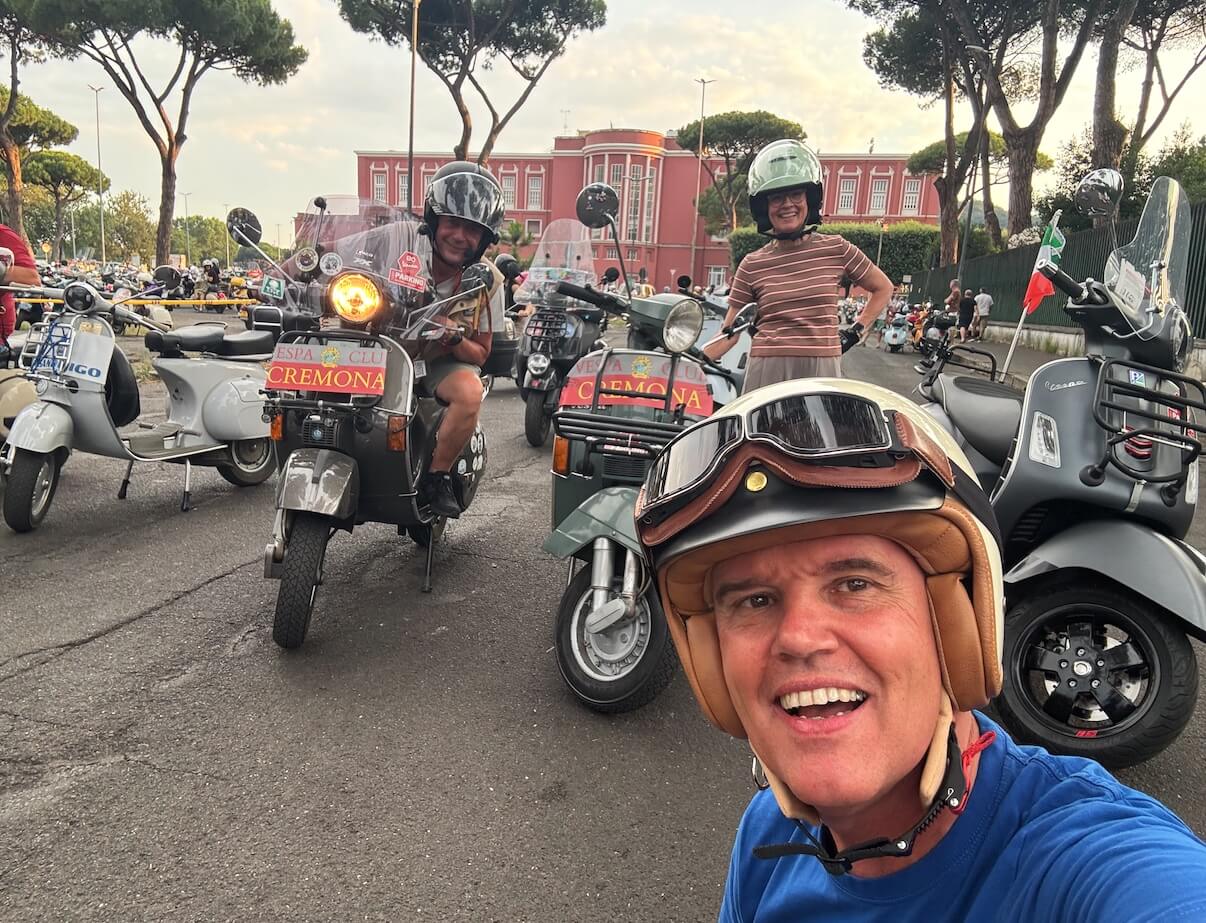
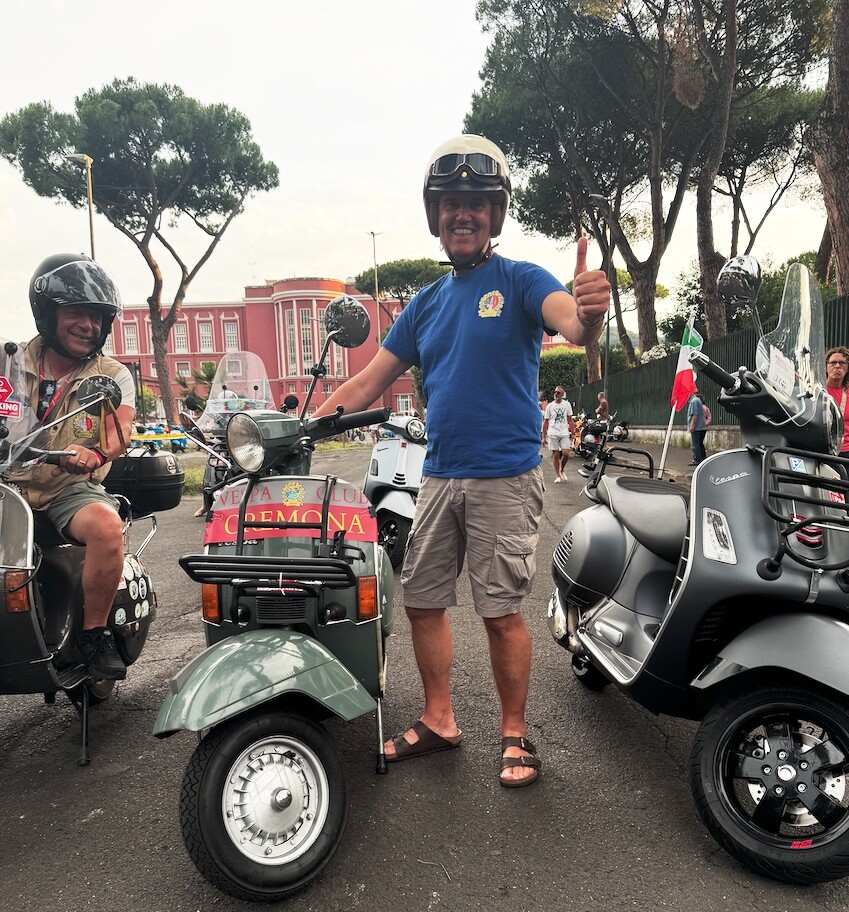
The Vespa Club Cremona group on the road and in the parking area at the Foro Italico, with Edgar and Astrid. An ‘amazing sea’ of thousands of Vespas of every model, era and colour. Photo courtesy.
Let’s also talk about Vespa trips: your most unforgettable one, in addition to the Cremona-Rome and back round trip…
“I took an unforgettable Vespa trip back in 2008 when I set off from Cremona on my old Gran Turismo 150 for Brescia. In Brescia, I picked up the woman who was my girlfriend at the time (and who is now my wife!) so we could take a trip around Lake Garda. On the Veronese side, near Garda, we stayed at a hotel, and the next day we finished our leisurely tour. We had so much fun - the Vespa takes you everywhere at a speed that lets you see places, people, and landscapes you’d miss out on otherwise. I drive a lot in a car, mainly for work, all over Europe (40,000 km a year); riding a Vespa relaxes me.”
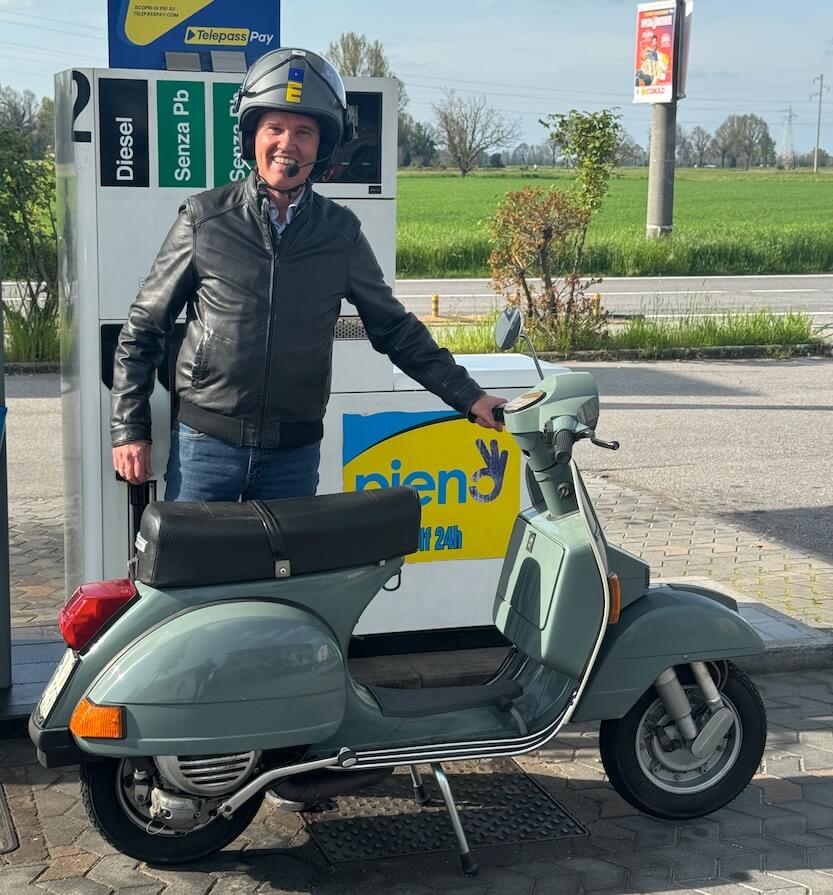
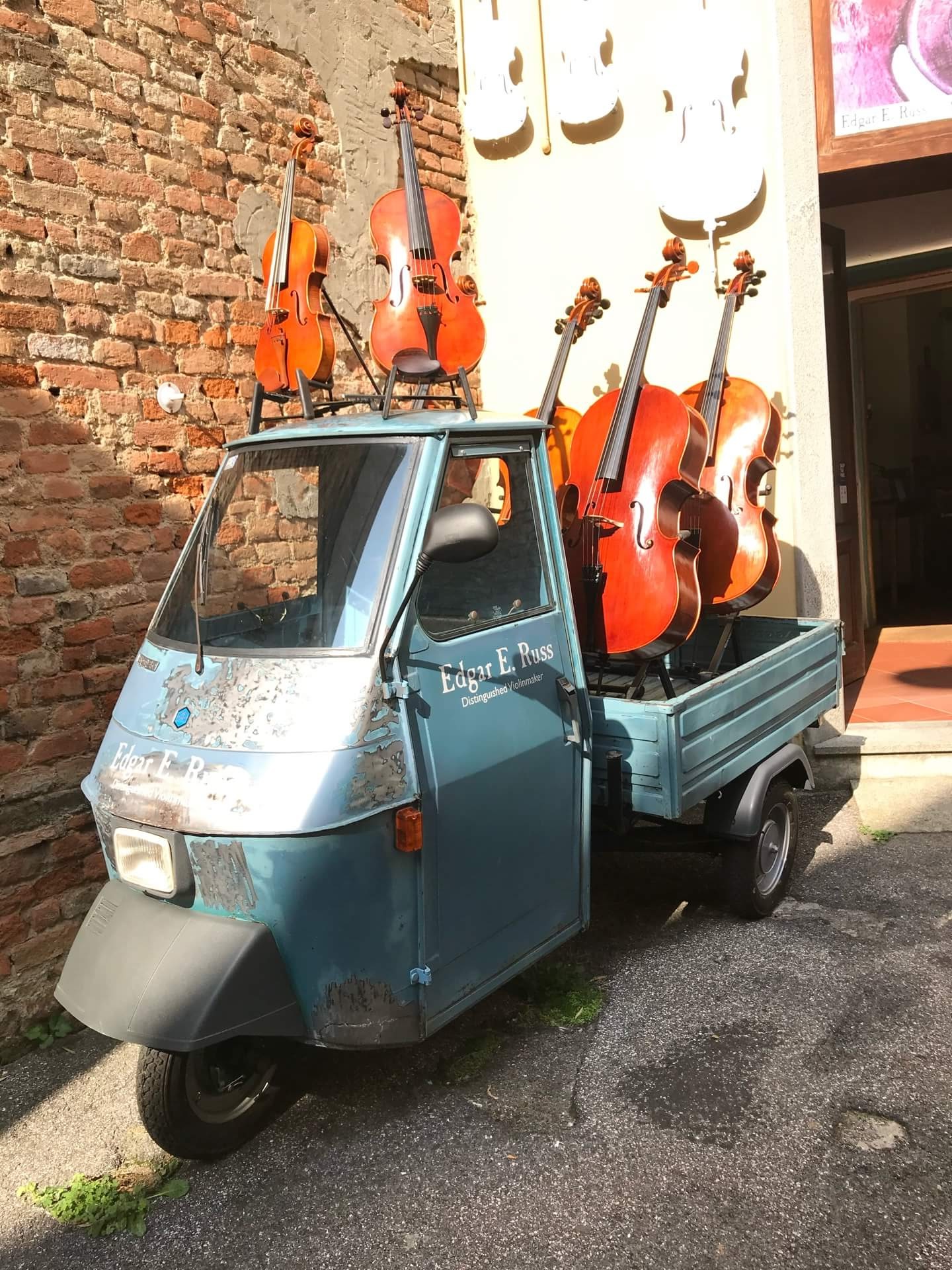
Edgar on the road, and his original Piaggio Ape in front of his workshop in Cremona. Photo courtesy.
Not just Vespa: in addition to the adorable Piaggio Ape, which you use for deliveries and errands in Cremona’s historic centre, is it true that you have something else special in your living room?
“Actually, I have quite a few vehicles: so many that some people have actually suggested I set up a little Vespa museum. But I’d rather have fewer of them, but in perfect condition. The model I have in my living/dining room at home is a perfectly restored Moto Guzzi Cardellino.
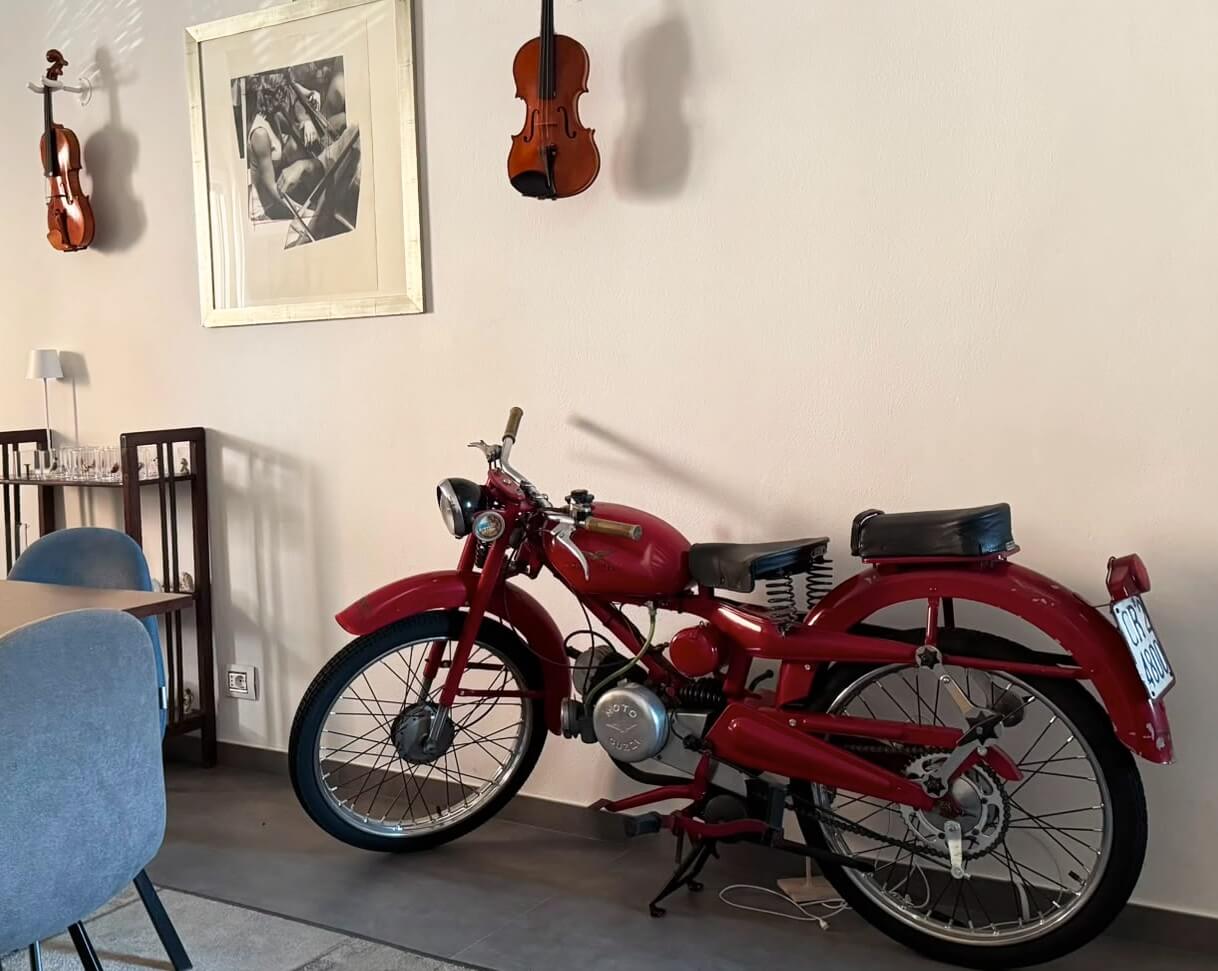
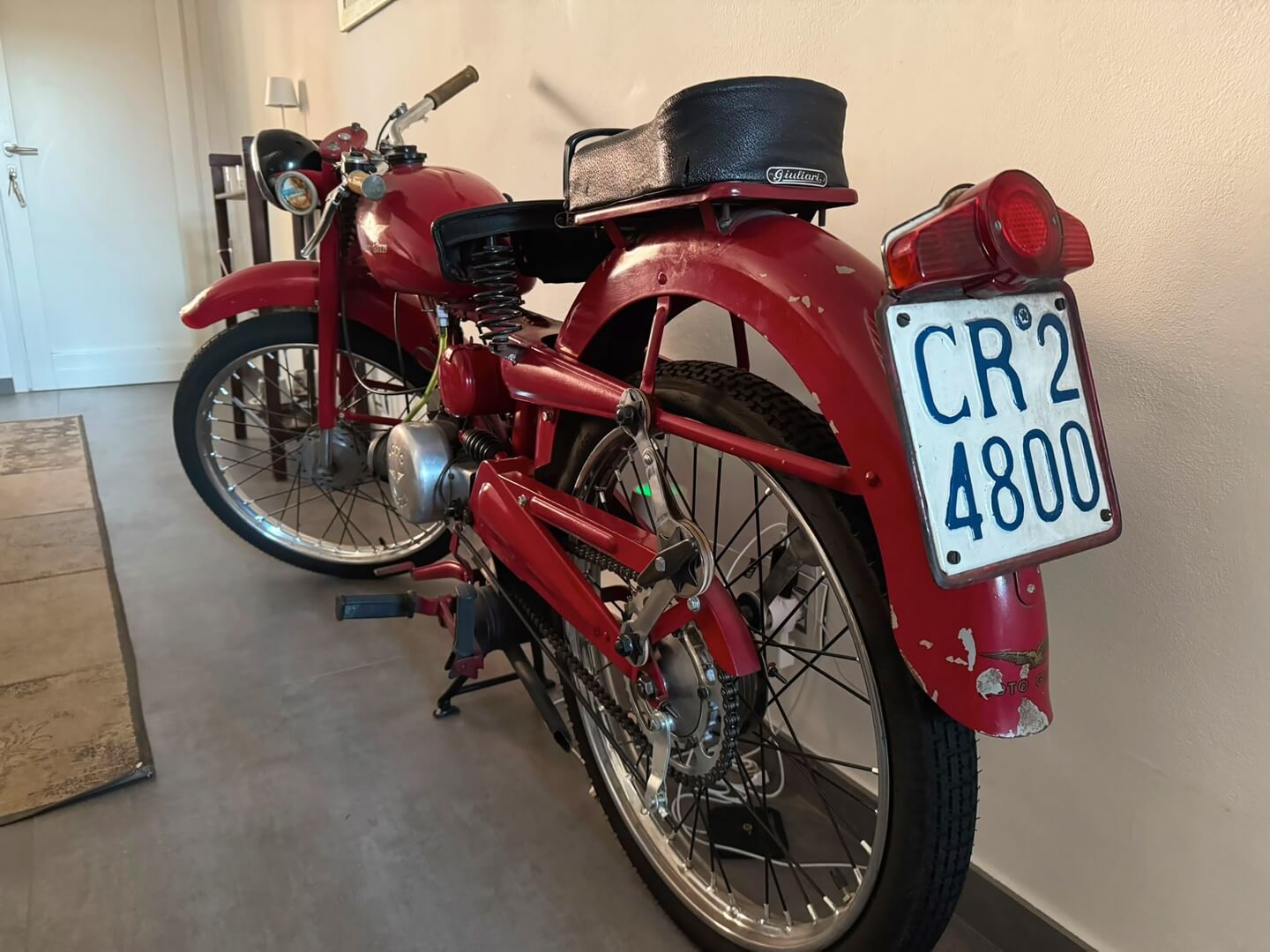
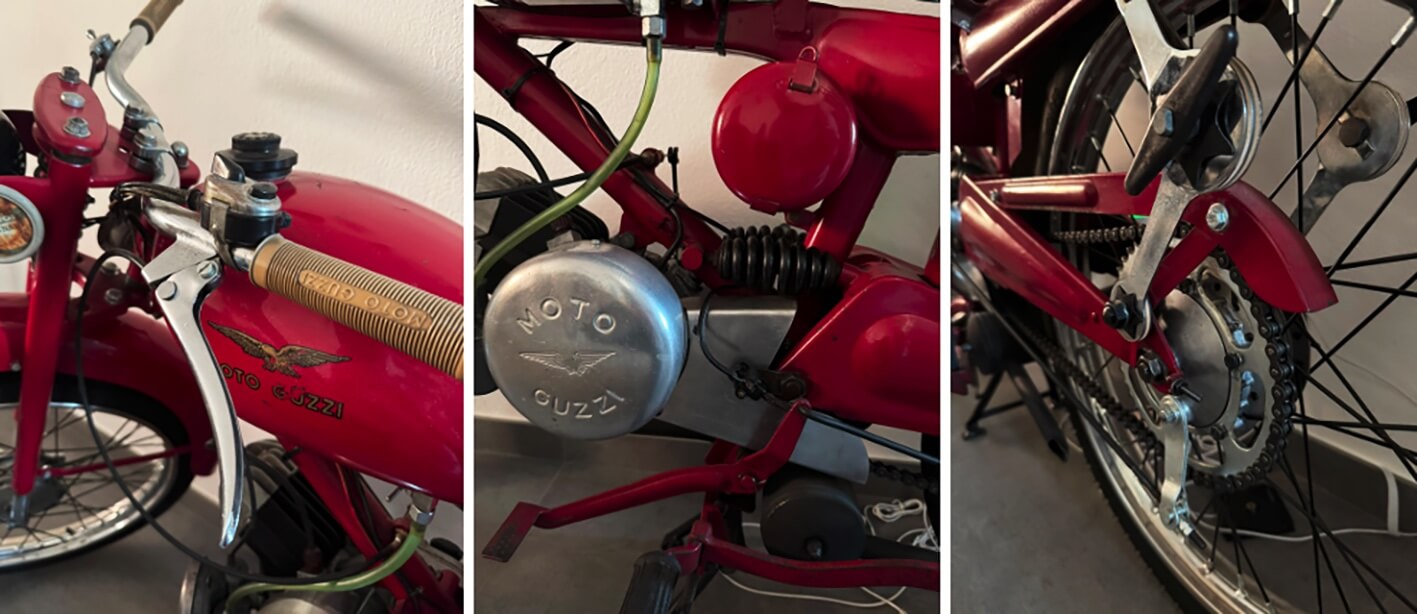
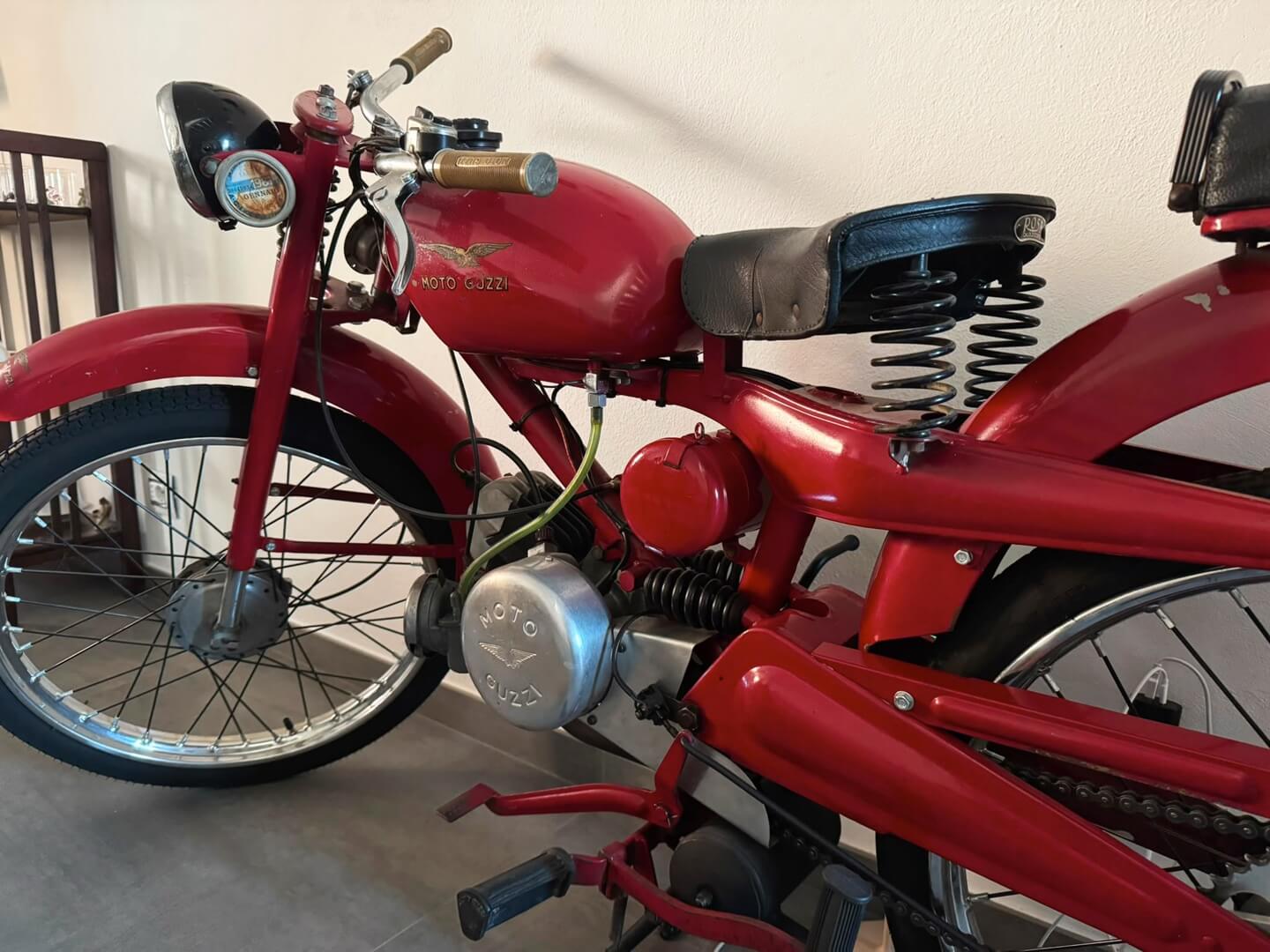
Moto Guzzi Cardellino (mid-1950s) in perfectly preserved condition. Photo courtesy.
Actually, to be more precise, I’d say ‘preserved’. Because I want to make sure that its original paint isn’t stripped to be repainted. These historic vehicles are like antique violins. They must be respected, and every original part must be preserved, repaired and maintained. Repainting damages not only the vehicle but also its value.”
ASTRID: “MY RETURN TO THE VESPA TO CELEBRATE 80 YEARS OF AN ICON”
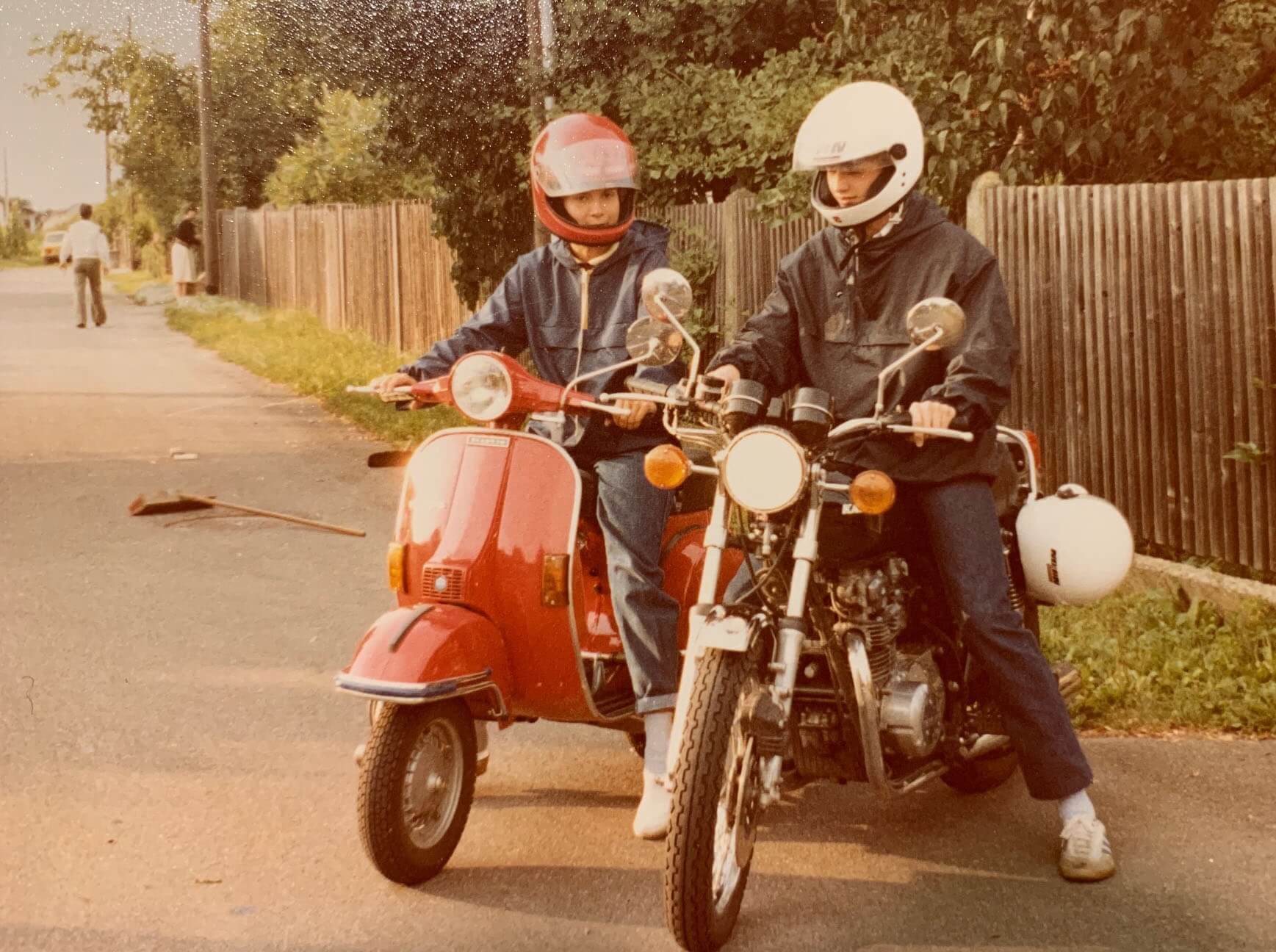
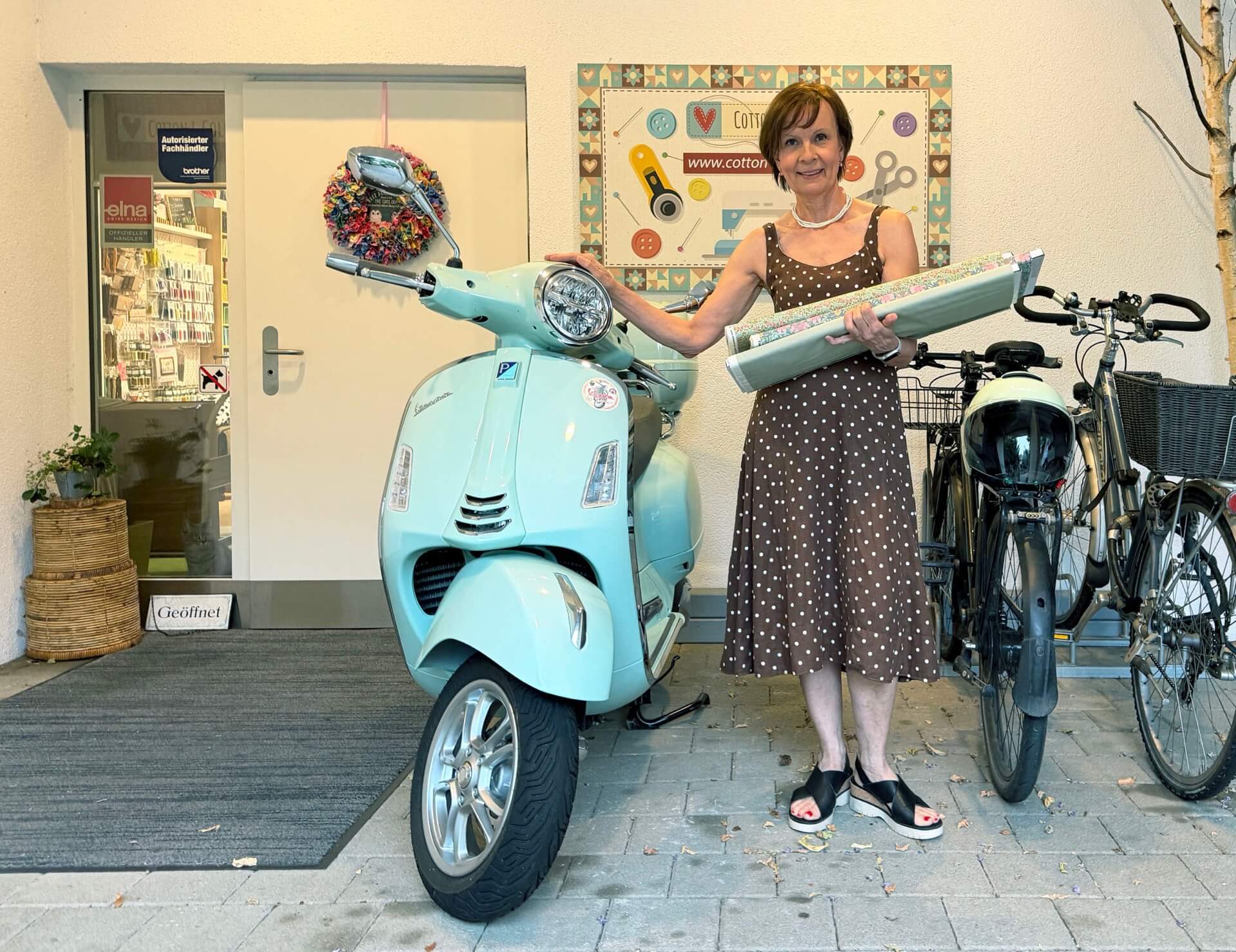
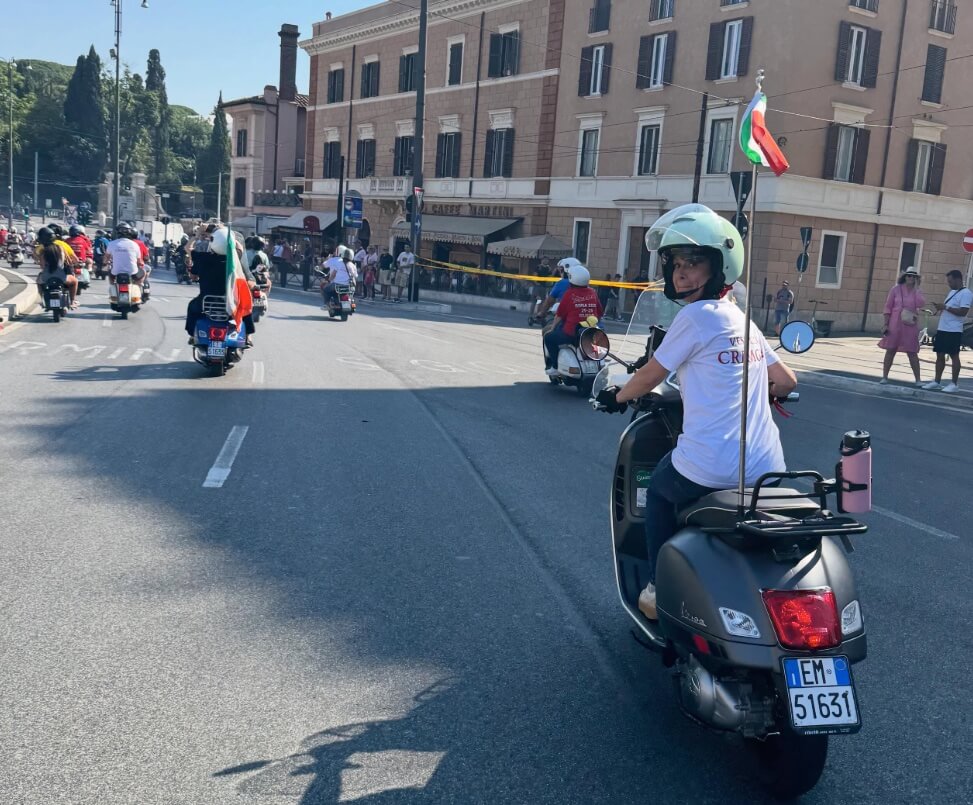
Astrid at 20, on her first Vespa PX 125; Astrid today posing in front of her shop with her new Vespa GTS 310, which she bought in March to ‘train’ for the big Roma 2026 event. And here, riding her brother’s Vespa GTS, taking part in the grand parade in the heart of Rome. Photo courtesy.
Another wonderful story is that of Edgar’s sister, Astrid, who lives and works in Basel, Switzerland.
“I bought my red Vespa PX 125 with the money I’d saved by working during the school holidays when I was 20. Then, I spent around 40 years without a Vespa, during which time I raised three children. When my brother Edgar talked to me about taking a trip to Rome to attend the Vespa’s 80th anniversary event and asked me to go with him, riding a Vespa from his collection, I was really excited. My only concern was that I didn’t know if I’d actually be able to ride after so many years. That’s why, on 11 March 2026, I bought a GTS 310 in the shade Verde Amabile green to get some practice in, and I fell in love with it all over again. Since then, after work, I’ve been spending my time taking rides on my Vespa. It’s such a pleasure!”
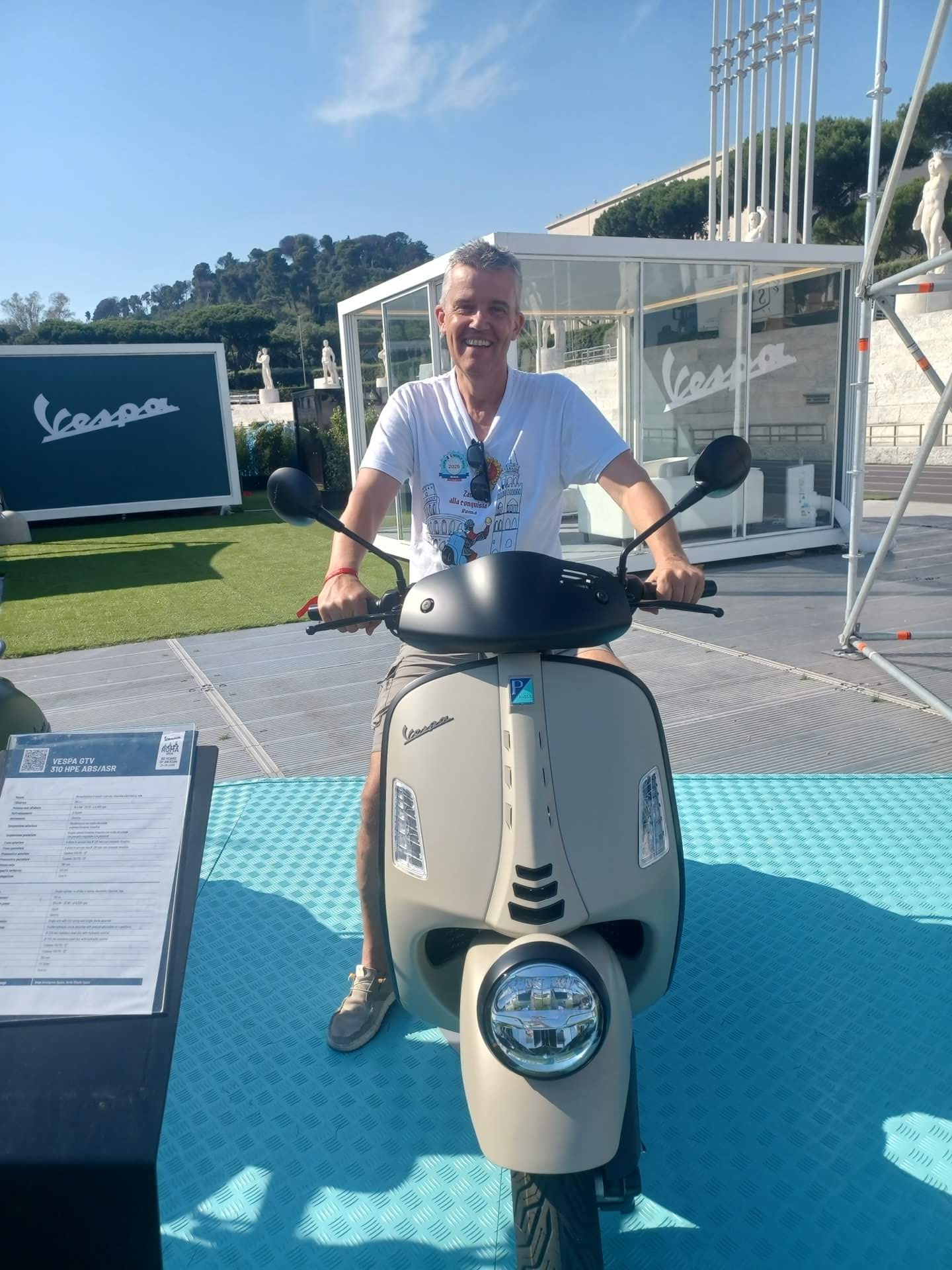

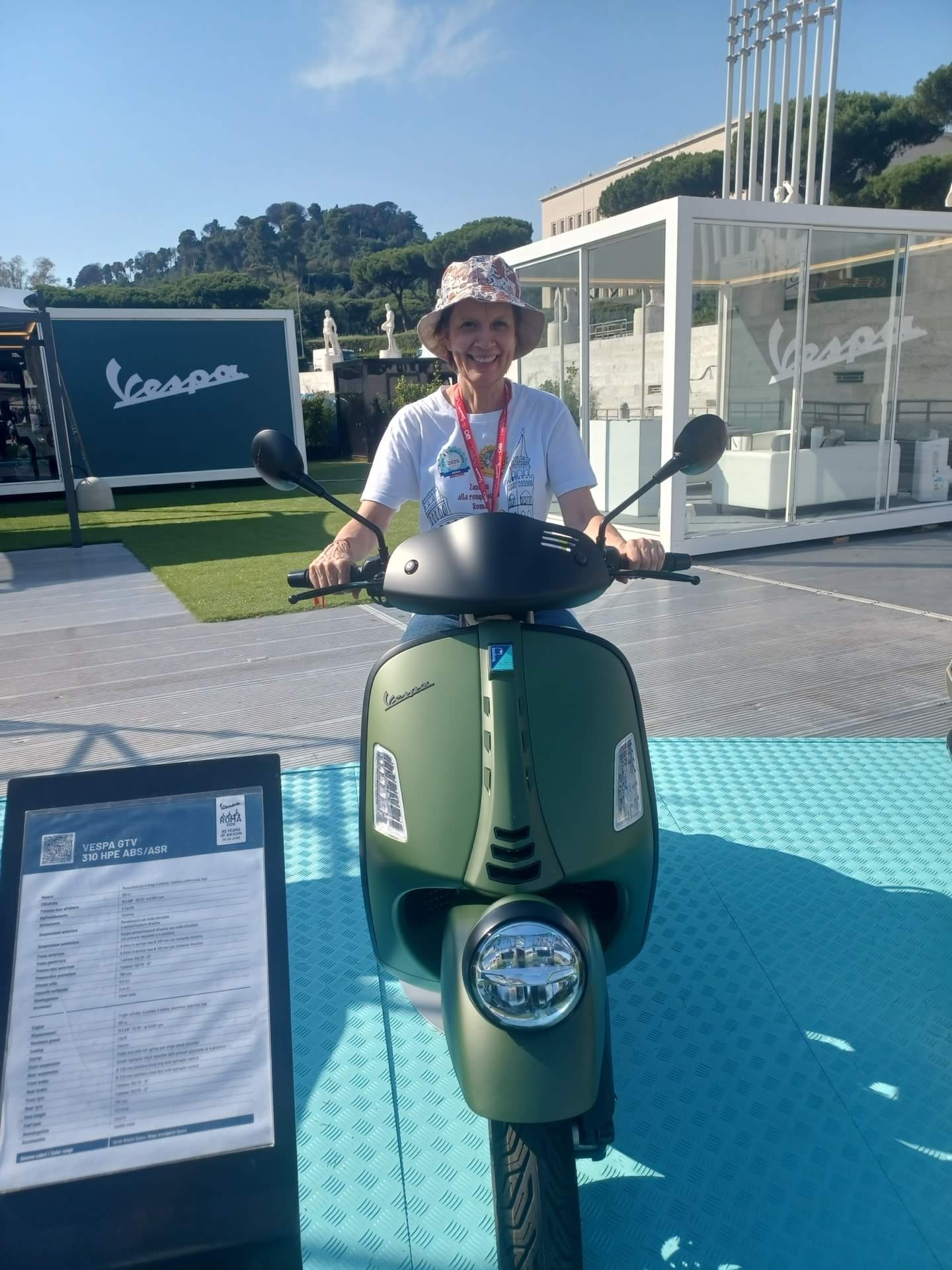
Wide magazine photo.Photo courtesy.Wide magazine photo.
“OUR BEST MOMENTS AT THE ROMA 2026 EVENT”. THEN JULI ARRIVED!
A question for both of you: What were the most memorable moments you experienced during the Roma 2026 event?
Edgar: “Life is made up of moments. For months, we counted down the days until we could finally set off on our Vespas to Rome. So, for me, the most exciting moment was setting off from Cremona. Waking up a minute before the alarm went off and then setting off with the others at 5:00 a.m.; watching the sun rise and listening to the sound of our Vespas as they carried us towards Rome...it was a really beautiful moment. Then the parade in Rome was… the cherry on the cake! Seeing and riding alongside 25,000 other Vespas was an unforgettable feeling. Thank you to everyone who organised this! And thank you for this interview.”
Astrid: “It was an unforgettable experience; I enjoyed every moment to the fullest, including this surprise interview. Another wonderful surprise was returning to Basel and discovering that I had become a grandmother! Juli, our first granddaughter, was born.”
Congratulations! Chances are she’ll become a Vespista too - take it from Edgar and Astrid!
SOCIAL MEDIA CORNER – COTTON & COLOR BY ASTRID OBERHAUSER FACEBOOK:
https://www.facebook.com/cottonandcolor/
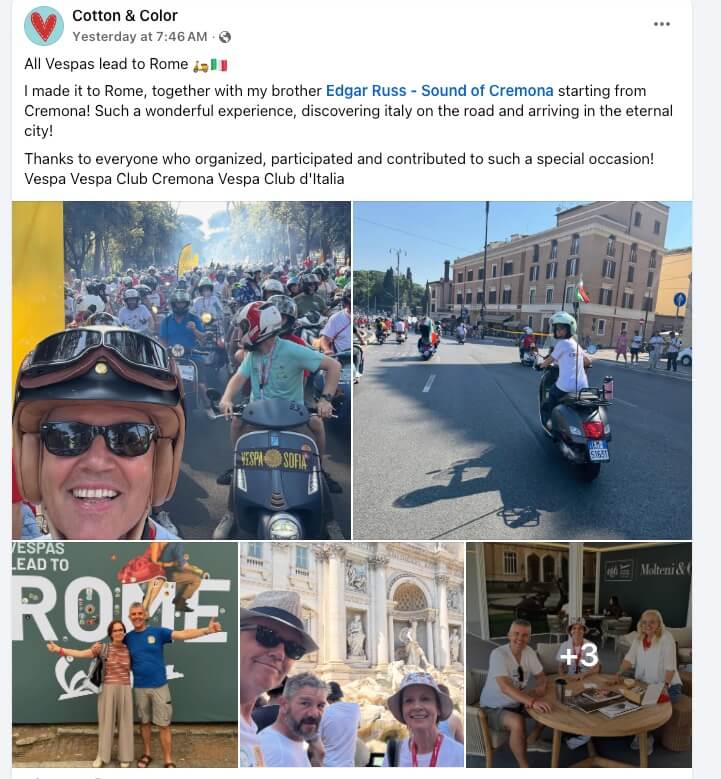
“All Vespas lead to Rome. I made it to Rome, together with my brother Edgar Russ, starting from Cremona! Such a wonderful experience, discovering Italy on the road and arriving in the Eternal City! Thanks to everyone who organised, participate and contributed to such a special occasion!” Thank you, Astrid!
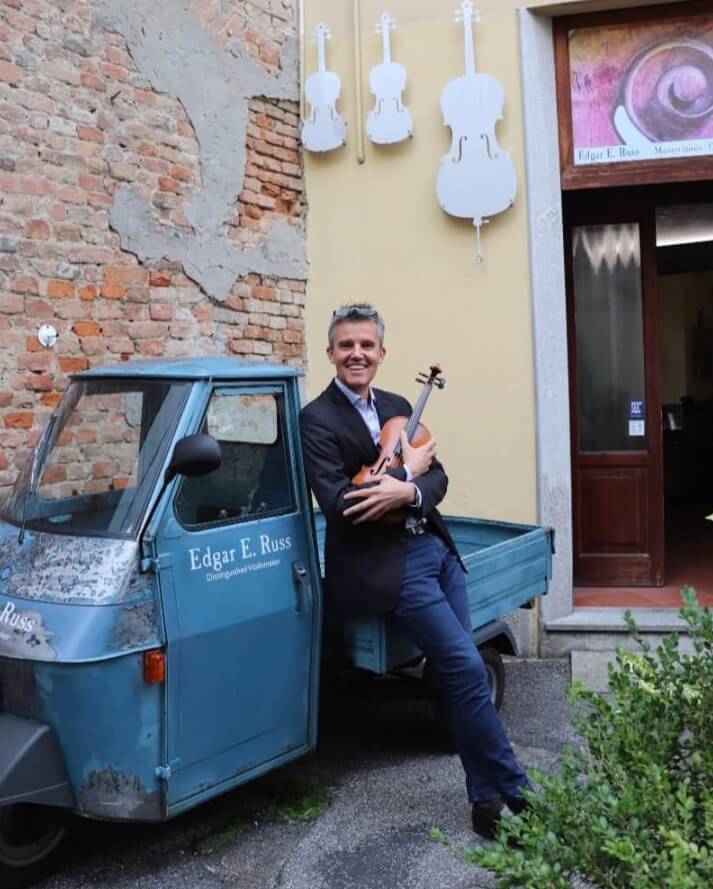
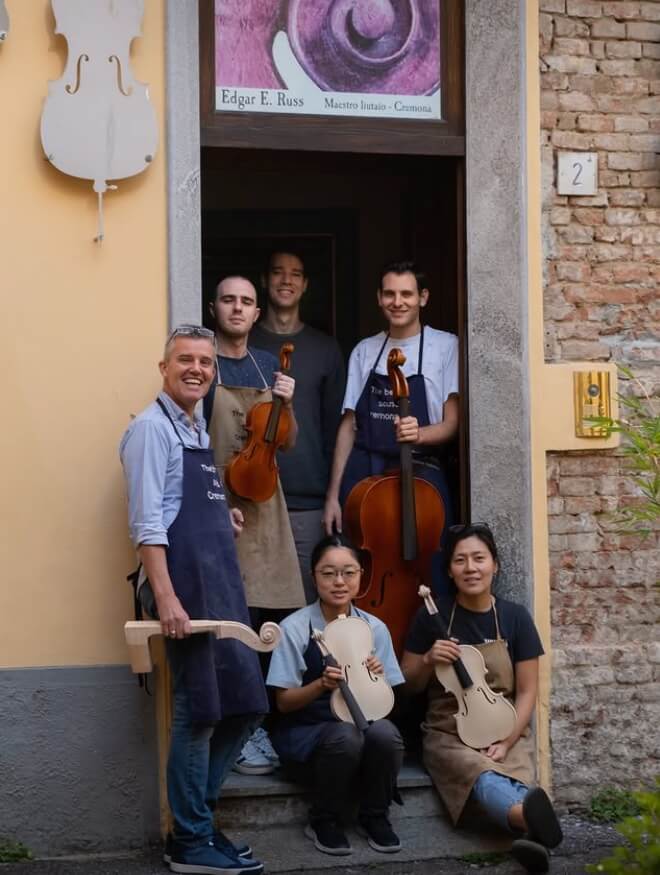
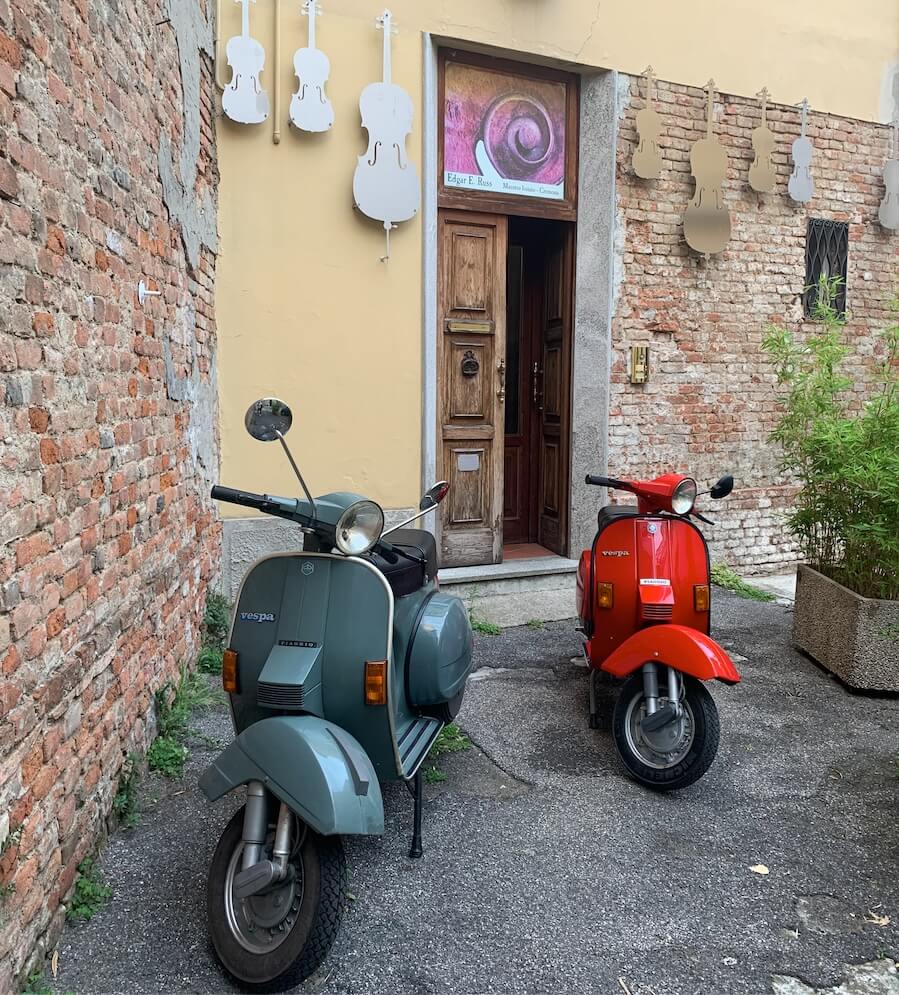
Edgar Russ, with Piaggio Ape and his staff, in front of his workshop in the historic heart of Cremona; some Vespas from his collection. Photo courtesy.
Website and social media channels of Edgar E. Russ – Sound of Cremona:
https://www.violincellomaker.com/
https://www.facebook.com/Edgar.E.Russ/?profile_tab_item_selected=mentions
https://www.instagram.com/edgarrussviolinmaker/channel/
https://www.youtube.com/user/EdgarERuss/featured
Cotton & Color (Riehen), ‘The largest fabric selection in Switzerland’ founded by Astrid Oberhauser. A leader in the sector for 30 years:
https://shop.cotton-color.com/en/
https://shop.cotton-color.com/en/uber-uns/